
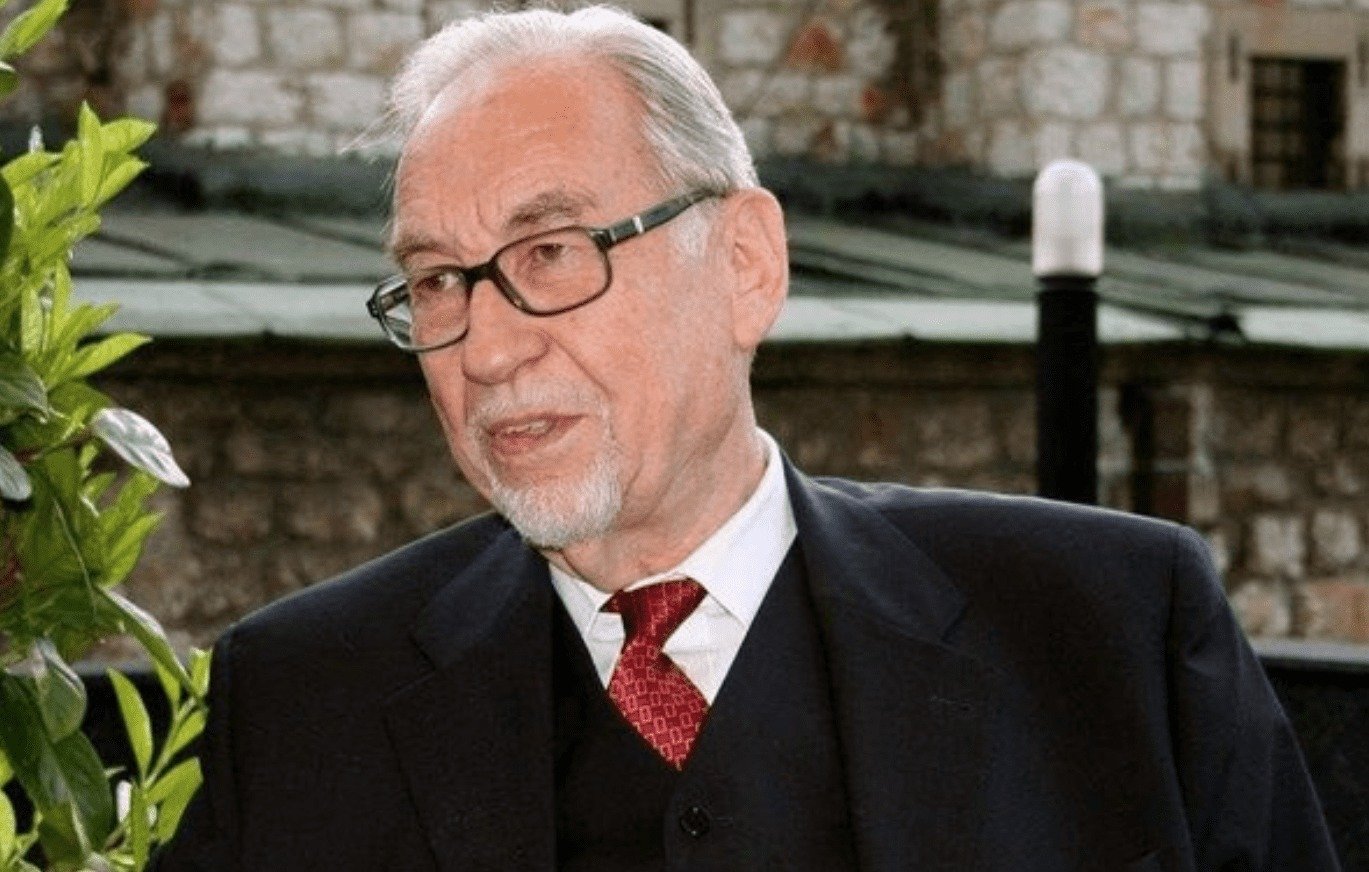
The Ambassador Who Chose Truth Over Power
Remembering Dr. Murad Hofmann — The diplomat who presented Islam as humanity’s civilizational hope
Today we remember an intellectual and diplomatic giant who didn’t merely search for truth — he paid its price with the courage of a warrior. Dr. Murad Hofmann (Wilfried Hofmann), the thinker, philosopher, and ambassador who left this world on January 12, 2020, bequeathing us a legacy that illuminates the darkness of contemporary materialism and heralds Islam as a civilizational alternative capable of saving humanity’s future.
From Elite Corridors to the Path of Truth
Born Wilfried Hofmann in 1931 in Aschaffenburg, Germany, to an educated family, he received the finest academic training Europe could offer. He studied law at the University of Munich, then earned his doctorate from prestigious Harvard University. He ascended to high and sensitive diplomatic positions reserved only for Germany’s “elite minds” — positions that most people spend entire careers merely dreaming about.
He worked as an expert at NATO, represented his country as ambassador to Algeria, then to Morocco. These are not titles given lightly. These are positions of immense power, influence, and prestige.
And then, in 1980, at the height of his diplomatic career, Dr. Wilfried Hofmann did something that would shock his colleagues, confuse his peers, and inspire millions: He embraced Islam.
The pressure was immense. The campaigns of defamation and restriction were relentless. But he faced them with the steadfastness of a thinker who had found what he was searching for, choosing truth over the glitter of position, presenting a model of a Muslim proud of his identity in the heart of Western institutions and among Germany’s elite circles.
A Partnership in Civilizational Vision
I consider Dr. Murad Hofmann, alongside his intellectual companion — the fighter, philosopher, politician, and mujahid President Alija Izetbegović of Bosnia and Herzegovina — to be among the most important renewers of Islamic thought in the West in the twentieth century. I don’t believe I’m exaggerating if I say: the most important, period.
Both were high-caliber thinkers and “practicing” philosophers who managed to present Islam with the mentality of people immersed in Western society. They presented Islam to the world as a “saving civilization” and a comprehensive way of life for the new millennium.
“They successfully argued to the Western mind the inadequacy of materialistic philosophies, consumerist tendencies, and excessive individualism that founded current Western civilization — neglecting the moral and ethical dimension, making that civilization fly with only one material-technical wing, leaving it at the mercy of the wind and gradually heading toward decline.”
This wasn’t armchair philosophy. This was lived conviction. Both men didn’t just write about Islamic civilization — they embodied it, defended it, and paid the price for advocating it in societies that were often hostile to such ideas.
The Hofmann Project: Critiquing the West from Within
Hofmann’s intellectual project centered on critiquing the West from within using rigorous methodology, and proving that Islam possesses the solutions the world awaits. He didn’t approach this as an outsider throwing stones — he spoke with the authority of someone who had lived at the highest levels of Western power and found it wanting.
His most prominent works form a comprehensive vision for understanding Islam as a civilizational answer:
His most famous thesis. In it, he proves with the intelligence of a diplomat and the depth of a philosopher that Islam is the only civilizational system capable of treating humanity’s environmental and social crises after the fall of the grand ideologies. This wasn’t wishful thinking — it was systematic analysis backed by decades of observation at the highest levels of global affairs.
Hofmann puts his finger on the wound, analyzing the state of “spiritual emptiness” amid material affluence, and warning against the dependency of “colonized minds” that are dazzled by the Western model without awareness. He called on Muslims to restore confidence in their value system — not from a place of defensiveness, but from intellectual certainty.
He narrates his spiritual journey from the corridors of law and politics to the realm of faith, explaining how he found in Islam the missing balance between reason and spirit, between individual and society. This wasn’t conversion born of emotion — it was the logical conclusion of a brilliant legal mind seeking coherence.
A forward-looking vision calling for the purification of Islamic thought from impurities and stagnation, and presenting it as a universal message that addresses twenty-first-century humanity in the language of the age. Hofmann understood that eternal truths must be communicated in contemporary language.
Reflections on coexistence and citizenship, and how to adhere to religious values in the heart of secular societies without dissolution or isolation. This was practical wisdom from someone who walked this tightrope daily — maintaining Islamic identity while functioning effectively in Western institutions.
The Cost of Conviction
Let’s be clear about what Dr. Hofmann sacrificed. In 1980, when he announced his conversion to Islam, he wasn’t some obscure academic or private citizen. He was a senior German diplomat, a NATO expert, an ambassador representing one of the world’s most powerful nations.
The professional consequences were severe. The social ostracism was real. The whisper campaigns, the questioning of his loyalty, the subtle and not-so-subtle pressures to recant — all of these he endured.
But here’s what makes his story so powerful: He didn’t retreat. He didn’t apologize. He didn’t soften his stance. Instead, he doubled down, becoming one of Islam’s most articulate and effective advocates in the Western world.
This is the kind of courage that changes civilizations. Not the courage of the battlefield — though that has its place — but the courage to stand for truth when doing so costs you everything you’ve worked for.
Why Hofmann Matters Today
Five years after his passing, Dr. Murad Hofmann’s message is more urgent than ever. The Western civilization he critiqued has only accelerated its descent into what he identified as its core problems:
Spiritual emptiness masked by material abundance. The rates of depression, anxiety, and suicide in wealthy Western nations continue to climb. People have more stuff and less meaning than ever before.
Environmental catastrophe driven by consumerist ideology. The planet is burning while economic systems predicated on infinite growth on a finite planet refuse to change course.
Social fragmentation caused by extreme individualism. Communities are dissolving. Traditional bonds are breaking. People are more “connected” digitally and more isolated actually than at any point in human history.
Moral relativism leading to ethical confusion. When everything is subjective, nothing is sacred. When there are no ultimate values, every value becomes negotiable.
Hofmann saw all of this coming. And he offered Islam not as a patch for Western civilization, but as a comprehensive alternative — a different way of organizing society, balancing rights and responsibilities, integrating the material and spiritual, the individual and communal.
The Unfinished Legacy
Dr. Hofmann taught us that Islam is not a geographical inheritance, but the “future” of the world for those who seek salvation. But here’s the uncomfortable truth: his project remains largely incomplete.
The Islamic renaissance he envisioned — one that would speak to modern humanity with intellectual rigor, moral clarity, and practical solutions — still awaits those who will carry its banner forward.
We have his books. We have his example. We have his methodology. What we need now are people with the courage to continue his work:
• Intellectuals who can engage Western thought at the highest levels without inferiority complexes or defensive postures
• Practitioners who can demonstrate Islamic principles in action, not just in theory
• Leaders who are willing to pay the price of conviction, as Hofmann did
• Educators who can present Islam’s civilizational vision in language that resonates with contemporary seekers
How I love, appreciate, and respect this man. I pray that God benefits the Islamic nation and all humanity through the serious thought he presented. We are in dire need today of those who will continue this giving, develop it, and draw inspiration from it, to become building blocks in the civilizational construction that all of humanity needs.
Dr. Murad Hofmann didn’t just convert to Islam — he converted to a mission. He spent the remainder of his life after 1980 doing what few have the courage to do: speaking uncomfortable truths to powerful people, challenging the assumptions of the civilization that birthed him, and offering an alternative when alternatives were desperately needed.
Five years after his passing, his books remain on shelves, often unread. His ideas circulate, often misunderstood. His example stands, often unheeded.
The question is: Who will have the courage to continue it?
Dr. Murad Wilfried Hofmann (1931-2020)
May his legacy inspire generations of truth-seekers








Be First to Comment