
Middle East Conflict Escalates as Iran Retaliates Against U.S. and Israel
Regional tensions surge as Hezbollah launches attacks, U.S. jets crash in Kuwait, and civilian casualties mount.
Hezbollah Launches First Attack on Israel in Over a Year
AMMAN, Jordan – The conflict over Iran engulfed more of the Middle East and beyond on Monday as Lebanon’s militant group Hezbollah responded to the killing of Iran’s spiritual leader with its first attack on Israel in more than a year.
The Lebanese government, facing the prospect of being drawn into another devastating war, announced plans to arrest those responsible for the rocket attack on Israel.
U.S. Fighter Jets Crash in Kuwait Amid Friendly Fire Incident
Kuwaiti authorities reported Monday that “several” U.S. fighter aircraft had crashed in its territory. The U.S. Central Command confirmed that three U.S. F-15E fighter jets “went down over Kuwait due to an apparent friendly fire incident.”
“During active combat—that included attacks from Iranian aircraft, ballistic missiles, and drones—the U.S. Air Force fighter jets were mistakenly shot down by Kuwaiti air defenses.”
— U.S. Central Command statement
The Command added that all six crew members “ejected safely, have been safely recovered, and are in stable condition.” Kuwait acknowledged the incident and stated that “the cause is under investigation.”
Iran claimed responsibility for downing one of the jets.
Civilian Casualties Mount in Lebanon
Lebanon’s health ministry reported that Israeli airstrikes in retaliation for the Hezbollah attack killed at least 31 people and wounded at least 149, most of them in southern Lebanon.
In Beirut, residents fleeing southern Lebanon and the city’s southern suburbs sought refuge in shelters set up in schools, which have been closed by the government.
“I spent the morning looking for a school and then I found this,” said a taxi driver who left a Hezbollah stronghold with his family. “Last time I stayed in the streets. The schools were all full, and I couldn’t pay rent for a house.”
“The enemy is an enemy in the end. But enough—we also want to live.”
Iranian Attacks Target U.S. Bases and Allies
Powerful Iran-backed militias in Iraq joined the fighting, firing at a U.S. base in Erbil in the Kurdistan Region and claiming responsibility for a drone attack targeting U.S. forces at Baghdad Airport.
Iran increased attacks on Kuwait, a key U.S. military ally. Cyprus reported that a drone targeted a British base on the Mediterranean island.
The Iranian Red Crescent Society reported that at least 555 Iranians have been killed since the beginning of U.S. and Israeli attacks on Saturday, including Iran’s Supreme Leader Ayatollah Ali Khamenei and members of his family. Iran stated that more than 165 schoolgirls were killed in a direct hit on a school.
U.S. Troops Killed in Kuwait; President Vows Retaliation
Three U.S. troops were killed in an Iranian attack in Kuwait, according to a Defense Department official. The President pledged that the U.S. would “avenge” the deaths.
“Sadly, there will likely be more before it ends. That’s the way it is.”
— The President
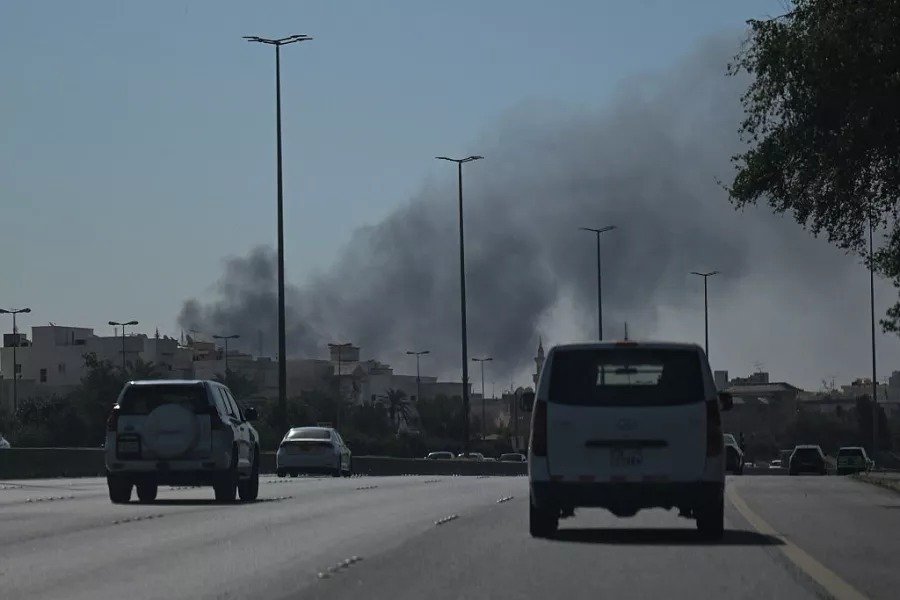
The U.S. Embassy in Kuwait warned Americans to take cover indoors and advised against visiting the embassy. Reports indicated smoke rising near the embassy, though an attack could not be immediately confirmed.
Regional and Global Impact
The U.S. military confirmed hitting an Iranian warship, which was reportedly sinking in an Iranian port. The President claimed on social media that the U.S. had sunk nine Iranian warships and “largely destroyed” Iran’s naval headquarters, though the U.S. Central Command did not confirm these claims.
Oil prices were expected to rise sharply after Iran’s Revolutionary Guard Corps reported hitting three U.S. and U.K. oil tankers in the Gulf and closing the Strait of Hormuz, a critical waterway for global oil trade.
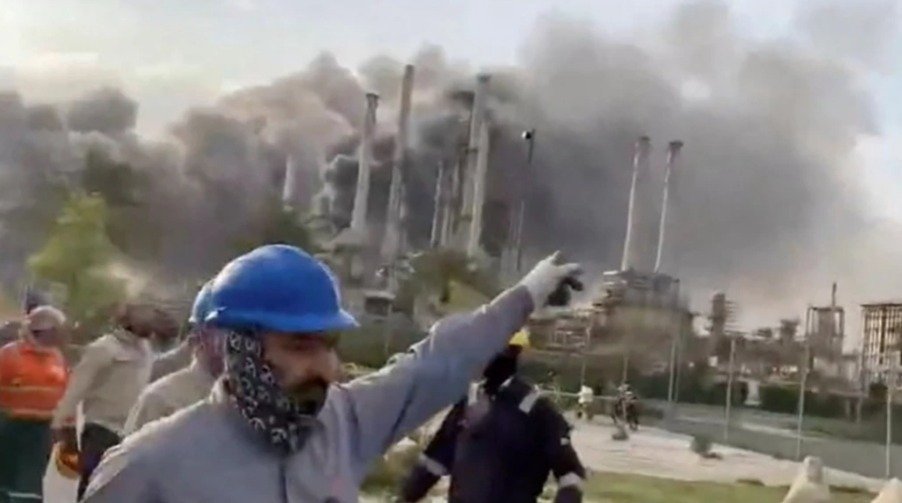
Saudi Arabia reported shooting down two drones targeting one of its major refineries, causing a limited fire but no civilian injuries.
Israel urged civilians to evacuate villages in the east and south of the country as the conflict widened.
International Reactions and Evacuation Plans
Gulf countries, traditionally seen as havens for Western expatriates, have faced increasing Iranian attacks. Britain’s Foreign Minister announced that the government was considering arranging evacuations for hundreds of thousands of citizens in the region if needed.
The President stated that combat operations would continue “in full force” until all objectives were achieved. He indicated that the U.S. military intended to sustain its assault on Iran for “four to five weeks” if necessary.
“Combat operations continue at this time in full force, and they will continue until all of our objectives are achieved. We have very strong objectives.”
— The President in a video message













Be First to Comment