
Karen Keegan needed a kidney transplant. Routine tests were run. But what happened next stunned the entire medical team.
When doctors tested her sons to find a compatible donor, the results came back impossible. Genetically, they weren’t her children. Not one match in the DNA. Not even half.
Confused and heartbroken, Karen insisted they were biologically hers. After all, she had carried and delivered them. But the DNA said otherwise.
So researchers dug deeper. And what they uncovered rewrote biology textbooks.
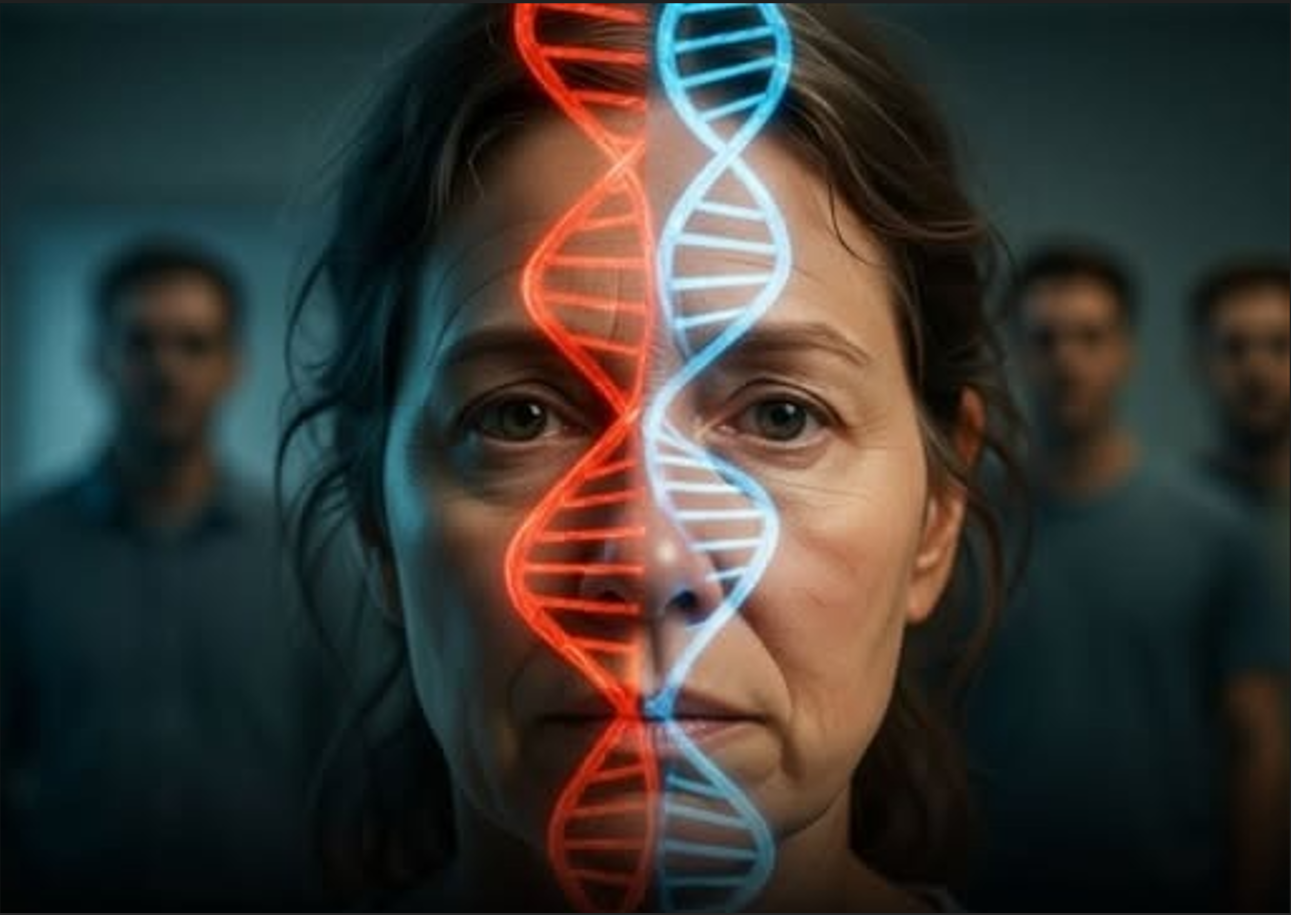
Karen wasn’t lying. She was a chimera — a rare condition where two embryos fuse in the womb early in pregnancy, combining into one body with two sets of DNA. In her case, the DNA in her blood and kidneys came from one twin, while the DNA in her ovaries came from the other.
That meant the eggs that created her sons had a different genetic blueprint than the blood used to test her identity.
Suddenly, it all made sense.
Karen Keegan became one of the first documented human chimeras. Her case revealed that a person can carry two distinct genetic identities—something previously thought to be near-impossible. It also raised huge questions about legal maternity, forensic science, and the complexity of human biology.
She was her children’s mother. But genetically, only part of her was.
This shocking case reminds us: DNA doesn’t always tell the full story. And sometimes, nature is far more mysterious than we’re ready for.
–Dr. Hatim Hegab












Be First to Comment