

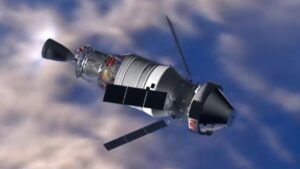
China has stunned the global space community by successfully carrying out an emergency space-rescue mission in a time frame no other nation has matched. After detecting a technical issue during a crewed mission, Chinese engineers prepared and launched a fully operational rescue spacecraft in just 11 days, enabling the safe return of three astronauts without delay or outside assistance. This rapid turnaround is being described as a record-setting achievement in human spaceflight readiness.
Typically, crewed launches require weeks or even months of preparation, including safety checks, fueling, trajectory simulations, life-support testing, and vehicle integration. In contrast, China’s Tiangong space station program was deliberately built with emergency extraction in mind. Its rockets, capsules, and launch facilities are maintained in a high-readiness, “hot standby” posture, similar to how air forces keep fighter jets prepared for immediate deployment.
Experts say the operation showcases a high level of technological maturity, operational flexibility, and built-in redundancy—traits considered essential for sustaining long-term space station activities. While agencies such as NASA, ESA, and Roscosmos have contingency plans for crew rescue, none have ever mounted a crewed rescue launch on such short notice.
The successful mission significantly boosts China’s standing as a major space power, underlining its ability to support and protect its astronauts independently. Analysts also note that this capability could prove critical for future deep-space endeavors, including planned missions to the Moon and Mars, where rapid-response rescue systems may one day spell the difference between life and death for stranded crews.













Be First to Comment