
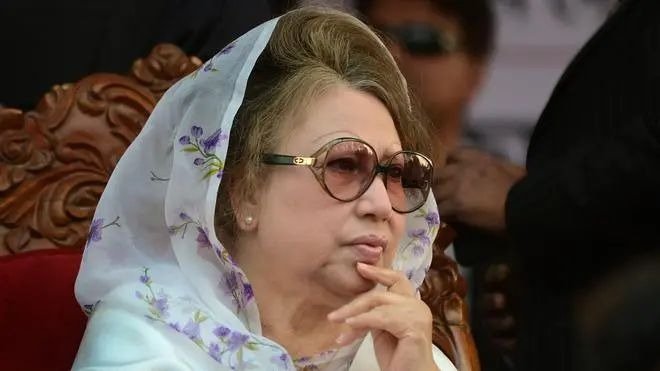
Khaleda Zia, Bangladesh’s first female prime minister, whose decades-long rivalry with another woman at the helm of a dueling political dynasty shaped the fate of the young South Asian nation, died on Tuesday at a hospital in Dhaka, Bangladesh’s capital. She was believed to be 80.
Khaleda Zia, Bangladesh’s First Female Prime Minister, Dies at 80
Decades-long political rivalry with Sheikh Hasina shaped the fate of the South Asian nation
Khaleda Zia, Bangladesh’s first female prime minister whose decades-long rivalry with another woman at the helm of a dueling political dynasty shaped the fate of the young South Asian nation, died on Tuesday at a hospital in Dhaka, Bangladesh’s capital. She was believed to be 80. The Bangladesh Nationalist Party, of which Ms. Zia was the chairperson, announced her death in a statement on its official social media page.
Ms. Zia, the widow of the first of several military rulers in Bangladesh’s turbulent 50-year history as an independent nation, served two full terms and one shortened term as prime minister. For much of the past three decades, she alternated as Bangladesh’s highest elected official with Sheikh Hasina, the daughter of the country’s slain founding president, who grew increasingly authoritarian until she was toppled following deadly protests last year. In her final decade of life, an ailing Ms. Zia was hounded by Ms. Hasina, her political rival, who kept her either in jail or under house arrest as court cases piled up against her. When her condition worsened after she caught COVID-19 in 2021, doctors advised her to travel abroad for treatment, but the courts under Ms. Hasina denied several requests. She was freed from house arrest and nearly a dozen court cases were dropped after Ms. Hasina was toppled and fled the country, but she remained bedridden.
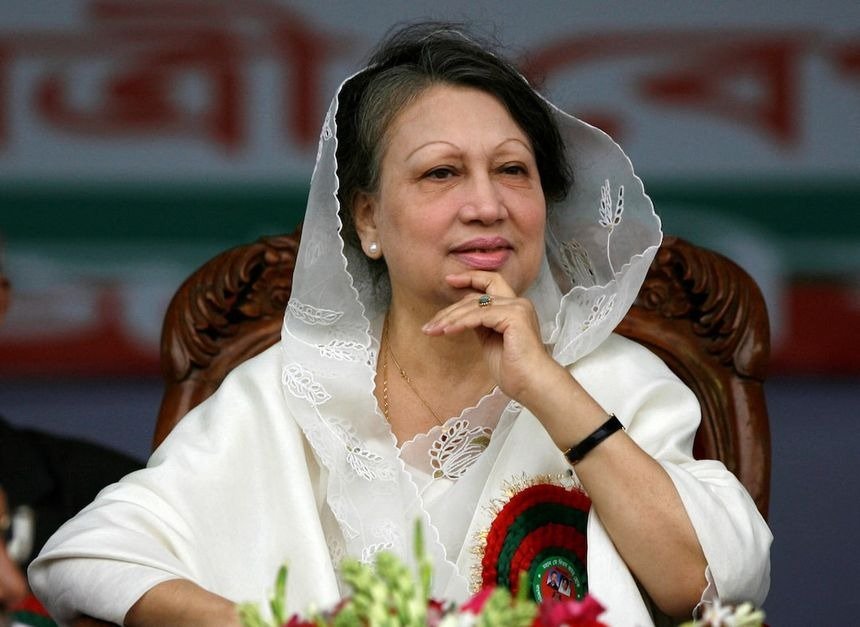
Khaleda Zia, Bangladesh’s first female prime minister (Photo: Archives)
Born Khaleda Khanam Putul in 1945 or 1946 in what was then undivided India under British imperial control, she married Ziaur Rahman in the 1960s, an officer of Pakistan’s army who later became a key figure in the Bangladesh independence movement and eventually the leader of the new nation’s military. After General Zia was assassinated in 1981 by a group of army officers, Ms. Zia officially entered politics and was elected Bangladesh’s first female prime minister in 1991. Her supporters recalled her first five-year term as a time of striking advancement in primary education, particularly for girls, and of far-reaching economic changes that helped lift the nation out of absolute poverty. From her hospital bed after Ms. Hasina’s downfall, Ms. Zia celebrated it as “the end of tyranny,” reading from a statement in what ended up being her last public words. She is survived by her son Tarique Zia, who had been leading the family’s party from exile in Britain since 2008 but returned to Bangladesh last week.








Be First to Comment