

Schumer Moves to Hold DOJ Accountable Over Incomplete Epstein Files Release
Senate Minority Leader introduces legislation targeting Attorney General Pam Bondi after Justice Department fails to fully comply with transparency law’s Friday deadline
Senate Minority Leader Chuck Schumer introduced legislation on Monday that would direct the Senate to initiate legal action against the Justice Department for failing to release the complete files related to convicted sex offender Jeffrey Epstein by Friday’s deadline—a requirement mandated by the Epstein Files Transparency Act.
The announcement follows a Sunday declaration by Democratic Rep. Ro Khanna and Republican Rep. Thomas Massie that they are pursuing “inherent contempt” charges against Attorney General Pam Bondi for non-compliance with the law requiring full disclosure of the Epstein files.
“The law Congress passed is crystal clear: release the Epstein files in full so Americans can see the truth. Instead, the Trump Department of Justice dumped redactions and withheld the evidence—that breaks the law.”
— Sen. Chuck Schumer (D-NY)
If the congressional effort succeeds, it could potentially lead to Bondi’s arrest, though the bipartisan pair is expected to introduce the resolution as “privileged” when the House reconvenes in January. Such designation would force a vote within two legislative days on the House floor, though success remains uncertain.
The DOJ’s Partial Disclosure
The Justice Department faced a Friday deadline imposed by Congress and signed into law by the president to release a massive cache of records gathered during government investigations into Epstein, who died in jail in 2019 while awaiting trial on federal sex trafficking charges.
While the DOJ released thousands of files—ranging from investigative documents to grand jury testimony to photographs taken by Epstein and his associates—officials acknowledged they would fail to fully comply with the deadline. The law contains exceptions designed to protect victims and address other sensitive circumstances, but critics argue the department is not honoring the legislation’s letter and spirit.
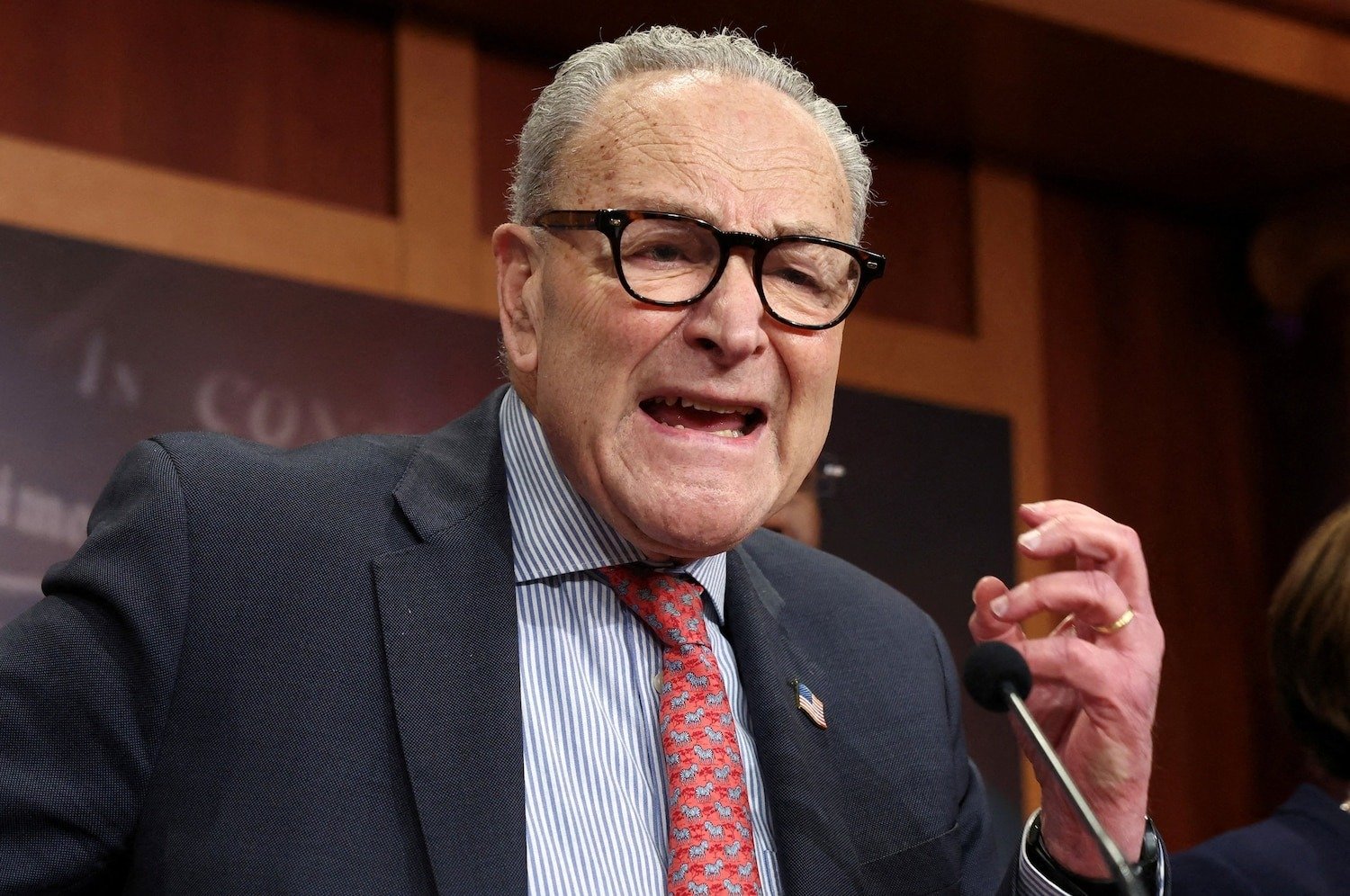

Schumer characterized the DOJ’s partial release on Friday as a “blatant cover-up,” asserting that “Pam Bondi and Deputy Attorney General Todd Blanche are shielding Donald Trump from accountability, and the Senate has a duty to act.”
The Epstein Files Transparency Act passed the Senate unanimously, compelling the executive branch to release all documents related to Jeffrey Epstein’s criminal activities and associated investigations. The deadline for full compliance was set for Friday, December 20, 2025.
Senate Action Expected in January
Schumer is expected to force consideration of his resolution on the Senate floor in January when lawmakers return from their holiday break. The measure would likely require unanimous consent to pass—a challenging threshold given the Senate’s current partisan divisions.
However, the precedent of unanimous support for the original Epstein Transparency Act suggests there may be bipartisan appetite for enforcement action. The earlier legislation passed without a single dissenting vote in the Senate.
The inherent contempt power permits Congress to rely on its own constitutional authority to detain and imprison a “contemnor”—someone held in contempt—until the individual complies with congressional demands such as a subpoena or pays a monetary fine, according to the Congressional Research Service. The power directs the Sergeant at Arms to arrest individuals who refuse to comply, though they are released once compliance is achieved.
Bipartisan Push for Accountability
On Sunday, Khanna and Massie—the co-authors of the Epstein Files Transparency Act—publicly announced their intention to pursue inherent contempt proceedings against Bondi, emphasizing that this path does not require Senate approval to be enforced.
“The quickest way, and I think most expeditious way, to get justice for these victims is to bring inherent contempt against Pam Bondi.”
— Rep. Thomas Massie (R-KY), CBS News’ Face the Nation
Khanna, appearing on the same program Sunday, reiterated that inherent contempt represents the appropriate course of action at this juncture. “We only need the House for inherent contempt, and we’re building a bipartisan coalition,” he said. “It would fine Pam Bondi for every day that she’s not releasing these documents.”
The California Democrat emphasized the personal stakes, adding, “I’ll tell you why—I’ve talked to the survivors—why this is such a slap in the face.”
DOJ Pushes Back
Deputy Attorney General Todd Blanche dismissed the congressional threats on NBC News’ “Meet the Press” Sunday, asserting that the department believes it is in full compliance with the law. When asked specifically about potential legal action against the department, Blanche responded defiantly: “Bring it on.”
A statement released Monday morning by attorneys representing a group of Epstein survivors sharply criticized the DOJ’s partial disclosure, characterizing omissions—whether through redactions or unreleased pages—as a fundamental failure to comply with the law.
“We are told that there are hundreds of thousands of pages of documents still unreleased.”
— Statement from attorneys for Epstein survivors
The survivors’ legal representatives argue that the incomplete release denies justice to those who suffered abuse and prevents the public from understanding the full scope of Epstein’s criminal network and any complicity by powerful individuals or institutions.
What Happens Next
The legislative standoff is expected to intensify when Congress reconvenes in early January. House Republicans and Democrats will need to determine whether there is sufficient bipartisan support to advance inherent contempt proceedings against Bondi—an extraordinarily rare action that hasn’t been employed in modern congressional history.
Meanwhile, Schumer’s Senate resolution faces its own hurdles, requiring either unanimous consent or 60 votes to proceed. The outcome will test whether lawmakers’ unanimous support for transparency in the original legislation translates into backing for enforcement measures.
For survivors of Epstein’s abuse and advocates demanding full accountability, the coming weeks will determine whether congressional authority can compel the executive branch to honor transparency commitments—or whether inter-branch tensions will leave critical questions unanswered.










Be First to Comment