
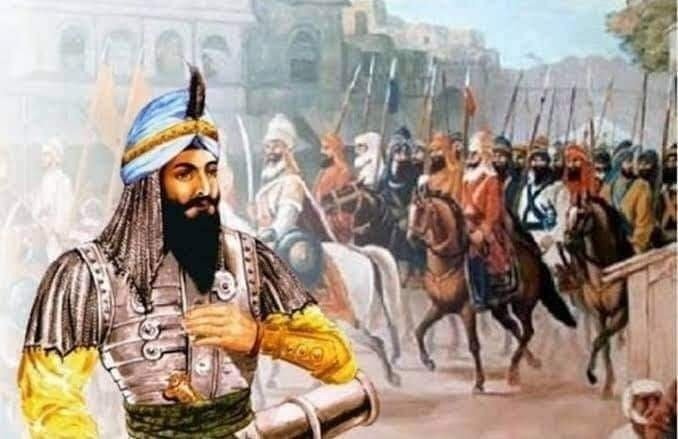
Who Was Sher Khan?
Rediscovering a Muslim King of Justice Behind the Cartoon Villain
In many children’s programs, our kids are taught that “Sher Khan” is the wicked tiger in the jungle who is always attacking Mowgli and his friends. In reality, this is a distortion and a falsehood.
So who was Sher Khan? In the year 1530 CE, there was a Muslim king who ruled Afghanistan and parts of India, and his name was Sher Khan. He was a marvel of justice, the like of whom the world rarely witnessed after the time of the Companions and their followers.
A Poor Man, a Mountain, and a Kingdom
Sher Khan’s army was stationed on one of the mountain peaks at the borders of his realm. There, a poor man lived with his family in a simple hut on that same peak. One day, the army needed to remove his hut for an important military plan.
After the army demolished the hut, the man went down from the mountain to the open plains. But he could not adapt to life there; his entire way of living was tied to the mountain—its hunting, its firewood, and his grazing of sheep.
Determined to seek justice, the man decided to go to King Sher Khan himself and complain about the army commander who had destroyed his home.
Where Is the King?
When he finally reached the capital, he asked where he could find King Sher Khan. People told him: “He is at the edge of the city, playing with the children.” The poor man thought they were mocking him because of his simple appearance.
He asked others, and they gave the same answer. So he went to the place they described, behind the grand mosque, and there he found a wide courtyard full of children wearing the finest clothes—and in their midst was King Sher Khan, playing with them.
The Orphans of the Muslims
The poor man asked someone standing nearby, “Who are these children?” The man replied, “These are the orphans from among the children of the Muslims.” The poor man exclaimed, “But their appearance does not suggest they are orphans!”
The man responded, “Here, our orphans wear clothes more luxurious than those of our own children. This is a decree from King Sher Khan: the orphans must appear more dignified than the rest of the children.”
In Sher Khan’s kingdom, dignity started with the most vulnerable. He did not allow orphans to feel lesser or looked down upon. Instead, he made their outward appearance a sign of honor and care. This is how true justice transforms society from the bottom up.
Meeting the King
The poor man felt hopeful about this just king and trusted that Allah would help him through him. When the king finished playing with the orphans, one of the attendants informed him that a stranger was waiting with a need.
The king said to the attendant, “Why did you not bring him to me immediately when he arrived? O man, perhaps the stranger is hungry, or afraid, or feels unsafe. How could you allow yourself to delay him? May Allah forgive you.”
He spoke these words while already walking toward the stranger, unwilling to waste time in talk while a needy person waited outside.
The king stood in front of the poor man and said with humility, “At your service, servant of Allah. I am your servant, Sher Khan. Do you have a grievance that we can settle for you by Allah’s permission?”
The poor man was stunned by such words and became tongue-tied. The king reassured him, smiled, and said, “Speak, servant of Allah, and fear none but Allah. By Allah, if your right were against me personally, I would let you take it from me now.”
Justice on the Mountain
The poor man told his story to King Sher Khan. The king replied, “Rejoice, servant of Allah. Your grievance has been accepted, and it is now upon my responsibility until your right is restored to you.”
Immediately, as a consequence for the army commander, the king ordered that the commander’s own house be taken so that a new home could be built for the poor man on the mountain peak. Beside it, he ordered a military fortress with towers to defend the region.
The poor man was amazed, striking one palm against the other in disbelief at the scale of justice he had just witnessed.
“Do Not Thank Me for Your Right”
The poor man tried to thank the king with words of praise and admiration. The king stopped him and said with a mix of sternness and humility, “O man, do not thank us for giving you your right. This is not my wealth, nor my father’s wealth. It is the wealth of Allah, Who has entrusted us with it to serve the weak among the Muslims before the strong.”
“By Allah, besides Whom there is no god, to lose a battle, be taken prisoner, and be cut into pieces and eaten by beasts and birds is better for me than to meet Allah on the Day of Judgment with a poor man’s grievance on my shoulders, arguing against me before Allah.”
Sher Khan understood that a single injustice could outweigh worldly victories. He feared a poor man’s complaint more than an enemy’s sword. This is the mindset that built civilizations and wrote pages of honor in our history.
Where Are Our Leaders Today?
So where are today’s kings and leaders of the Muslims when it comes to the weak and vulnerable? This story is among the most beautiful examples of justice narrated after the era of the Companions.
May Allah grant us leaders who fear Him in the rights of the weak, and may He inspire us all to stand for justice, even when it costs us comfort and power.






Be First to Comment