
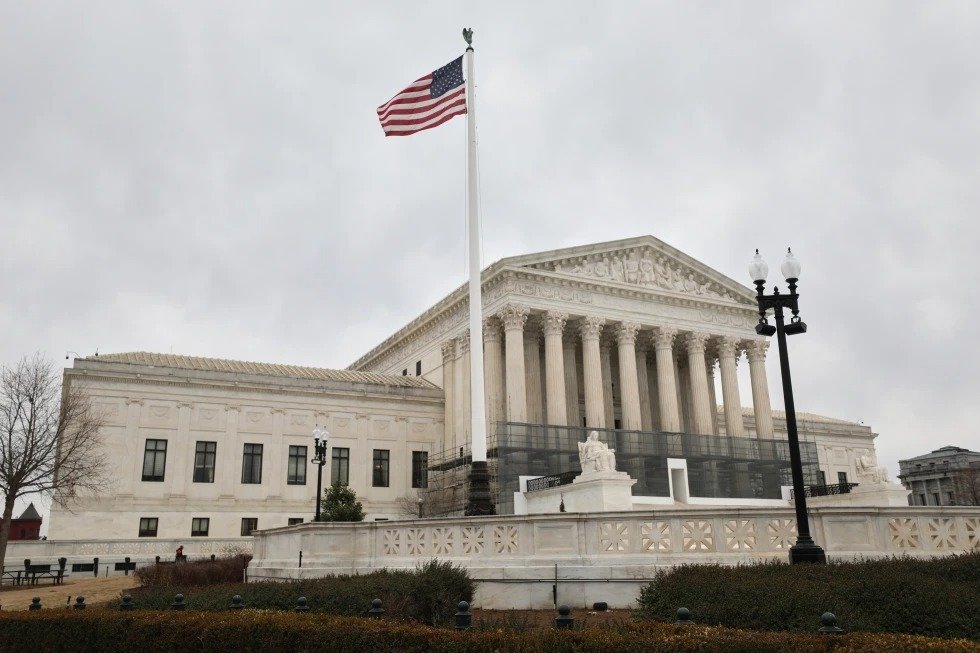
Supreme Court Strikes Down President Donald Trump’s Far-Reaching Global Tariffs
WASHINGTON — The Supreme Court struck down President Donald Trump’s far-reaching global tariffs on Friday, handing him a stinging loss that sparked a furious attack on the court he helped shape. The decision could have ripple effects on economies around the globe after Trump’s moves to remake post-World War II trading alliances by wielding tariffs as a weapon.
Trump said he was “absolutely ashamed” of some justices who ruled 6-3 against him, calling them “disloyal to our Constitution” and “lapdogs.” At one point he even raised the specter of foreign influence without citing any evidence. But an unbowed Trump pledged to impose a new global 10% tariff under a law that’s restricted to 150 days and has never been used to apply tariffs before. “Their decision is incorrect,” he said. “But it doesn’t matter because we have very powerful alternatives.”
The Ruling: Taxation Powers Belong to Congress
The court’s ruling found tariffs that Trump imposed under an emergency powers law were unconstitutional, including the sweeping “reciprocal” tariffs he levied on nearly every other country. The majority found that it is unconstitutional for the president to unilaterally set and change tariffs because taxation power clearly belongs to Congress.
[Image of the three branches of the US government and their specific powers]“The Framers did not vest any part of the taxing power in the Executive Branch,” Chief Justice John Roberts wrote. While the administration argued that a 1977 law (IEEPA) allowed him to set duties during emergencies, Roberts noted that the fact that no prior President has ever found such power in IEEPA is strong evidence that it does not exist.
The three conservative justices in the majority pointed to a principle called the major questions doctrine. It holds that Congress must clearly authorize actions of major economic and political significance. “There is no exception to the major questions doctrine for emergency statutes,” Roberts wrote.
Dissent and Billions in Limbo
Justices Brett Kavanaugh, Samuel Alito and Clarence Thomas dissented. “The tariffs at issue here may or may not be wise policy. But as a matter of text, history, and precedent, they are clearly lawful,” Kavanaugh wrote. Trump praised his 63-page dissent as “genius.”
The Treasury had collected more than $133 billion from the import taxes as of December, with a long-term impact estimated at $3 trillion. The court majority did not address whether businesses could get refunded, a process Kavanaugh noted could be a “mess.” Many companies, including Costco, are already seeking refunds in lower courts.
Small Businesses Celebrate
Small business owners across the country celebrated the ruling. Ann Robinson, who owns Scottish Gourmet in Greensboro, North Carolina, said she was “doing a happy dance.” The 10% baseline tariff on U.K. goods cost her business about $30,000 in the fall season. “Time to schedule my ‘Say Goodbye to Tariffs’ Sale!” she remarked.
Rick Woldenberg, CEO of Illinois toy company Learning Resources, hoped for more constraint in the future. “Somebody’s got to pay this bill. Those people that pay the bill are voters,” he said.
Global and Political Reaction
The ruling is a “complete and total victory” for challengers, according to Neal Katyal, who argued on behalf of small businesses. However, Vice President JD Vance called the high court decision “lawlessness” in a post on X. Internationally, European Commission spokesman Olof Gill said they remain in close contact with the U.S. Administration seeking clarity on next steps.










Be First to Comment