
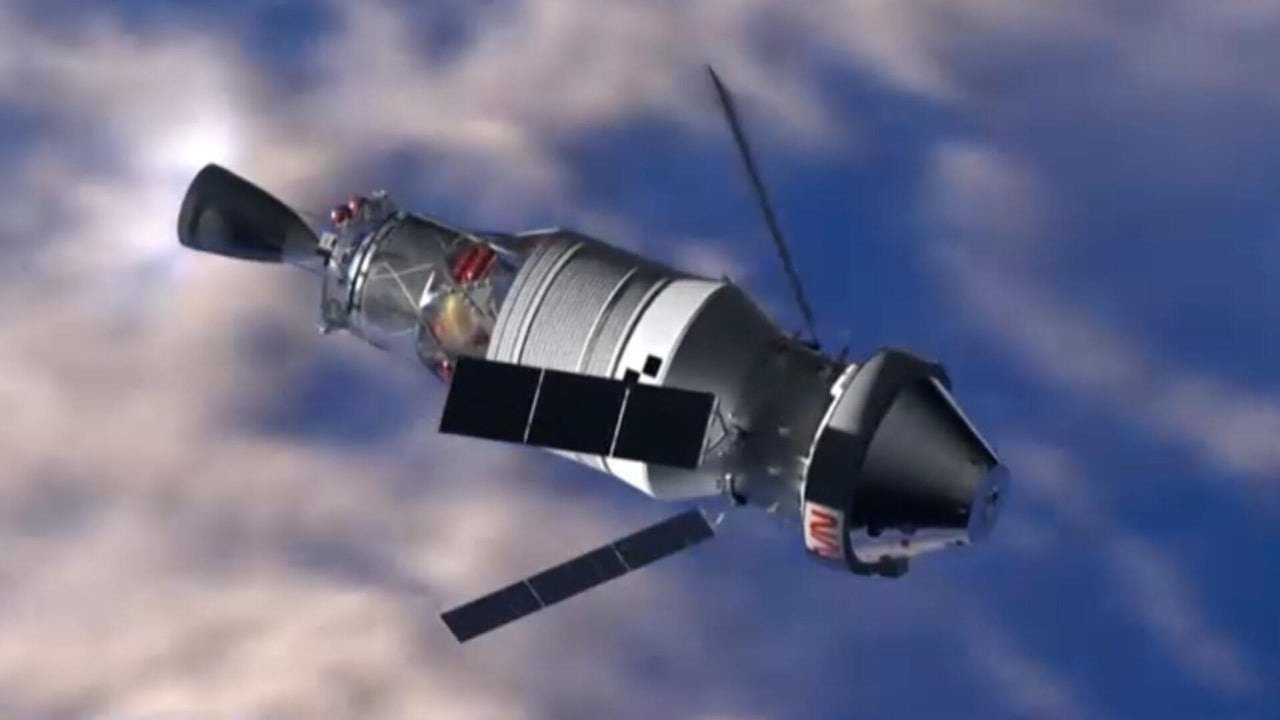
Stillwater’s Frontier Powers Artemis II Moon Mission
Local company’s technology guides astronauts on first lunar flyby in over 50 years
Out in space, the four-member crew of Integrity is on its way home to Earth after the first lunar flyby in more than 50 years, while inside a lab at Frontier Electronic Systems Corporation, three sample pieces of the Artemis II mission sit on a table.

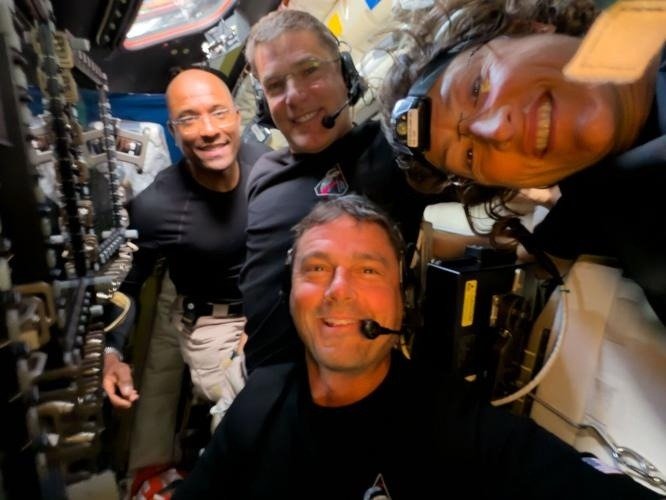
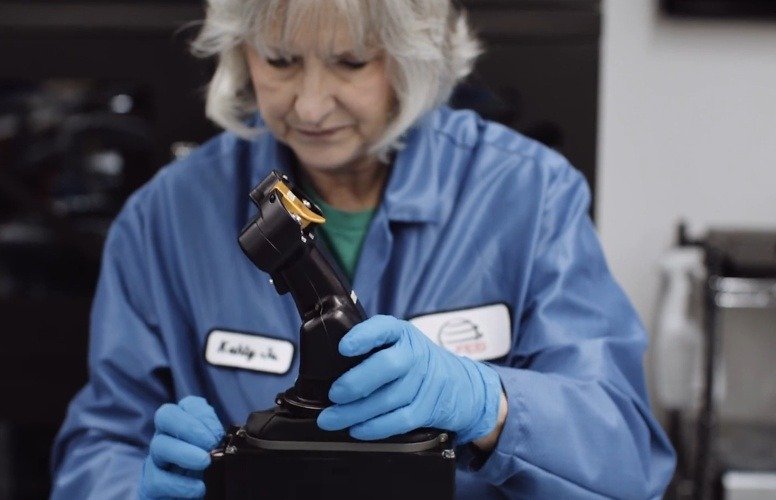
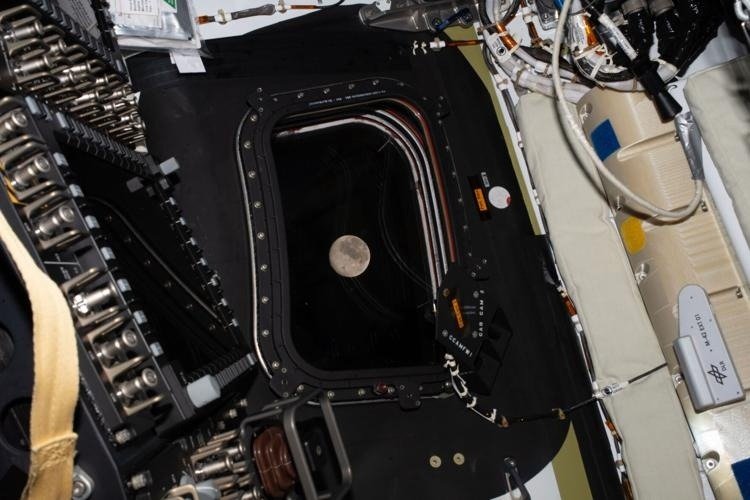
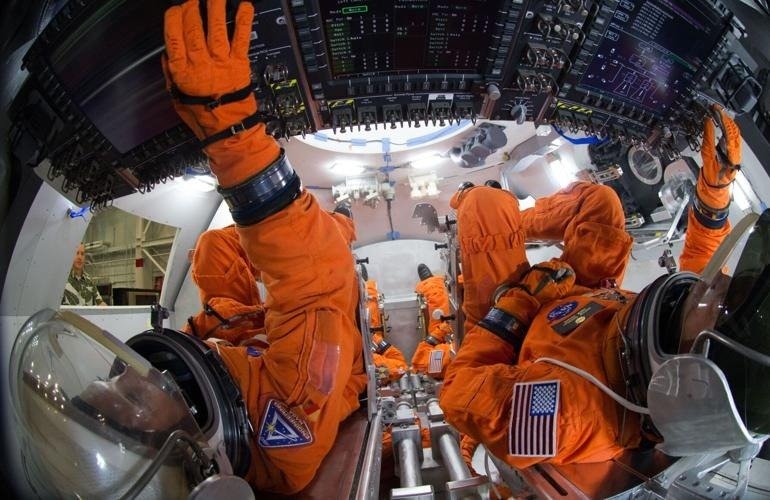
The hardware represents three of the more than 30 pieces of hardware that make up the Orion spacecraft’s integrity, but they also represent Stillwater, Oklahoma, to the rest of the world.
FES, a Stillwater company, built the rotational hand controller, which sits near the armrest of Integrity’s pilot and is used to steer and manipulate the spacecraft. The RHC is just one of three controllers FES manufactured, along with switch panels that are clearly visible in photos from inside the spacecraft.
The RHC controls three-dimensional movement of the spacecraft, including pitch (forward and backward), yaw (side to side) and roll (flipping upside down) of the spacecraft. Another controller, called the translational hand controller, is for moving up, down, in and out. A third controller, called a cursor control device, acts as a “space” mouse, or a computer mouse and attaches to the armrest so that it doesn’t float around in zero gravity.
“The very day of the launch, they tested all the hand controllers. When they separated from the core stage and got a lot of the other booster stuff off and they were up in space, the astronauts actually took control of the spacecraft and used the controllers to rotate it around and to practice, like if they ever had to dock or something.”
— Darryl Smith, Space and Aerial Product Program Manager at FES
Stillwater’s Space Legacy
The other hardware FES built is bezel switch panels on the dash – seven different panels in total found in the cockpit.
“Made right here in Stillwater, Oklahoma. These surround (the screens), (and provide) different functions that they have to require throughout the mission.”
— Darryl Smith
Guests to the lab are asked not to get closer than a foot to the equipment, as an electrical charge could damage the delicate hardware.
“These are the most visible of the products we make. We also make a lot of other products that are best described as black boxes that are all over the rocket, as well as up in the Orion spacecraft. They perform electrical functions required for the whole mission. They’re just not as visible and not as much hands-on, like these hand controllers and display panels.”
— Darryl Smith
For 45 years, the engineering and manufacturing company has built software and hardware products for government agencies such as the National Aeronautics and Space Administration and the U.S. Department of Defense. The Native American, woman-owned small company is steered by second-generation CEO Brenda Rolls, with about 135 employees working at the Sixth Avenue location. Rolls’ parents, Ed and Peggy Shreve, started the company at their kitchen table.
In the mid-1990s, FES began building space product systems through partnerships with companies such as Northrop Grumman, mainly on defense products for satellites. In the early 2000s, they began building hardware for the International Space Station.
“We have been in human space flight ever since.”
— James Peake, Business Development Specialist at FES
Artemis Mission Timeline
Oklahoma’s Role in the New Space Age
FES has been working with companies such as Honeywell and Lockheed Martin – the manufacturer of the Orion spacecraft – for about eight years. They built the hardware used on Artemis I, and will build more hardware for future missions.
“These (pieces in the lab) will actually probably be used on Artemis III or IV, and we’re building on Artemis V and VI, as well. It’s still absolutely in production.”
— Darryl Smith
Smith described preparing product for the Artemis II mission to preparing for the Olympics.
“You practice for years and years and years, and it’s a whole team here at Frontier that’s doing this. You get to the point where some of the products you’ve been working on and laboring over for years and years finally gets launched, and it works. It’s really exciting to see that happen.”
— Darryl Smith
Many of the employees stayed to watch the 5:35 p.m. (CST) launch on April 1. The team streamed the launch on the big screen in the break room area, and as employees watched and cheered, someone filmed the reaction.
“We were really excited watching it. The most exciting is going to be on Friday when the astronauts come back safely. That’s the goal of the mission, really.”
— Darryl Smith
Smith and Peake have both visited the Kennedy Space Center, and both visited the launch pad 39B six months ago when NASA held the Orion Handover event, where Lockheed officially handed over a giant set of keys to NASA upon completion of the spacecraft. The two also visited the Vehicle Assembly Building, where the entire booster sat with the interim cryogenic propulsion stage stacked on it.
Rolls also had the opportunity to watch the launch live last week, Peake said.
“That was quite a treat to have her get to see our products send people back to the moon for the first time since 1972. That’s quite a first for Frontier. It’s the first time we’ve been to the moon and to participate in something that’s likely going to define the next generation of space, it’s pretty special.”
— James Peake
Rolls said FES takes its job seriously and wants end users to have confidence in its products.
“When we are in space, we must trust that our equipment will perform reliably. Every component from our facility reflects the dedication of our Stillwater workforce and our collaboration with industry partners. Together, we have shown that Oklahoma-made hardware has no limits. The milestones we celebrate today with Artemis are a direct reflection of the thousands of hours our team and our industry partners have invested in every circuit, controller and switch panel. We take immense pride in being the steady hands behind the mission, working in lockstep with our partners to return humanity to the lunar frontier.”
— Brenda Rolls, CEO of Frontier Electronic Systems
To the FES team, the products created for Artemis II are on the leading edge of technology, and safety is paramount, then delivery and schedule. In the past 10 years, NASA astronauts have even visited FES to view the products and manufacturing process.
“It’s very meaningful for us as employees that are building products that are meant to keep astronauts alive, and to look them in the face and say, ‘Yes, we are doing what we need to do.’ Being involved with this, helping, may be a small part of it. Our company helping return man to the moon is pretty exciting.”
— Darryl Smith
It’s FES’ vision to provide high-quality jobs for Oklahoma State graduates, and that’s why they’re so successful, Smith said.
“You don’t have to live in a big city like Dallas or Los Angeles or Huntsville, Alabama, to have an impact and play a part in the mission to space.”
— Darryl Smith
FES will be on board for upcoming missions, including Artemis IV’s moon landing, slated for 2028. Their current product contract with NASA will last through Artemis V’s launch. Peake said FES administration had been to Washington, D.C., to meet with legislators and NASA administrators about focusing on a moon landing and “putting boots on the ground.”
“There will be a generation, hopefully, that’s born out of Artemis II that will live, work, and do things on the moon – which is an incredible thought.”
— James Peake















Be First to Comment