
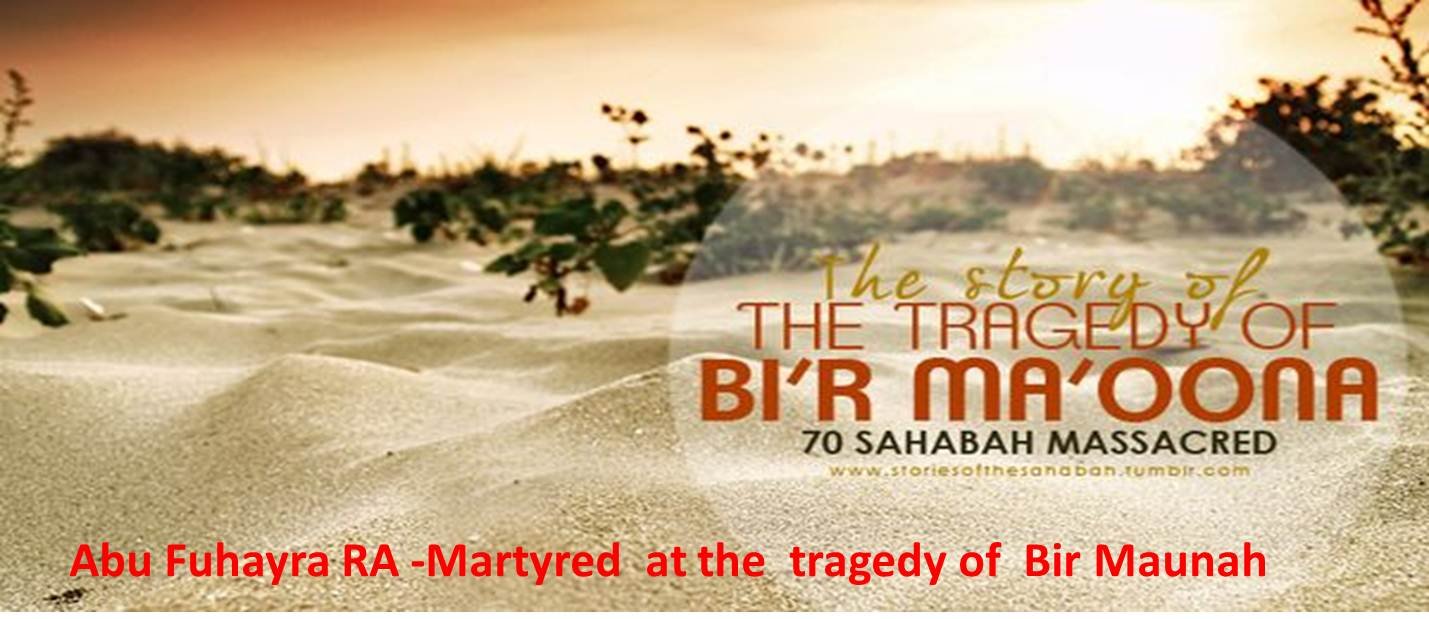
Amer ibn Fuhayrah
The Freed Slave Who Ascended to the Heavens
Died 4 AH / 625 CE
Full Name: Amer ibn Fuhayrah
Status: Companion of the Prophet ﷺ and freed slave (mawla) of Abu Bakr al-Siddiq
Birth: Unknown (born into slavery in Makkah)
Death: 4 AH (625 CE) at Bi’r Ma’unah, age 40
Notable For: Early convert to Islam, crucial role in the Hijrah, martyrdom with miraculous ascension
From Slavery to Freedom
كان عامر بن فهيرة عبدًا أسودًا مملوكًا للطفيل بن عبد الله بن سخبرة الأزدي في مكة، وكان مولّدًا من مولدي الأزد
Amer ibn Fuhayrah was a black slave owned by al-Tufayl ibn Abdullah ibn Sakhbarah al-Azdi in Makkah. He was born into slavery among the Azd tribe, living a life of bondage and servitude in a society where his status as a slave defined every aspect of his existence.
Yet when the call of Islam reached his ears, something stirred within his soul. The message of the Prophet Muhammad ﷺ spoke of equality before Allah, of a Day when kings and slaves would stand equal, judged only by their faith and deeds. For a man who had known nothing but subjugation, this was revolutionary.
Amer ibn Fuhayrah embraced Islam before the Prophet ﷺ even entered Dar al-Arqam to call people to the faith. This places him among the very earliest converts—a testament to his spiritual insight and courage. He saw the truth of Islam before many of the noble Quraysh, before the powerful and wealthy recognized what this humble slave had already understood.
Persecution of the Weak
ونظرًا لكونه عبدًا أسودًا، استُضعف عامر بن فهيرة فكان يُعذّب لترك دين الإسلام
Because he was a black slave, Amer ibn Fuhayrah was among “al-mustad’afin” (the oppressed/weakened ones)—those who were tortured for embracing Islam. The Quraysh showed no mercy to those without tribal protection or social standing.
Imagine: a man already living in chains, already denied basic human dignity, now suffering additional torment for choosing to worship the One True God. He was beaten in the scorching heat of the Makkan sun, pressured to renounce his faith, tortured to break his spirit.
But his spirit would not break. His body was enslaved, but his soul had found freedom in Islam. And this freedom was worth any price.
Abu Bakr’s Noble Act
إلى أن اشتراه أبو بكر الصديق وأعتقه، وصار يرعى له بعض غنمه
Abu Bakr al-Siddiq, may Allah be pleased with him, witnessed the torture of these vulnerable Muslims and could not bear it. Using his considerable wealth, he began purchasing and freeing enslaved believers. Among them was Amer ibn Fuhayrah.
Abu Bakr bought Amer and immediately emancipated him. From that moment, Amer became his mawla (freed slave/client), bound to Abu Bakr not by chains but by gratitude, loyalty, and shared faith. After his emancipation, Amer worked as a shepherd, tending some of Abu Bakr’s sheep—honest work for an honest wage, as a free man.
This act of kindness would prove to be divinely orchestrated. For when the time came for the greatest journey in Islamic history, this freed shepherd would play a role that no one else could fill.
The Greatest Journey: The Hijrah
لما همّ النبي محمد ﷺ وصاحبه أبو بكر بالهجرة، تخفّيا لفترة في غار ثور حتى يفقد متتبعيهم أثرهم
When the Prophet Muhammad ﷺ and Abu Bakr decided to migrate to Madinah, they knew the Quraysh would hunt them relentlessly. Their plan required absolute secrecy and meticulous execution. After leaving Makkah under cover of darkness, they hid in Ghar Thawr (the Cave of Thawr) for three days, waiting for their pursuers to lose their trail.
This is where Amer ibn Fuhayrah’s role became crucial. The plan involved several people, each with a specific task:
Abdullah ibn Abi Bakr (Abu Bakr’s son) would spend his days in Makkah, listening to the Quraysh’s plans, then slip out at night to inform the Prophet ﷺ and his father of any developments.
Asma bint Abi Bakr (Abu Bakr’s daughter) would prepare food and bring it to the cave under cover of darkness.
Amer ibn Fuhayrah had perhaps the most ingenious role: He would graze Abu Bakr’s sheep during the day as usual, raising no suspicion. But in the evening, he would bring the flock to Ghar Thawr, providing the Prophet ﷺ and Abu Bakr with fresh milk. Then, as Abdullah left the cave to return to Makkah, Amer would follow behind with the sheep, their hooves erasing Abdullah’s footprints from the sand.
فكان عامر بن فهيرة يروح بغنم أبي بكر عليهما، فيحتلبا الغنم وإِذا خرج عبد الله بن أبي بكر من عندهما اتبع عامر بن فهيرة أثره بالغنم حتى يخفي آثار أقدامه
Every evening, this former slave would bring his flock to the cave. The Prophet ﷺ and Abu Bakr would milk the sheep for sustenance. And when Abdullah departed, Amer would carefully guide his flock over the young man’s footprints, leaving behind only the confused tracks of wandering sheep.
It was brilliant. It was essential. And it was entrusted to a man who, years before, had been considered property—someone the society of Makkah had deemed insignificant. Yet Allah chose him for this sacred task, proving that true worth is measured not by birth or status, but by faith and character.
The Journey to Madinah
ولما سارا إلى يثرب، خرج عامر بن فهيرة معهم، حيث أردفه أبو بكر خلفه
When the Prophet ﷺ and Abu Bakr finally set out for Yathrib (Madinah), Amer ibn Fuhayrah traveled with them. Abu Bakr had him ride behind him on his mount—a journey of approximately 450 kilometers through harsh desert terrain, pursued by enemies who had placed a bounty on the Prophet’s head.
Throughout this perilous journey, Amer ibn Fuhayrah served his companions faithfully. He was there when the spider spun its web across the cave entrance. He was there when Suraqah ibn Malik pursued them and his horse’s legs sank into the sand. He witnessed miracles and shared in the fear, the hope, and ultimately the triumph of successful migration.
Life in Madinah
نزل عامر بن فهيرة حين هاجر إلى يثرب على سعد بن خيثمة، وقد آخى النبي محمد بينه وبين الحارث بن أوس بن معاذ
Upon arriving in Madinah, Amer ibn Fuhayrah stayed with Sa’d ibn Khaythamah, one of the generous Ansar (Helpers) who opened their homes to the Muhajirin (Emigrants). The Prophet ﷺ established brotherhood between Amer and al-Harith ibn Aws ibn Mu’adh from the Ansar—a bond that transcended tribal and ethnic boundaries, embodying Islam’s revolutionary principle of brotherhood in faith.
The Tragedy of Bi’r Ma’unah
شارك عامر بن فهيرة في السرية التي عقد رايتها النبي محمد للمنذر بن عمرو لدعوة أهل نجد إلى الإسلام، فاعترضتهم بطون من قبيلة سُليم عند بئر معونة، وقاتلوهم وقُتل عامر يومها وعمره 40 سنة
In Safar of the year 4 AH, approximately 70 companions set out on a missionary journey to invite the tribes of Najd to Islam. The Prophet ﷺ entrusted the leadership to al-Mundhir ibn Amr, and among the delegation was Amer ibn Fuhayrah.
They reached a place called Bi’r Ma’unah (the Well of Ma’unah), where they were met not with curiosity about Islam, but with betrayal and violence. Clans from the tribe of Sulaym attacked them treacherously. The companions, though skilled fighters, were overwhelmed by the numbers and the element of surprise.
One by one, these noble souls fell as martyrs. Amer ibn Fuhayrah, now 40 years old, fought valiantly. His killer was a man named Jabbar ibn Sulma—a name that would soon be transformed by what he witnessed.
The Miraculous Ascension
رُفِعَ عامر بن فهيرة إلى السماء، فلم تُوجَد جُثته
According to the narration preserved by al-Waqidi, from Muhammad ibn Abdullah ibn Muslim al-Zuhri, from his uncle Muhammad ibn Muslim al-Zuhri, from Urwah ibn al-Zubayr, from Aisha bint Abi Bakr (may Allah be pleased with her):
“Amer ibn Fuhayrah was raised to the heavens, and his body was not found.”
طلب عامر يومئذ في القتلى فلم يوجد، فيرون أن الملائكة دفنته
Ibn al-Athir al-Jazari recorded in his work “Asad al-Ghabah fi Ma’rifat al-Sahabah” (The Lion of the Forest in Knowing the Companions), narrating from Abdullah ibn al-Mubarak and Abd al-Razzaq ibn Hammam, from Ma’mar ibn Rashid, from Muhammad ibn Muslim al-Zuhri, from Urwah ibn al-Zubayr:
“Amer was searched for among the slain that day, but was not found. They believe that the angels buried him.”
وأورد ابن إسحاق في سيرته عن هشام بن عروة عن أبيه أن قاتله جبار بن سلمى شهد صعود جثته إلى السماء، فكانت سببًا لإسلامه
But perhaps most extraordinary of all: Ibn Ishaq recorded in his Sirah, from Hisham ibn Urwah, from his father, that Amer’s killer, Jabbar ibn Sulma, witnessed his body ascending to the heavens—and this miracle became the cause of his conversion to Islam.
Imagine this moment: Jabbar ibn Sulma, having just struck down Amer ibn Fuhayrah, watches in stunned amazement as the body of this Muslim—this former slave—begins to rise into the sky. The man he thought he had defeated ascends before his very eyes, carried by unseen hands, disappearing into the heavens.
After the battle, when the other companions’ bodies were found and buried, Amer’s body was nowhere to be seen. The companions searched thoroughly, but there was no trace of him. The scholars concluded that the angels themselves must have buried him—or that he had been taken directly to the heavens as a sign of his exalted status with Allah.
The Transformation of Jabbar ibn Sulma
Jabbar ibn Sulma could not forget what he had seen. The image of Amer’s body rising to the sky haunted him, challenged him, called him to truth. A man he had killed in the name of tribal loyalty had been honored by the Creator of the heavens and earth in a way that defied all understanding.
Eventually, Jabbar embraced Islam. The very hand that had struck down Amer would later be raised in prayer to the same God. The eyes that had witnessed the miracle would weep in repentance. And Jabbar would testify until his dying day about what he had seen—bearing witness to the truth of Islam through the miraculous ascension of the man he had killed.
In a profound way, Amer ibn Fuhayrah’s death became a da’wah (invitation to Islam) more powerful than any words could have been. His killer became a Muslim because of what he witnessed—because the miracle was so undeniable, so overwhelming, that it shattered all doubts about the truth of this faith.
Lessons from a Remarkable Life
1. Status Before Allah vs. Status Before People: Amer was a slave in Makkan society, considered among the lowest of the low. Yet he was chosen for a critical role in the Hijrah and granted a miraculous death that even prophets are not always given. Allah judges by the heart, not by social standing.
2. Early Faith and Perseverance: Amer embraced Islam when it was most dangerous to do so, endured torture, and never wavered. His reward was not just Paradise, but miraculous vindication even in death.
3. Every Role Matters: Amer’s task during the Hijrah might seem simple—just a shepherd with his flock. But without him erasing the tracks, the entire migration could have failed. Never underestimate the importance of your role in Allah’s plan.
4. Miracles as Guidance: Amer’s ascension was not just for him—it was a sign for those who witnessed it, including his killer. Sometimes Allah manifests miracles not just to honor the righteous, but to guide the misguided.
5. True Freedom: Amer was freed from physical slavery by Abu Bakr, but he had already freed himself spiritually through Islam. The greatest freedom is freedom from servitude to anything other than Allah.
Conclusion: From Earth to Heaven
Amer ibn Fuhayrah’s life reads like a testament to everything Islam came to establish: the dignity of every human being, the possibility of redemption and elevation regardless of past status, the reality of divine justice, and the certainty that Allah honors those who honor Him.
He was born into chains. He lived through torture. He served humbly. He fought bravely. And when his time came, he ascended literally—his body taken by angels, his soul elevated to the highest stations of Paradise.
For forty years, he walked this earth as one of “al-mustad’afin”—the oppressed and weakened. But in death, he became one of “al-muqarrabun”—those brought near to Allah in the highest ranks of Paradise.
May Allah be pleased with Amer ibn Fuhayrah and grant us a fraction of his faith, patience, and ultimate honor.
رضي الله عنه وأرضاه
Published in All, Articles, Biography Of the Companions, Islam and Stillwater








Be First to Comment