
Russia Patents Giant Rotating Space Station to Combat Zero-Gravity Effects
Energia’s design aims to generate artificial gravity, addressing the biggest challenge for long-term deep-space missions
While the International Space Station (ISS) prepares for a watery grave in 2030, Russia is looking up — and spinning. The Russian state rocket company, Energia, has officially secured a patent for a giant, rotating space station designed to solve the single greatest threat to deep-space travel: the slow decay of the human body in zero gravity.
By mimicking the mechanics of a high-tech carnival centrifuge, the proposed spacecraft would generate artificial gravity, providing the physical load necessary to protect astronauts’ bodies during long-term stays in space.
Although there are currently no resources or timelines attached, the design stakes Russia’s claim in a new space race, according to Space.com.
Patent for Artificial Gravity
Space is a biological challenge for humans. Gravity is the glue that holds us together; without it, our muscles lose their purpose and bones lose strength. Currently, astronauts on the International Space Station need to exercise for hours every day to maintain the strength to walk when they return home.
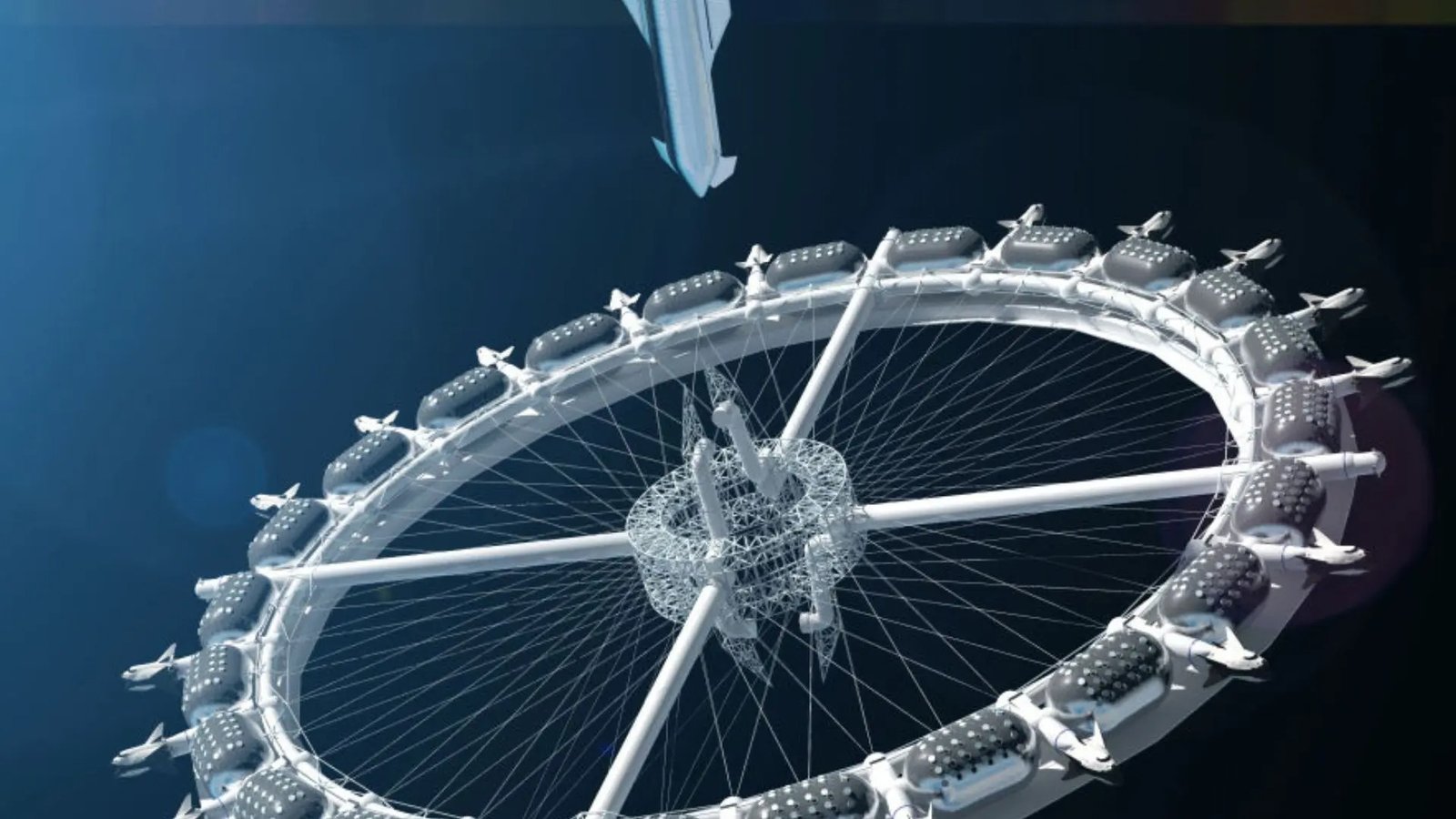
The patent describes a massive, modular rotating structure that looks less like a traditional tube and more like a high-speed fan. It illustrates a “notional space station” built around a central spine that balances stationary and spinning parts, using airtight, flexible joints to link the habitats to the rotating hub.
Reportedly, habitable modules are attached radially, extending outward like spokes on a wheel. To achieve 0.5g, the station’s living quarters would extend 131 feet (40 meters) from the center, spinning at five revolutions per minute to pin astronauts to the floor with centrifugal force.
The rotating design uses centrifugal force to simulate gravity. As the station spins, astronauts inside the habitable modules would experience an outward force pressing them against the floor, similar to how riders are pushed against the walls of a spinning carnival ride. At five revolutions per minute with a 40-meter radius, this creates a force equivalent to half of Earth’s gravity.
Engineering Hurdles Remain
Building it won’t be easy. The station is so large that it would require a fleet of rocket launches and complex assembly in orbit. Safety is also a major concern. The patent notes a significant docking dilemma.
Russia isn’t alone in this spinning dream. The American firm Vast is also racing to build commercial artificial gravity stations, and NASA has toyed with similar “Nautilus-X” concepts for decades.
While the company hasn’t committed a single ruble or a set date to this specific project, the patent serves as a high-stakes signal of intent to build.
Timing and the End of ISS
It surfaces just as the ISS enters its final act, with NASA preparing to steer the 450-ton lab into a fiery, controlled atmospheric reentry by 2030. For Russia, which plans to depart the ISS by 2028, this design represents a move away from aging international cooperation and toward a solo, high-tech future in deep space.
The country intends to detach its newest components — such as the Nauka multipurpose lab and the Prichal node — just before the ISS is deorbited in 2030. This move will prevent Russia from burning up its tech investment in the ISS.
The Global Race for Artificial Gravity
The patent represents more than just a technical blueprint—it’s a declaration of Russia’s ambitions in the next era of space exploration. As nations and private companies alike recognize that long-duration space missions require solutions to the zero-gravity problem, artificial gravity stations have moved from science fiction to serious engineering proposals.
The race to build the first functional rotating space station could define the future of deep-space exploration, determining which nations or companies lead humanity’s expansion beyond Earth orbit.
While the patent is now secured, actual construction remains years—possibly decades—away. Russia will need to secure funding, develop the necessary technologies for in-orbit assembly, and solve the complex engineering challenges of building and operating a continuously rotating structure in space. Meanwhile, the clock is ticking on the ISS, with decommissioning scheduled for 2030.












Be First to Comment