

Why Nothing We Desire Ever Satisfies Us1
A thousand years ago, the height of human ambition was owning a piece of land and a few head of livestock. This was the ideal of wealth in that era. The wealthiest person’s ultimate dream was to own a luxurious carriage pulled by a fine horse—a symbol that would secure their place among the elite and the fashionable.
Today, we call someone who owns a carriage and horse a “coachman,” and we consider them among the lower classes. Meanwhile, the truly elite have replaced land with apartment buildings, then replaced buildings with corporations, then replaced corporations with nothing more than a pocket-sized book of bonds or checks—pure capital that multiplies itself through investment in any venture.
The livestock stable has given way to a garage of Mercedes vehicles. Then the garage itself became obsolete, abandoned by the wealthy to the common folk and lower classes. Now the elite own private jets, yacht marinas, or cruise ships.
Tomorrow, aircraft will become the property of the poor, and a new class of wealthy elite will emerge—those who own rockets, spacecraft, and satellites. A weekend trip will mean dinner on Mars.
The Endless Cycle of Desire
Time has turned, and people have moved from one state to another with astonishing speed. Yesterday’s dreams are now available to everyone. Pepper and cardamom, once carried by ships from India around the Cape of Good Hope in perilous voyages fraught with danger, used to be weighed against gold and stored in safes alongside jewels. They appeared only on the tables of millionaires. The same was true of Indian silk handkerchiefs that we read about in the homes of lords in the novels of Zola and Balzac. All of this has descended to become accessible to ordinary people.
Pepper and cardamom are now sold in corner spice shops for the poor. Silk has been driven from the market by nylon, dacron, and terylene, dropping to half a pound per handkerchief—now an affordable accessory for servants and shop workers. Any person with a modest income can now obtain many of the luxuries that our grandparents could only dream of, their mouths watering at the thought.
Yet misery still exists. Unhappiness remains the rule. Complaints continue at every level of society. This is evidenced by newspaper columns, songs, books, radio broadcasts, the sullen and gloomy faces of people in the streets, their constant bickering, and their perpetual dissatisfaction with everything.
The Paradox of Satisfaction
Nothing that humans imagined would bring them happiness has actually made them happy. No sooner does someone possess what they once dreamed of than they grow tired of it and desire something else. People are always looking at what others have, completely oblivious to what they themselves possess. A man forgets his own wife and desires his neighbor’s wife, even though his own wife is sweeter and more beautiful. But it is the insatiable desire, whose hunger is perpetually renewed, whose appetite opens to every forbidden and unknown thing.
This is why Buddha built his religion on killing desire and liberating oneself from it, considering it the cause of suffering. In his view, there is no escape from misery except through escape from desire—killing it and reaching a state of inner tranquility that renounces everything and abstains from all desires.
The Divine Revelation
God reveals the truth to us more profoundly in the Qur’an, explaining that He created this worldly life with a specific nature and characteristic—it is “enjoyment” or “temporary pleasure.” The Qur’an states: “The life of this world is nothing but the enjoyment of delusion.” (Qur’an 3:185) and “Know that the life of this world is but amusement and diversion and adornment and boasting to one another and competition in increase of wealth and children—like the example of a rain whose [resulting] plant growth pleases the tillers; then it dries and you see it turned yellow; then it becomes [scattered] debris. And in the Hereafter is severe punishment and forgiveness from Allah and approval. And what is the worldly life except the enjoyment of delusion.” (Qur’an 57:20).
“Enjoyment” here refers to consumed pleasure that expires. Among the characteristics of worldly life, as intended by its Creator, is that all its pleasures are consumable—they expire and die the moment they are born. Within every pleasure lies the seed of its own destruction. Boredom, frustration, and habituation inevitably kill it.
A World of Testing
This is the nature that God intended for worldly life, because He intended it as a temporary abode, not a permanent dwelling. Therefore, He made every pleasure temporary and unstable. He did not intend these pleasures to be genuine pleasures, but rather designed them as mere tests of the soul’s true character—provocations that examine courage, nobility, chastity, the truthfulness of the truthful, and the sincerity of the sincere.
Whoever understands this will find complete rest and cease this hysteria that drags them from one desire to throw them into another, leads them from one craving to cast them into the furnace of another craving, and pulls them from one madness to hurl them into another madness.
They will find peace and grant peace, attempting to discipline themselves, purify their spirit, cleanse their heart, and work for the afterlife that God promised to all His prophets—a world where pleasure will be real and pain will be real.
The Historical Perspective
Such a person will not regret the pleasures of this world they may miss, because they have learned completely through experience and practice that these are deceptive pleasures that slip through the fingers like a mirage. They have read history and learned that Qarun’s (Korah’s) wealth, by current calculations, amounts to no more than several hundred pounds in copper currency—this is how all his treasures are estimated in sterling. How many people today possess hundreds of pounds yet complain of poverty and curse the day they were born, even though by historical standards they are wealthier than Qarun?
It is the eternal deception. You dream of possessing the land, but the land possesses you and dedicates you to its service. You imagine that money will free you from need, but money opens doors to greater demands and thus throws you into greater need. Whenever you acquire one million, you need three million to guard and secure that one million. The vicious circle spins endlessly.
This is the nature of our deceptive world in which we are tested. We all know this, yet we never learn.
- Article: “The Train of Pleasure”
From the book: “The Devil Rules.”
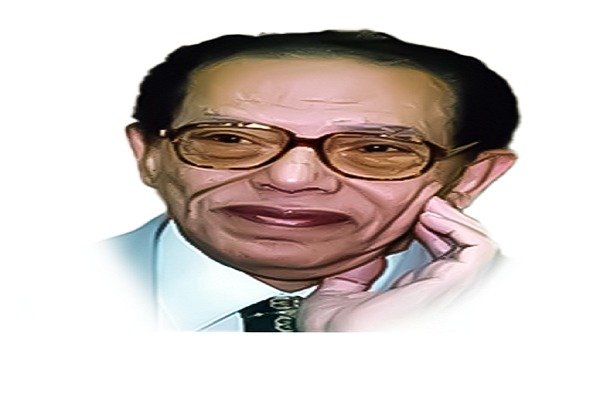
By Dr. Mustafa Mahmoud (May God have mercy on him) ↩︎





Be First to Comment