
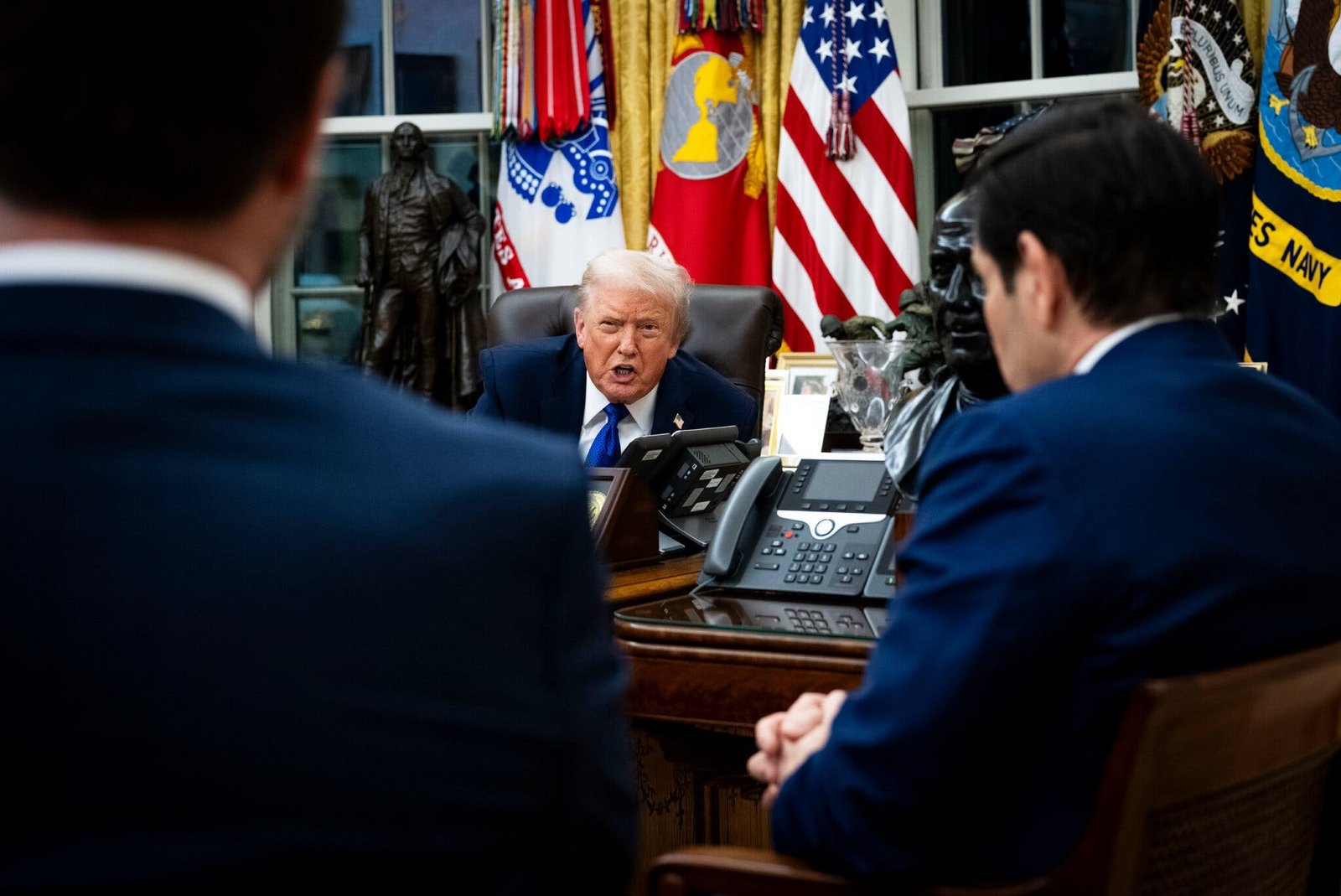
President Trump said that “only time will tell” how long the U.S. will oversee Venezuela. A call he held with Colombia’s president appeared to ease tensions.
Trump Says U.S. Will Run Venezuela for Years, Takes Control of Oil Sales
President announces indefinite American oversight following capture of Nicolás Maduro, as tensions with Colombia ease after hour-long call with President Petro
President Trump said Wednesday that the United States would run Venezuela and control its oil sales for years following last week’s military operation that captured President Nicolás Maduro, while appearing to ease tensions with Colombia after an hour-long phone call with President Gustavo Petro.
In a nearly two-hour interview with The New York Times, Mr. Trump said the interim Venezuelan government—composed of former Maduro loyalists—was “giving us everything that we feel is necessary,” and that America would rebuild the country “in a very profitable way.”
“We’re going to be using oil, and we’re going to be taking oil,” Mr. Trump said. “We’re getting oil prices down, and we’re going to be giving money to Venezuela, which they desperately need.”
When asked how long U.S. oversight would last, Mr. Trump said “much longer” than a few months or a year, though he declined to provide a precise timeframe. Hours earlier, Mr. Rubio told Congress the arrangement would be indefinite.
Colombia Crisis Defused
The interview was interrupted when Mr. Trump took a call from President Petro of Colombia, who had feared U.S. military action after Mr. Trump on Sunday called him a “sick man” who makes cocaine and said military operations against Colombia “sounds good.”
Mr. Petro had responded frantically, calling on Colombians to take to the streets and giving a rare interview to The Times earlier Wednesday in which he said, “We are in danger. Because the threat is real. It was made by Trump.”
The Colombian president had called for a massive demonstration in Bogotá when Mr. Trump reached out. After the hour-long call, Mr. Trump posted on social media that it had been a “Great Honor” to speak with Mr. Petro, praising his “call and tone” and announcing that a White House visit was being arranged.
Relations between the two leaders have been openly hostile since Mr. Trump took office about a year ago. In February, Mr. Petro briefly blocked military flights carrying migrants, backing down only after Mr. Trump threatened crushing tariffs. The State Department revoked Mr. Petro’s visa last fall after he called on American soldiers to disobey Mr. Trump during a pro-Palestinian rally.
Mr. Petro told The Times he believed Trump’s threats stemmed from a lack of direct communication and that right-wing figures in both countries had fostered an “erroneous” image of him ahead of Colombian elections in May. He forcefully denied accusations of being linked to drug trafficking or Mr. Maduro.
Venezuela Operation Details
During the interview, Mr. Trump reveled in the success of the operation that broke into Mr. Maduro’s heavily fortified compound in Caracas, resulting in his capture along with his wife, Cilia Flores. The operation appears to have killed approximately 70 Venezuelans, Cubans, and others.
Mr. Trump said he had tracked the training for the operation, including the creation of a life-size replica of the compound at a military facility in Kentucky. He expressed worry during the operation that it could become a “Jimmy Carter disaster,” referring to the failed 1980 Iran hostage rescue attempt.
The president declined to say what might prompt him to put American forces on the ground in Venezuela, or whether he would insert troops if the government blocked access to oil or refused to expel Russian and Chinese personnel.
He also sidestepped questions about why he didn’t install Edmundo González, whom the U.S. declared winner of Venezuela’s 2024 presidential election, or back opposition leader María Corina Machado, who recently won the Nobel Peace Prize.
Timeline of Recent Events
Congressional Concerns
The Senate is expected to vote Thursday on a war powers resolution to limit Mr. Trump’s ability to take further military action without explicit congressional authorization. Democrats have raised concerns about the administration avoiding congressional approval for the Maduro capture mission.
Senator Chuck Schumer, the minority leader, said he asked Trump administration officials for assurances the U.S. wasn’t planning operations in other countries, including Colombia. “I was very, very disappointed in their answer,” he said.
When White House Press Secretary Karoline Leavitt was asked whether Mr. Petro should expect a visit from Delta Force, she responded: “That would be a very unwise question for me to answer.”
Life in Venezuela
A new Gallup poll released Thursday painted a dire picture of daily life in Venezuela before Maduro’s ouster. Three in five Venezuelans struggled to afford food last year—among the highest rates in Latin America—with just under a fifth reporting full-time employment.
Venezuela has long been plagued by hyperinflation, food shortages, and oil sector mismanagement. The economy shrank painfully between 2016 and 2019, when hyperinflation pushed basic goods out of reach for 80 percent of people. While the economy had been on track for modest recovery, the poll shows putting food on the table remains a major challenge.
Greenland Threats and Republican Pushback
Mr. Rubio said he would meet with Danish officials next week to discuss Greenland’s future as European leaders push back against Trump administration threats to take the semiautonomous Danish territory. The threats appear emboldened by the recent Venezuela operation.
In a rare display of Republican dissent, several GOP senators denounced considerations to acquire Greenland through military force. Senator Thom Tillis of North Carolina called the idea “insane,” while Senator Mitch McConnell stated that “threats and intimidation by U.S. officials over American ownership of Greenland are as unseemly as they are counterproductive.”
Senator Rand Paul of Kentucky said he heard “zero support” within the Republican caucus for military action in Greenland. “I’ve not heard anybody in the hallways, in the gym, anywhere,” he said.
What’s Next
The extent of U.S. control over Venezuela remains unclear, as does the timeline for elections in a country with a democratic tradition dating to the late 1950s. Mr. Trump said he expected to travel to Venezuela “at some point” when “it’ll be safe.”
American oil executives have expressed interest in Venezuelan fields but remain reluctant, worried the operation could falter when Trump leaves office or that Venezuela’s military and intelligence services—cut out of the profits—would undercut the effort.
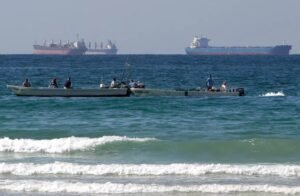
Meanwhile, the U.S. seized two “ghost fleet” oil tankers Wednesday, including one carrying up to two million barrels of Venezuelan crude, as part of efforts to enforce sanctions and control oil flows from the country.






Be First to Comment