
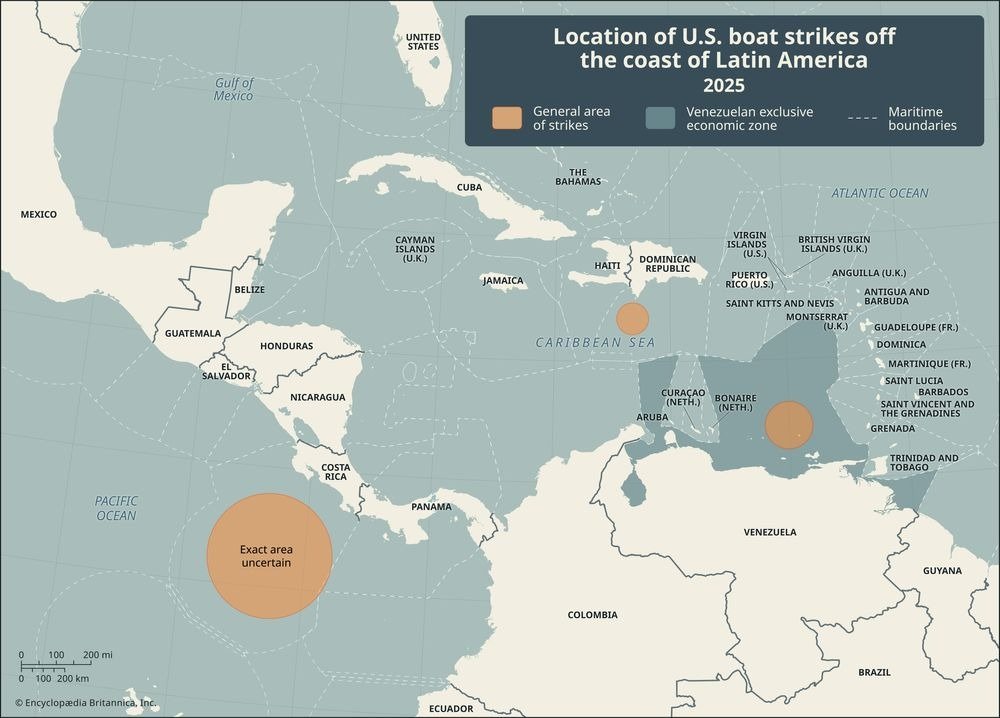
The United States has hit Venezuela with a “large-scale strike” and said its president had been captured and flown out of the country. The extraordinary nighttime operation announced by President Donald Trump comes after months of intense pressure on Nicolás Maduro’s government.
US Strikes Venezuela, Captures President Maduro in Dramatic Military Operation
Operation Absolute Resolve involves 150 aircraft targeting Caracas; Maduro and wife flown to US to face narcoterrorism charges
The United States launched large-scale military strikes against Venezuela in the early hours of Saturday morning, subsequently capturing President Nicolás Maduro and his wife Cilia Flores in what represents a dramatic escalation of tensions between Washington and Caracas. President Donald Trump announced the operation’s success at approximately 4:21 a.m. ET, stating the Venezuelan leader had been “captured and flown out of the country.”
U.S. officials confirmed to multiple news outlets that Trump had ordered the strikes, targeting military facilities across northern Venezuela including the capital Caracas. The administration did not notify Congress prior to launching the operation, according to multiple sources.
Low-flying aircraft were observed over several areas including La Guaira, Higuerote, Meseta de Mamo, Baruta, El Hatillo, Charallave, and Carmen de Uria. Early reports suggest explosions occurred at Generalissimo Francisco de Miranda Air Base (La Carlota) and Fort Tiuna, two major military installations in the Caracas area. Fires were visible at Fuerte Tiuna, Venezuela’s largest military complex.
Trump Announces Maduro’s Capture
In a press conference on January 3, Trump stated that Maduro and his wife had been captured during the operation and transported out of Venezuela. “We are going to run the country until such time as we can do a safe, proper and judicious transition,” the president declared.
Attorney General Pam Bondi announced that Maduro and his wife had been indicted in the Southern District of New York on charges including narcoterrorism conspiracy and cocaine importation conspiracy. “They will soon face the full wrath of American justice on American soil,” Bondi stated, referring to the couple as “alleged international narco traffickers.”
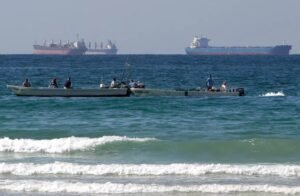
The strikes come after months of increasingly aggressive U.S. actions against Venezuela. In August 2025, the United States began a military buildup in the southern Caribbean. In November, the USS Gerald R. Ford aircraft carrier was deployed to the region. In December, the U.S. began intercepting and seizing oil tankers, effectively imposing a naval quarantine on Venezuela. The CIA also launched covert operations in Venezuela in late December.
Trump had previously announced publicly that the U.S. military would conduct strikes inside Venezuela. According to Chairman of the Joint Chiefs of Staff Dan Caine, the military spent months planning and rehearsing the operation, with troops positioning themselves and completing preparations in late December. Trump gave final approval for the attack around 11 p.m. on January 2.
International Reaction
The strikes have drawn swift international condemnation and raised serious questions about the operation’s legality under international law.
Russia’s Foreign Ministry issued a strongly worded statement calling the operation “an act of armed aggression against Venezuela” that is “deeply concerning and condemnable.” Russia demanded Maduro’s immediate release and called for an emergency meeting of the UN Security Council. “The pretexts used to justify such actions are unfounded,” the statement read.
Iran condemned the attack as a “flagrant violation of the national sovereignty and territorial integrity of Venezuela,” according to AFP.
Colombian President Gustavo Petro wrote on social media, “Alert to the whole world, they have attacked Venezuela bombing with missiles,” and called for a UN meeting.
British Prime Minister Keir Starmer stated that the UK was not involved in the strikes and that he wanted to speak with Trump to “establish the facts first.” “I can be absolutely clear that we were not involved, and I always say and believe we should all uphold international law,” Starmer said.
Trinidad and Tobago Prime Minister Kamla Persad-Bissessar clarified that her nation is “NOT a participant in any of these ongoing military operations,” despite earlier reports of an agreement allowing U.S. access to its airports.
Domestic Political Response
The operation has generated significant controversy in Washington, with lawmakers from both parties questioning its constitutional and legal basis.
Democratic Senator Ruben Gallego of Arizona, a Marine Corps veteran who served in Iraq, called the action illegal, writing on X: “This war is illegal. The Second unjustified war in my life time.”
Democratic Senator Brian Schatz, a member of the Senate Foreign Relations Committee, warned against military involvement in Venezuela, stating that the United States has “no vital national interests in Venezuela to justify war.”
Republican Senator Mike Lee initially expressed skepticism, saying he looked “forward to learning what, if anything, might constitutionally justify” the strikes in the absence of a declaration of war or authorization for the use of military force. However, after a call with Secretary of State Marco Rubio, Lee stated, “This action likely falls under the president’s inherent authority under Article II of the Constitution to protect US personnel from an actual or imminent attack.”
Lee also reported that Rubio “anticipates no further action in Venezuela now that Maduro is in US custody.”
Venezuelan Government Response
Before Maduro’s capture was confirmed, the Venezuelan government declared a state of emergency and issued a statement rejecting and denouncing what it called “an extremely serious military aggression perpetrated by the current government of the United States of America against Venezuelan territory and people.”
Defense Minister Vladimir Padrino López stated that the attacks were illegal under international law.
Vice President Delcy Rodríguez later confirmed that both Maduro and his wife were missing and demanded “proof of life” from U.S. authorities.
Timeline of Events
The Justification
The Trump administration has justified its actions against Venezuela on the grounds of combating drug trafficking. Washington has accused Maduro of being linked to drug cartels, though without presenting public evidence. The administration has stated its push aims to curb drug smuggling into the United States.
Maduro had consistently denied any involvement in drug trafficking, accusing Trump of seeking to depose him and gain access to Venezuela’s vast oil reserves—the largest proven reserves in the world.
Ironically, just days before the strikes, Maduro had indicated openness to negotiating with the U.S. on drug trafficking issues. In an interview on Thursday, he told Spanish journalist Ignacio Ramonet: “The US government knows, because we’ve told many of their spokespeople, that if they want to seriously discuss an agreement to combat drug trafficking, we’re ready. Wherever they want and whenever they want.”
Legal and Constitutional Questions
The operation raises profound questions about presidential war powers, international law, and the United States’ role in regime change operations.
The strikes were conducted without congressional authorization or a declaration of war. While presidents have constitutional authority as commander-in-chief to respond to imminent threats to U.S. personnel or interests, critics argue that this operation appears to be a planned offensive action rather than a defensive response.
Under international law, the use of military force against another sovereign nation generally requires either UN Security Council authorization or a claim of self-defense under Article 51 of the UN Charter. The capture and removal of a foreign head of state raises additional questions under international law regarding sovereignty and due process.
The operation occurred exactly 36 years to the day after the U.S. invasion of Panama on January 3, 1990, which similarly resulted in the capture of that nation’s leader, Manuel Noriega, who was also brought to the United States to face drug trafficking charges. Noriega was later convicted and served 17 years in U.S. federal prison.
What Happens Next
Trump stated that the U.S. government would be “very much” involved in deciding Venezuela’s immediate future. “We’re making that decision now. We can’t take a chance on letting somebody else run it and just take over where he left off,” he told Fox News.
U.S. Deputy Secretary of State Christopher Landau characterized the situation as a “new dawn” for Venezuela, stating: “The tyrant is gone. He will now—finally—face justice for his crimes.”
The immediate question concerns who will govern Venezuela. The country’s opposition, led by figures like María Corina Machado, claims legitimacy based on the disputed 2024 presidential election, which international observers widely believed was fraudulent in Maduro’s favor.
The situation remains fluid, with significant uncertainty about Venezuela’s political future, the international community’s response, and the potential for further military action or diplomatic consequences.






Be First to Comment