
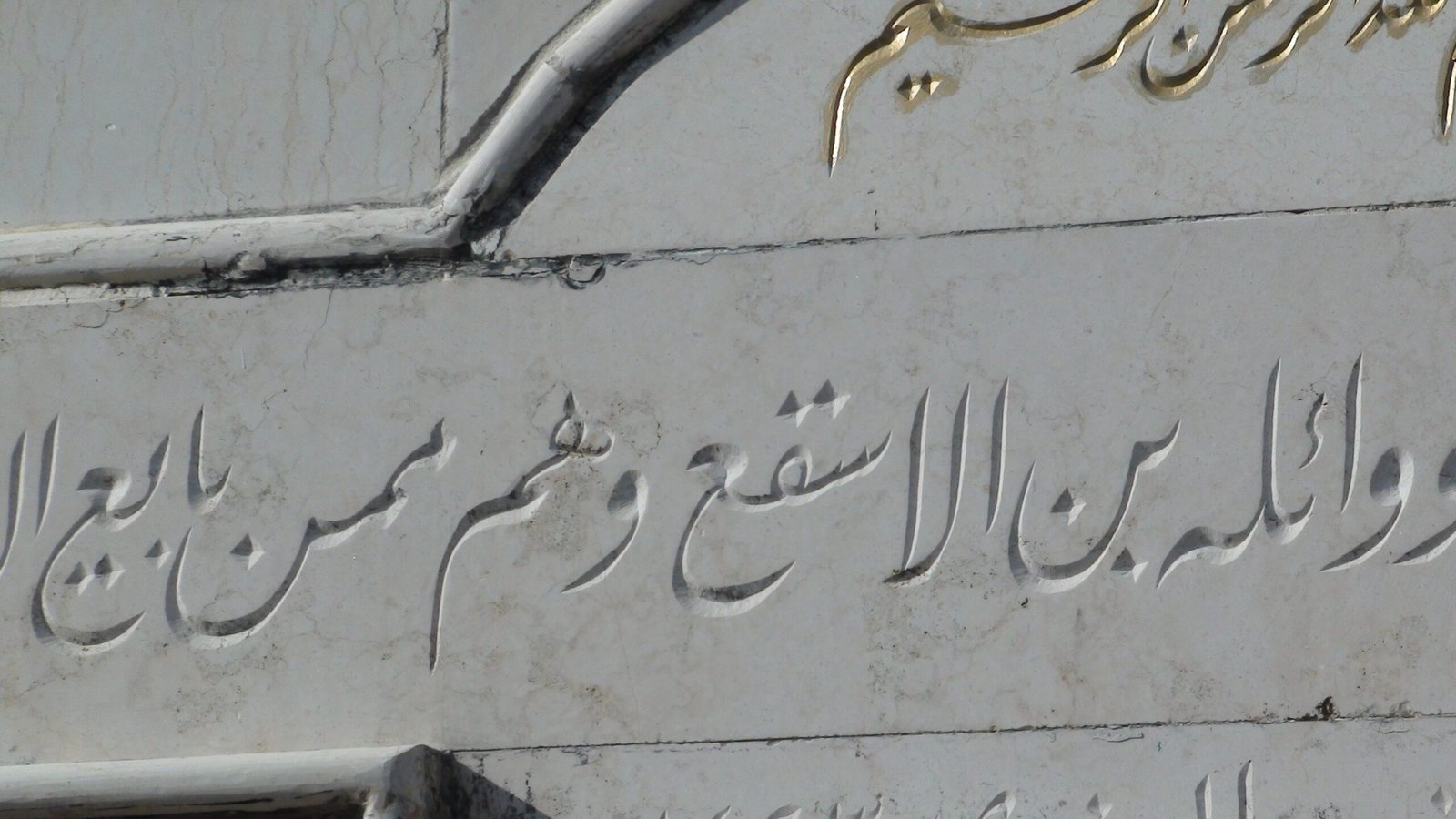
Wathila bin al-Asqa’ al-Laythi
A Noble Companion of the Prophet Muhammad (peace be upon him)
Devoted Servant, Warrior of Faith, and Keeper of Hadith
Introduction
Wathila bin al-Asqa’ al-Laythi (may Allah be pleased with him) was a noble companion of the Prophet Muhammad (peace be upon him). His full lineage traces back to the tribe of Kinana: Wathila bin al-Asqa’ bin Abd al-Uzza bin Abd Yalil bin Nashib bin Ghiyara bin Sa’d bin Layth bin Bakr bin Abd Manat bin Kinana. He was known by several honorific titles (kunyas), including Abu Shaddad and Abu al-Asqa’.
Despite embracing Islam late in the Prophet’s ministry, Wathila became one of the most devoted and active companions, witnessing crucial battles, preserving prophetic traditions, and earning recognition for his courage and scholarship.
Conversion and the Pledge of Allegiance
Wathila embraced Islam in the ninth year of the Hijra, during the “Year of Delegations,” shortly before the Battle of Tabuk. Upon his arrival in Medina, he prayed the dawn prayer (Fajr) behind the Messenger of Allah (peace be upon him). After the prayer, the Prophet (peace be upon him) turned to him and asked, “Who are you, and what brought you here?” Wathila replied, “I have come to pledge my allegiance to you.”
The Prophet’s Words:
“You pledge to hear and obey, in what you love and what you hate.”
Wathila responded without hesitation: “Yes, I pledge.”
Immediately after pledging allegiance, Wathila expressed his desire to join the upcoming expedition to Tabuk, requesting that the Prophet (peace be upon him) equip him for the journey. This demonstrated his immediate commitment to the cause of Islam and his willingness to sacrifice for the faith.
The Battle of Tabuk: The Army of Hardship
As Wathila was among the Ahl al-Suffa—the impoverished companions who resided in the Prophet’s Mosque—he lacked the means to afford a mount for the long journey to Tabuk. The expedition was famously known as the “Army of Hardship” (Jaish al-Usra) due to the extreme heat, difficult terrain, and scarcity of resources. In his eagerness to participate, Wathila called out to his fellow companions, “Who will carry me on his mount in exchange for my share of the spoils?”
The noble Ansari companion, Ka’b bin ‘Ujra, accepted the offer and shared his mount with Wathila. After the campaign concluded and the spoils were distributed, Wathila brought his share to Ka’b to fulfill his promise. However, Ka’b, demonstrating the true spirit of Islamic brotherhood, refused the payment, saying, “Keep your share, for I only carried you for the sake of Allah, the Almighty.”
Quranic Recognition:
“Allah has already forgiven the Prophet and the Muhajireen and the Ansar who followed him in the hour of difficulty…”
(Surah At-Tawbah, 9:117)
This expedition was the last one led by the Prophet (peace be upon him), and Allah revealed verses in the Quran honoring those who participated, including Wathila, who had only recently embraced Islam yet demonstrated unwavering commitment.
Military Valor and the Conquest of Syria
Following the Battle of Tabuk, Wathila participated in the expedition to Dumat al-Jandal led by the renowned commander Khalid bin al-Walid. During the era of the Rightly Guided Caliphs, he was a prominent knight in the conquest of the Levant (Sham). He witnessed the fall of Damascus, Homs, and several other key cities, earning recognition for his courage and tactical acumen.
Historical accounts highlight his extraordinary bravery during the siege of Damascus. It is recorded that he positioned himself in the shadows near the Jabiya Gate (Bab al-Jabiya) to monitor enemy movements. When a group of Roman cavalry emerged, Wathila launched a daring solo attack, causing such confusion among the enemy that they fled back into the city, believing they were surrounded by a larger force. In the ensuing skirmish, he captured a high-ranking Roman official and brought him to the commander, Khalid bin al-Walid, contributing significantly to the eventual conquest of the city.
A Companion of Renown:
Wathila was known among the companions for his exceptional horsemanship, strategic thinking, and unwavering faith. His participation in the early Islamic conquests established him as one of the most respected warriors of his generation, yet he remained humble and devoted to the teachings of the Prophet (peace be upon him).
Legacy of Hadith and Scholarship
Despite his relatively late conversion, Wathila remained in the close company of the Prophet (peace be upon him) for three years, during which he preserved and transmitted many prophetic traditions. He is credited with narrating approximately 56 to 130 hadiths, making him a significant source of prophetic knowledge for subsequent generations.
One of his most famous narrations concerns the excellence of the Prophet’s lineage:
A Hadith on Divine Selection:
“Indeed, Allah chose Kinana from the children of Ishmael, and He chose Quraysh from Kinana, and He chose the tribe of Hashim from Quraysh, and He chose me from the tribe of Hashim.”
(Sahih Muslim)
Another deeply personal moment for Wathila occurred during the event of the “Cloak” (Hadith al-Kisa’). When the Prophet (peace be upon him) gathered Ali, Fatima, Hasan, and Husayn under his cloak and prayed for them, Wathila asked, “Am I also from your family, O Messenger of Allah?” The Prophet (peace be upon him) replied, “And you are from my family.” Wathila later remarked that this inclusion was the most hopeful promise he ever received.
Many prominent scholars and transmitters of hadith learned from Wathila, including Abu Idris al-Khawlani, Makhul, and others. Through these students, his knowledge and the prophetic traditions he preserved reached countless Muslims across generations, cementing his role as a guardian of Islamic knowledge.
Final Years and Legacy
Wathila bin al-Asqa’ lived a long and blessed life, eventually settling in the Levant. He passed away in either 83 AH or 85 AH (approximately 702-704 CE), at the age of nearly 100 years. Some accounts state he died in Jerusalem (Bayt al-Maqdis), while others mention Damascus. He is remembered as one of the last companions of the Prophet (peace be upon him) to pass away in the region of Syria, leaving behind a legacy of devotion, courage, and scholarship that was carried forward by a generation of successors (Tabi’un).
A Life of Service:
From a poor companion living in the Prophet’s Mosque to a renowned warrior and scholar, Wathila’s life exemplifies the transformative power of faith. His unwavering commitment to Islam, demonstrated through both sword and scholarship, made him an invaluable asset to the early Muslim community. His hadiths continue to guide Muslims, and his example of courage and devotion remains an inspiration to believers.
Our final prayer is: All praise is due to Allah, the Lord of all worlds, and may the peace and blessings of Allah be upon our master Muhammad and upon his family and all his companions.







Be First to Comment