
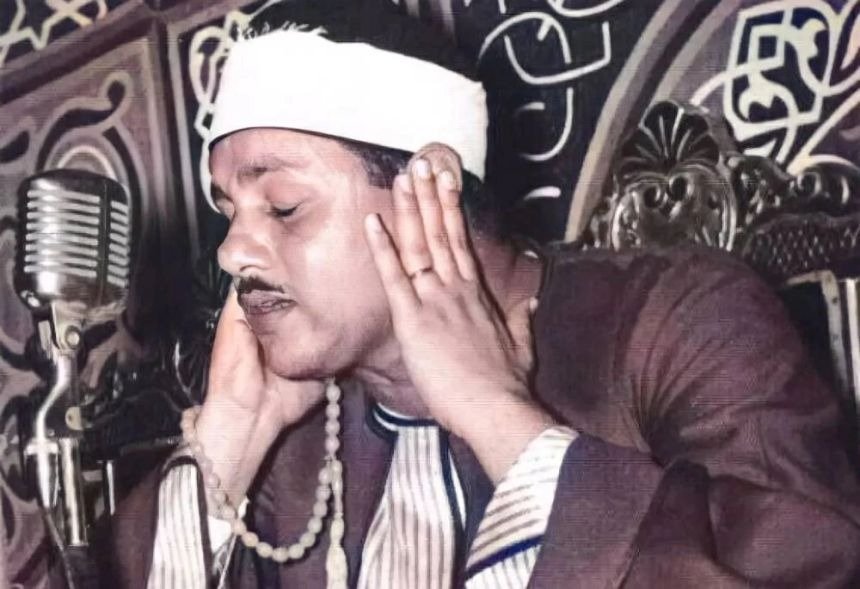
Born in Egypt, Sheikh Mahmoud Ali Al-Bannah dedicated his life to the service of the Quran, perfecting the art of recitation through years of study, practice, and spiritual devotion. His recitation is characterized by a unique blend of technical excellence and emotional depth, demonstrating mastery of the complex rules of Tajweed while maintaining the soul-stirring quality that makes the Quran’s message penetrate deep into the listener’s heart.
Sheikh Mahmoud Ali Al-Bannah
Among the Five Great Quranic Reciters

Sheikh Mahmoud Ali Al-Bannah (رحمه الله)
In the rich tradition of Quranic recitation, certain voices emerge that transcend mere technical mastery to touch the hearts of millions across generations. Sheikh Mahmoud Ali Al-Bannah stands as one of the most revered and influential Quran reciters in Islamic history, his melodious voice carrying the words of Allah with unparalleled beauty and precision.
Born in Egypt, Sheikh Mahmoud Ali Al-Bannah dedicated his life to the service of the Quran, perfecting the art of recitation through years of study, practice, and spiritual devotion. His recitation is characterized by a unique blend of technical excellence and emotional depth, demonstrating mastery of the complex rules of Tajweed while maintaining the soul-stirring quality that makes the Quran’s message penetrate deep into the listener’s heart.
The Five Great Reciters
Throughout the modern era of recorded Quranic recitation, five names stand above all others as the most celebrated and influential masters of this sacred art. These five reciters have shaped how Muslims around the world experience the Quran through audio recordings, each bringing their unique style while maintaining the highest standards of accuracy and beauty.
The Five Great Masters of Quranic Recitation
These five reciters represent the pinnacle of Quranic recitation in the modern era. Each brought distinctive qualities to their recitation while maintaining absolute fidelity to the rules of Tajweed and the authentic traditions of Quranic pronunciation transmitted through generations from the Prophet Muhammad ﷺ.
These five masters are distinguished not only by their technical perfection but by their ability to convey the profound meanings of the Quran through their voices. They mastered the Maqamat (melodic modes) of Arabic music and applied them to Quranic recitation in ways that enhance understanding and emotional connection without compromising the integrity of the text or the rules of recitation.
Sheikh Mahmoud Ali Al-Bannah’s Distinctive Style
Sheikh Mahmoud Ali Al-Bannah’s recitation is characterized by several distinctive features that have made his recordings beloved by Muslims worldwide. His voice carries a warmth and clarity that makes even the most complex verses accessible to listeners, while his pacing allows for reflection on the meanings being conveyed.
His mastery of Tajweed is evident in every recording. The rules of pronunciation, elongation (Madd), pause and resumption (Waqf wa Ibtida), and the various qualities of letters are all executed with precision. Yet this technical excellence never feels mechanical; rather, it serves as the foundation for a deeply spiritual experience.
Sheikh Al-Bannah’s recitation demonstrates particular strength in his application of the melodic modes (Maqamat). He understood intuitively which mode best suited different passages of the Quran—using somber tones for verses of warning and judgment, uplifting melodies for verses of hope and Paradise, and contemplative modes for verses calling to reflection and wisdom.
— Prophet Muhammad ﷺ
The Impact of His Recitation
For generations of Muslims, Sheikh Mahmoud Ali Al-Bannah’s recitations have been companions in worship, study, and daily life. His recordings have been used to teach proper pronunciation and Tajweed, to provide comfort in times of difficulty, and to inspire deeper connection with the words of Allah.
Many Muslims have memorized the Quran while listening to his recitations, finding that his clear articulation and measured pace make ideal models for learning. Teachers of Quran around the world have used his recordings as examples of proper recitation, pointing students to his mastery as a standard to aspire toward.
Beyond the educational value, Sheikh Al-Bannah’s recitations have touched hearts and strengthened faith. There are countless stories of people who found guidance, comfort, or renewed commitment to Islam through listening to his voice carrying the words of the Quran. His recitation has the rare quality of making listeners feel as though they are hearing the Quran as it was meant to be heard—with all its beauty, power, and transformative potential.
A Recitation by Sheikh Mahmoud Ali Al-Bannah
To truly appreciate the artistry and spiritual impact of Sheikh Mahmoud Ali Al-Bannah’s recitation, one must experience it directly. Below is a recording of the Sheikh reciting from the Holy Quran, demonstrating the qualities that have made him one of the five most celebrated reciters in Islamic history.
Experience the beauty and precision of one of the five great masters of Quranic recitation
As you listen to Sheikh Al-Bannah’s recitation, pay attention to the clarity of his articulation, the precision with which he applies the rules of Tajweed, and the emotional resonance he brings to the verses. Notice how his voice modulates to reflect the meanings of the passage, how his pacing allows for contemplation, and how the melodic elements enhance rather than distract from the message.
This is not merely beautiful sound—it is the Quran brought to life through the voice of a master who dedicated his life to its service.
Learning from the Masters
The recordings left by Sheikh Mahmoud Ali Al-Bannah and his four peers among the great reciters represent an invaluable resource for anyone seeking to improve their own recitation or deepen their relationship with the Quran. These are not just performances to be passively enjoyed; they are lessons to be studied and models to be emulated.
For those working to memorize the Quran or improve their recitation, Sheikh Al-Bannah’s recordings offer clear models of correct pronunciation, proper application of Tajweed rules, and appropriate pacing. His articulation is so precise that even non-Arabic speakers can learn proper pronunciation by careful imitation. His pacing is measured enough that students can follow along while reading from the Mushaf (written Quran).
Beyond technical learning, his recitation demonstrates how the rules of Tajweed serve a higher purpose: to convey the meanings and emotions of the Quran accurately and powerfully. This integration of form and content is what students should ultimately aspire to achieve.
Students of the Quran are encouraged to listen repeatedly to the recordings of these great masters, comparing their recitations, noting their different strengths, and incorporating what they learn into their own practice. Each of the five great reciters has something unique to teach, and Sheikh Al-Bannah’s contributions to this tradition are immeasurable.
The Importance of Beautiful Recitation
The emphasis in Islam on beautiful, correct recitation of the Quran is not merely aesthetic. The Prophet Muhammad ﷺ specifically encouraged beautifying the Quran with one’s voice, saying in an authentic hadith: “Beautify the Quran with your voices, for a beautiful voice increases the beauty of the Quran.”
“And recite the Quran with measured recitation.”
— Surah Al-Muzzammil (73:4)
This verse commands not just reading the Quran, but reciting it in a measured, careful way that reflects its majesty and importance. The great reciters like Sheikh Mahmoud Ali Al-Bannah exemplify this command, showing us what it means to give the Quran its due through voice and technique.
Beautiful recitation serves multiple purposes: it attracts people to the Quran, it aids in memorization, it enhances understanding by highlighting the relationships between words and meanings, and it creates an emotional and spiritual atmosphere conducive to reflection and transformation.
A Legacy that Endures
Sheikh Mahmoud Ali Al-Bannah, along with his four peers among the great reciters, has left a legacy that continues to benefit the Muslim community decades after his passing. In an age of recorded media, his voice remains alive, teaching new generations and reminding older ones of the beauty and power of the Quran.
His recordings are played in mosques during Ramadan, studied by students of Tajweed, used as therapy in hospitals, and cherished by individual Muslims seeking spiritual nourishment. They have been digitized and distributed worldwide, making his recitation accessible to anyone with an internet connection.
This accessibility represents a tremendous blessing. Previous generations could only hear such recitation if they lived near a master or visited during special occasions. Now, the recitation of Sheikh Al-Bannah and the other great masters can be heard anywhere, anytime, by anyone—a democratization of access to the highest forms of Quranic recitation.
— Prophet Muhammad ﷺ (Sahih al-Bukhari & Muslim)
Conclusion: Honoring the Masters Through Learning
The best way to honor Sheikh Mahmoud Ali Al-Bannah and the other great reciters is not merely to listen with appreciation, but to learn from their example and work to improve our own recitation of the Quran. Their mastery should inspire us to dedicate ourselves to learning the proper rules of Tajweed, to practicing until our pronunciation is correct, and to reciting with the intention of both preserving the accuracy of the text and conveying its meanings effectively.
Every Muslim has a relationship with the Quran, and that relationship is deepened through recitation. Whether we aspire to master the art as the great reciters did, or simply to read correctly during our daily prayers, we all benefit from the examples these masters have left us.
Sheikh Mahmoud Ali Al-Bannah’s place among the five greatest reciters is secured not just by his technical excellence or melodious voice, but by the countless hearts he touched and the innumerable souls he helped draw closer to the words of Allah. His recitation continues to serve the Quran and its people, and in this, he achieved the highest purpose any Muslim can aspire to.
May Allah have mercy on Sheikh Mahmoud Ali Al-Bannah and all the scholars and reciters who have dedicated their lives to serving the Quran. May their examples inspire us to give this blessed book its proper place in our lives, to recite it correctly and beautifully, and to live according to its guidance.
“Indeed, those who recite the Book of Allah and establish prayer and spend from what We have provided them, secretly and publicly, hope for a transaction that will never perish.”
— Surah Fatir (35:29)







Be First to Comment