

In this article, The AsSiddique Post gives its readers a full coverage of the most important political events that took place in 2025
2025: The Most Consequential Political Year in Decades
From Trump’s inauguration to government shutdowns, Epstein files to international conflicts—a comprehensive look back at the year that reshaped American politics
It’s been a long year, jam-packed with an inauguration, hotly debated policies, ongoing conflicts, assassinations, consequential elections, a government shutdown and more. It’s impossible to list every story that happened in 2025, but this recap highlights the most significant and impactful events that shaped American politics and the world.
January: A New Administration Takes Power
The year began with the 119th Congress being sworn in on January 3, reestablishing Rep. Mike Johnson, R-La., as House speaker and making Sen. John Thune, R-S.D., the majority leader of the Senate. A week later, former President Jimmy Carter’s state funeral was held in Washington, D.C., marking the end of an era.
Trump’s Second Inauguration: Donald Trump was inaugurated as the 47th president of the United States. Due to cold temperatures, his ceremony was held indoors for the first time in 40 years. He became the second nonconsecutive two-term president in U.S. history.
Video: Donald Trump sworn in as 47th president of the United States
On his first day, Trump pardoned roughly 1,500 people charged in connection with the January 6 Capitol riot, signed an executive order renaming the Gulf of Mexico as the “Gulf of America,” established the Department of Government Efficiency (DOGE), withdrew from the World Health Organization, and signed other orders that cracked down on immigration and diversity, equity and inclusion policies.
On January 21, setting the tone for the artificial intelligence boom in 2025, OpenAI, Oracle, SoftBank and other major corporations announced The Stargate Project, a joint AI-infrastructure venture aiming to raise $500 billion in investments and create 100,000 new jobs by 2029.
Potomac River Disaster: A midair collision between a commercial airplane and an Army helicopter occurred over the Potomac River near Reagan Washington National Airport in Arlington, Virginia, killing all 67 passengers on both aircraft.
Other notable January events included: Pete Hegseth confirmed as Secretary of Defense in a 51-50 vote with Vice President JD Vance casting the deciding vote; former Sen. Bob Menendez sentenced to 11 years in prison on corruption charges; and Israel and Hamas agreeing to their first ceasefire of the year on January 15.
February: DOGE Takes Shape, Tariffs Begin
Trump’s tariff agenda took shape in February, with announcements of a 25% tax on goods from Canada and Mexico on February 1 (walked back on February 3), a 25% tax on all aluminum and steel imports on February 10, and a 25% broad tax on European Union imports on February 26.
The Department of Government Efficiency picked up momentum, announcing the shutdown of the U.S. Agency for International Development on February 3. DOGE was behind layoffs of thousands of federal employees including at the National Nuclear Security Administration, National Science Foundation, Federal Aviation Administration, Internal Revenue Service, Pentagon, and Social Security Administration.
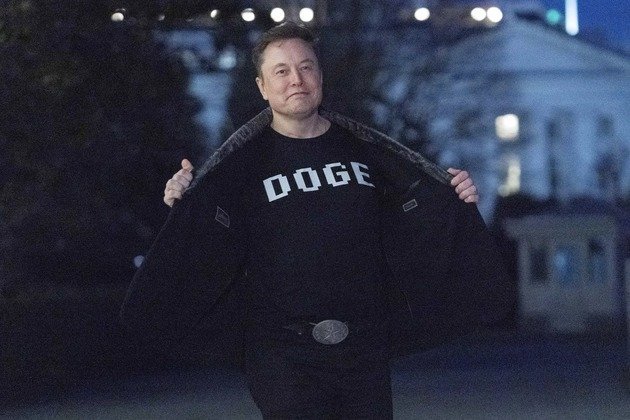
From meme to movement: DOGE’s impact on federal government restructuring
Three high-profile Cabinet members were confirmed: Attorney General Pam Bondi on February 4, Health and Human Services Secretary Robert F. Kennedy Jr. on February 13, and Commerce Secretary Howard Lutnick on February 18.
Trump’s Gaza Plan: Trump announced that the U.S. would eventually take control of the Gaza Strip, proclaiming that Palestinians would have to leave the area, the U.S. military would oversee the operation, and that reconstruction would turn the land into “The Riviera of the Middle East”—a controversial statement that drew international criticism.
Contentious Ukraine Meeting: Trump met with Ukrainian President Volodymyr Zelenskyy in the Oval Office. The televised meeting was contentious as Trump and Vance criticized Zelenskyy for not being appreciative enough of U.S. help in the Russia-Ukraine war.
Video: Trump cuts short talks with Zelenskyy
March: Immigration Crackdown and Atlantic Leak
March saw aggressive implementation of Trump’s immigration agenda. On March 15, the administration flew roughly 260 alleged immigrants to El Salvador to be held at the notorious Terrorism Confinement Center, defying a district judge’s restraining order. Officials claimed the men were members of Tren de Aragua and MS-13 gangs, but later reporting showed that was untrue for most passengers.
On March 9, Immigration and Customs Enforcement arrested Columbia University student Mahmoud Khalil, a Palestinian activist who protested against the war in Gaza. NASA astronauts Butch Wilmore and Suni Williams returned to Earth on March 18 after being stuck in space for nine months aboard the International Space Station.
The Atlantic Leak: Jeffrey Goldberg, editor in chief of The Atlantic, revealed he had accidentally been added to a Signal group chat with Cabinet members including Vance, Hegseth, Director of National Intelligence Tulsi Gabbard, and Secretary of State Marco Rubio. The group chat detailed classified information about airstrikes against the Houthis in Yemen before, during and after the attacks.
April: Liberation Day and Tariff Wars
April began with arguably the biggest economic story of the year: Trump’s Liberation Day announcement. On April 2, in a White House Rose Garden ceremony, Trump signed an executive order establishing new “reciprocal” tariff rates for over 180 countries. Most countries were hit with a baseline 10% rate, while China, Japan, Brazil and India received higher rates.
A week later, on April 9, Trump increased tariffs on China to 125% and paused new tariffs on every other country for 90 days, lowering them to 10% across the board.
Kilmar Abrego Garcia, a father from Maryland, emerged as the face of men wrongfully deported to El Salvador. On April 10, the Supreme Court ruled that the administration must “facilitate” his return to the U.S. Despite this, both Trump and El Salvador’s President Nayib Bukele refused to comply during their April 14 White House meeting.
Yemen Airstrike Tragedy: The Air Force launched airstrikes on a migrant detention center in Yemen, killing at least 68 African migrants. It was the largest civilian death toll from a U.S. military operation since 2017.
Other April events: Trump paused more than $2.2 billion in funding to Harvard University on April 15 (the school sued on April 21); former Rep. George Santos was sentenced to 87 months in federal prison on April 25; and the U.S. and Ukraine signed a minerals deal on April 30, guaranteeing continued support in the war against Russia.
May: An American Pope and Biden’s Diagnosis
Historic Vatican Election: Robert Francis Prevost was elected as the new pope, taking the name Pope Leo XIV. He became the first American pope in history.
Video: Robert Francis Prevost announced as Pope Leo XIV
Former President Joe Biden announced his cancer diagnosis on May 18, two Israeli embassy workers were shot and killed in Washington, D.C., on May 21, and Elon Musk announced he was leaving DOGE on May 28.
Trump signed an executive order to cease funding for NPR and PBS on May 1 and held a contentious meeting with South African President Cyril Ramaphosa on May 21, leveling claims of “white genocide” which were met with strong pushback.
The Supreme Court made consequential immigration rulings: on May 19, it ruled that the administration could strip temporary protected status from 350,000 Venezuelan immigrants; on May 29, the court extended that ruling to Cuban, Haitian and Nicaraguan immigrants.
June: National Guard Deployments and Political Violence
June marked the beginning of Trump’s unprecedented use of the National Guard. In response to protests against immigration policies, Trump sent 2,000 Guard members to Los Angeles on June 7. California sued on June 9, but a panel of federal judges ruled on June 19 that Trump could keep the Guard in LA.
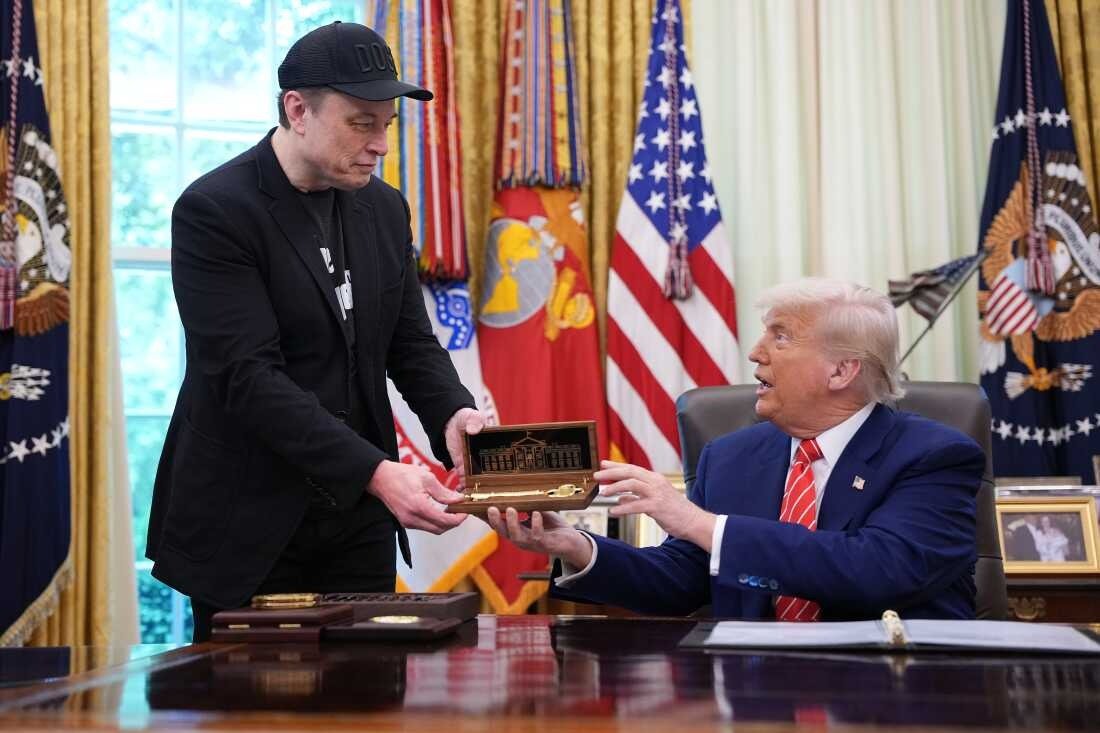
Trump and Musk publicly broke their alliance on June 5, exchanging jabs on social media. Musk criticized Trump on the economy and alleged connections to Jeffrey Epstein, while Trump threatened to pull federal funding from Musk’s companies.
Minnesota Assassinations: Two Minnesota lawmakers were shot at their homes by a gunman impersonating a police officer. State Rep. Melissa Hortman and her husband were killed while State Sen. John Hoffman and his wife survived the attack. This sparked the largest manhunt in Minnesota history.
43 hours, 4 victims and 1 alleged assassin: Minnesota’s largest manhunt
Trump held a military parade on June 14, which coincided with nationwide “No Kings” protests against the administration. Other June events included Japan’s Nippon Steel finalizing its acquisition of U.S. Steel on June 18, the Supreme Court upholding Tennessee’s ban on gender-affirming care for minors, and Zohran Mamdani defeating Andrew Cuomo in the Democratic primary for New York City mayor on June 24.
July: The One Big Beautiful Bill and Church Endorsements
Major Legislative Victory: The One Big Beautiful Bill Act, the administration’s principal legislative achievement, passed in the Senate 51-50 with Vance casting the tiebreaker on July 1. Trump signed the bill on July 3.
July saw a flurry of tariff updates: Trump announced a 50% tariff on Brazil on July 10 in response to charges against former President Jair Bolsonaro; the U.S. struck deals with Japan (July 22), the EU (July 27), and South Korea (July 30), all including 15% “reciprocal” tariffs.
On July 7, the IRS ruled that churches can endorse political candidates for the first time since 1954—a significant shift in the relationship between religion and politics in America.
The Epstein controversy heated up: on July 15, the House held its first vote to release the Epstein files, with Republicans successfully blocking Democrats’ attempt. Three days later, Trump sued Rupert Murdoch after the Wall Street Journal reported that Trump’s name appeared in Epstein’s birthday book.
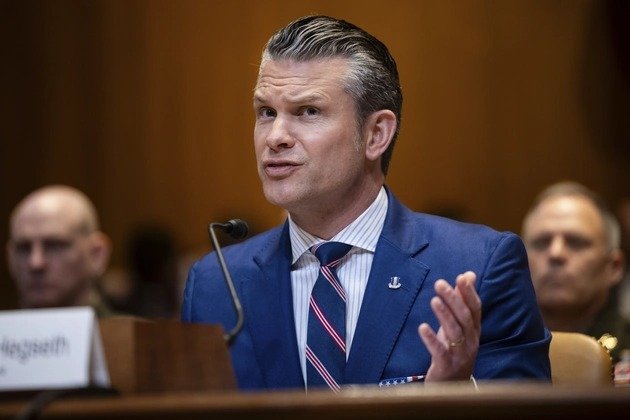
Tariff recap: What products did tariffs impact in 2025
August: Alaska Summit and Federal Crackdowns
August began with Trump firing Bureau of Labor Statistics Commissioner Erika McEntarfer on August 1 after an underwhelming jobs report. On August 4, civil arrest warrants were issued for Texas House Democrats who left the state to delay a vote on a new congressional map favoring Republicans.
Trump-Putin Meeting: Trump and Russian President Vladimir Putin met in Alaska to discuss the war against Ukraine—a highly controversial summit that drew international attention.
On August 11, Trump deployed the National Guard to Washington, D.C., placing the city under federal control in an attempt to crack down on crime. A federal judge struck down Arkansas’ law requiring Ten Commandments displays in public schools on August 5, and HHS Secretary Kennedy revoked $500 million in funding for messenger RNA vaccines the same day.
Notable late-August events: Former national security adviser John Bolton’s home was raided by the FBI on August 22; the U.S. took a 10% equity stake in Intel in exchange for CHIPS Act funds; Iryna Zarutska was killed on a light rail train in Charlotte, North Carolina on August 22 (video released later sparked criminal justice reform calls); and Trump signed an executive order to charge people who burn the American flag on August 25.
September: Charlie Kirk Assassination and Media Suspension
Kirk Assassination: Conservative activist Charlie Kirk was shot and killed at a campus event in Utah. The suspect was arrested on September 12, and a televised memorial took place on September 21. Kirk posthumously received the Presidential Medal of Freedom.
Video: Charlie Kirk posthumously receives Presidential Medal of Freedom
In a related controversy, Jimmy Kimmel was suspended by ABC on September 17 for comments about Kirk’s alleged assassin. FCC Chair Brendan Carr’s role in the suspension was highly scrutinized. Kimmel returned to his show on September 22.
On September 5, Trump “renamed” the Department of Defense to the Department of War (as a secondary title only). An appeals court declined to overturn the E. Jean Carroll case on September 8. That same day, the House Oversight Committee released Epstein’s birthday book, which included a note allegedly signed by Trump.
Other September events: The Federal Reserve cut its key interest rate by a quarter-point (Sept. 17); Trump labeled antifa as a terrorist organization (Sept. 18); the New York Times reported border czar Tom Homan accepted a $50,000 bribe from an undercover FBI agent (Sept. 20); two ICE detainees were killed in a shooting at a Dallas field office (Sept. 24); former FBI Director James Comey was indicted on charges of giving false statements to Congress (Sept. 25); and more Epstein files were released naming Elon Musk, Peter Thiel, Steve Bannon and Prince Andrew (Sept. 26).
October: Record Government Shutdown Begins
Government Shutdown: What would become the longest government shutdown in U.S. history began, lasting 43 days until November 12.
On October 8, Trump announced that Israel and Hamas had agreed on a framework for a peace deal including Israel’s withdrawal of forces and a prisoner exchange. The next day, New York Attorney General Letitia James was indicted on mortgage fraud charges.
Israel-Hamas Ceasefire: Israel and Hamas agreed to their first ceasefire of the year, providing a temporary pause to the ongoing conflict in Gaza. The agreement came after months of intense fighting and international diplomatic efforts to broker a pause in hostilities.
On October 8, 2025, President Trump announced a significant breakthrough in Middle East diplomacy when Israel and Hamas reached agreement on a framework for a comprehensive peace deal. This framework, coming nearly nine months after the January ceasefire, represented a more ambitious attempt to address the underlying causes of the conflict rather than simply pausing hostilities. The agreement outlined provisions for Israel’s phased withdrawal of military forces from Gaza, a carefully negotiated prisoner exchange involving both Israeli hostages and Palestinian detainees, and crucially, the establishment of long-term security arrangements designed to prevent future escalations. Unlike the temporary January ceasefire, this framework aimed to create a sustainable path forward, though it remained unclear what role Hamas would play in Gaza’s future governance and how reconstruction efforts would be funded and implemented. The Trump administration presented the framework as a major diplomatic achievement, though regional experts cautioned that translating the agreement’s broad principles into concrete, lasting peace would require sustained international support, significant financial commitments for Gaza’s reconstruction, and most challenging of all, genuine political will from all parties to move beyond decades of conflict. The framework’s success would ultimately depend on whether it could address not only immediate security concerns but also the deeper issues of Palestinian self-determination, economic development in Gaza, and a broader resolution to the Israeli-Palestinian conflict.

Israel and Hamas reach ceasefire agreement in January 2025
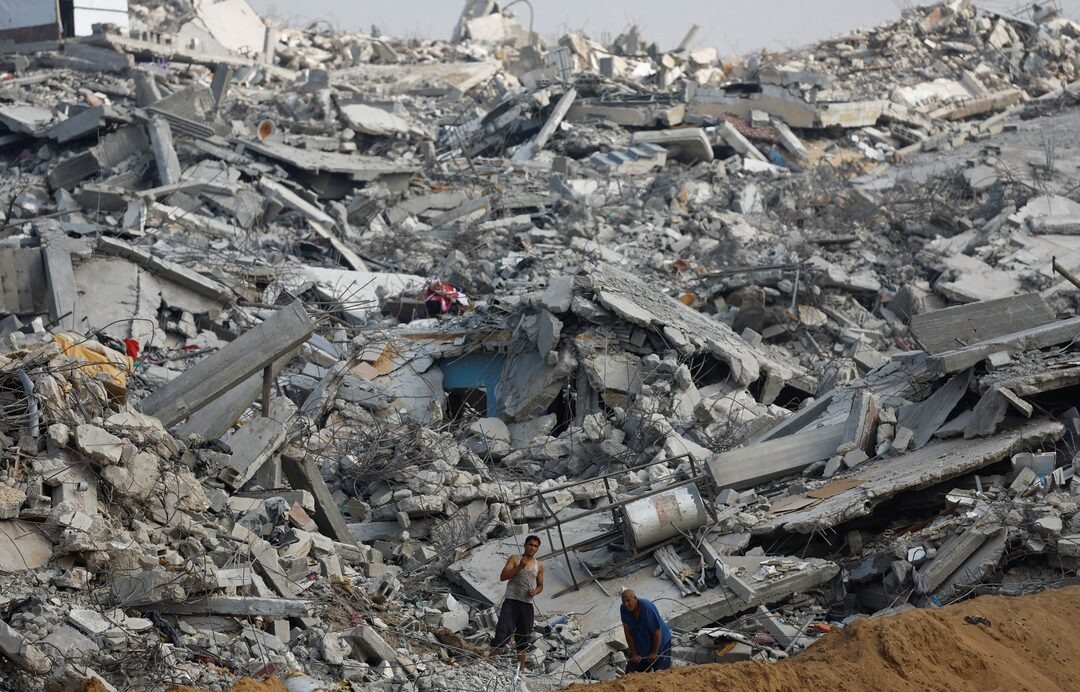
Gaza destruction continued for two years

More than 70 thousands people were killed and 150 thousands injured or maimed.
China Tariff Reduction: Trump met with Chinese leader Xi Jinping in South Korea, resulting in the administration lowering tariffs on China. The next day, the Senate passed a bill to nullify all of Trump’s global tariffs, but the bill stalled in the House.
Video: Trump announces tariff reduction and trade agreements with China
Trump also announced on October 29 that the Defense Department would restart nuclear testing for the first time in over 30 years. A second nationwide “No Kings” protest was held on October 18. Trump commuted George Santos’ sentence on October 17 and pardoned Binance’s co-founder on October 23.
November: Shutdown Ends, Major Resignations and Epstein Bill
The government shutdown became the longest in history on November 4 as millions worried about access to SNAP benefits with funding running low. The shutdown ended after 43 days on November 12. The new spending bill did not include an extension of enhanced Affordable Care Act subsidies.

Five things to know about the Affordable Care Act enhanced subsidies
Off-year elections were held on November 4, with Democrats performing better than Republicans. Notable wins included Mikie Sherill for New Jersey governor, Abigail Spanberger for Virginia governor, and Zohran Mamdani for New York City mayor.
On November 6, Rep. Nancy Pelosi announced she would not run for reelection, ending her 40-year career in Congress. GOP Rep. Marjorie Taylor Greene announced on November 21 that she was resigning from the House in 2026 after a public feud with Trump.
Epstein Files Bill: The House and Senate passed a bill forcing the DOJ to release all files related to Jeffrey Epstein’s cases. Trump, after initially opposing the release, signed the bill on November 19.
On November 9, Trump pardoned Rudy Giuliani, Sidney Powell, and more than 70 others for their roles in the 2020 fake elector scheme. A Georgia prosecutor officially dropped the state racketeering case against Trump and others for attempting to overthrow the 2020 election.
Tragedy struck on November 26 when two National Guard members were shot and killed blocks away from the White House in Washington, D.C. On November 28, following a new report, lawmakers and experts began questioning whether Hegseth or other military leaders had committed a war crime by ordering a follow-up strike to kill survivors of an initial airstrike on an alleged drug boat.
December: Epstein Files Released
Epstein Files Release: The biggest story of the month was the partial release of the Epstein files. On December 12, before the official release, House Democrats published photos from the files showing Trump, Bill Clinton, Bill Gates, Woody Allen and Richard Branson. On December 19, the DOJ released heavily redacted files. After Congressional criticism, the department released over 10,000 more on December 23, including numerous references to Trump. The DOJ promised to release more files in 2026.
On December 2, Costco and several other companies sued the Trump administration over tariffs. On December 4, the FBI arrested a Virginia man suspected of planting pipe bombs at the RNC and DNC headquarters on January 5, 2021. The U.S. seized a Venezuelan oil tanker on December 10, escalating regional tensions.
Trump cracked down further on immigration: on December 2, the administration paused immigration applications from 19 countries including Afghanistan, Haiti and Iran. On December 18, following a shooting at Brown University allegedly carried out by a Portuguese national, Trump suspended the green card lottery program.
On December 11, Republican Indiana state lawmakers broke from Trump, rejecting a new congressional map that would have favored the party in the 2026 midterms—a rare instance of GOP pushback against the president.
As 2025 comes to a close, it’s clear that this year will be remembered as one of the most consequential in modern American political history. From the unprecedented use of executive power to international conflicts, from the longest government shutdown to shocking revelations in the Epstein files, from political violence to major electoral shifts—2025 reshaped the American political landscape in ways that will reverberate for years to come.
The events of 2025 have raised fundamental questions about the balance of power in American government, the role of the presidency, the independence of federal institutions, and the future of American democracy itself. As we move into 2026, these questions will continue to dominate political discourse and shape the nation’s trajectory.












Be First to Comment