

Behind the Rankings: How WalletHub Determined Oklahoma is 50th in Education
Examining the methodology, controversies, and implications of Oklahoma’s last-place ranking in national education assessments
The Ranking That Sparked a Statewide Conversation
When financial services website WalletHub announced its annual list of states’ education systems, Oklahoma’s ranking became instant political fodder. The site listed Oklahoma as 50th in the nation—including the District of Columbia—with only New Mexico ranking lower at 51st.

WalletHub’s ranking system combines 15 education-related metrics into an 80-point quality score using test scores, graduation rates, teacher certification, and more. An additional 20 points assess the safety of states’ education systems. While data experts acknowledge some measures are accurate, others are misleading or simply wrong. Yet the end result mirrors findings from other analyses, including reports from the Oklahoma Center for Education Policy and U.S. News and World Report, which both placed Oklahoma at 48th.
The Political Impact of the Ranking
Oklahoma’s 50th-place position drew significant attention and sparked policy conversations, which WalletHub’s Chip Lupo said is the purpose of their list. “We’re a personal finance website, but we publish these to give consumers choices if they’re looking to relocate, and give them ammunition to lobby state and local leaders,” Lupo explained.
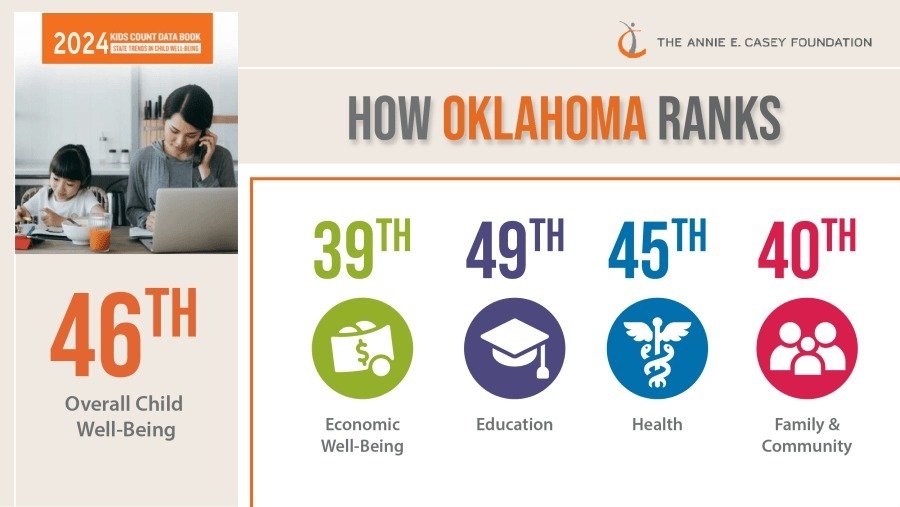
The ranking has indeed elevated conversations about education improvement. Sen. Ally Seifried, R-Claremore, noted that it brought in business leaders and others without children in schools who now want answers. “I’m glad that people are upset, because we were 47th, 48th for my previous three years, and I guess 50th really woke people up,” Seifried said.
WalletHub’s Methodology: Simplifying Complexity
WalletHub, best known for credit monitoring and budgeting services, publishes about 100 lists annually on various topics. While not an education expert, the site attempts to simplify complex educational dynamics into a digestible score using 15 metrics. More than half the points come from students’ test scores, including math and reading from The Nation’s Report Card, plus six categories related to Advanced Placement exams, SAT scores and ACT scores.
Gary Anderson, an NYU education professor and WalletHub expert, was troubled by the lack of inputs related to states’ financial support of public schools. “Testing has come front and center as the way to rank schools,” Anderson noted. “I think our rankings are too narrow.” He explained that since the early 2000s, with No Child Left Behind, the focus shifted from inputs like teacher preparation to outputs like test results.
“We need to bring some balance to that. Testing has come front and center as the way to rank schools, but we need to consider other factors like financial support and teacher preparation.”
— Gary Anderson, NYU Education Professor
The Test Score Controversy
One-third of WalletHub’s formula depends on ACT and SAT scores, which can disadvantage states like Oklahoma that test all students. Oklahoma’s median ACT score of 16 (class of 2024) ranked 49th, but the state ranked 13th for participation with over 100% of students taking college entrance exams. States with fewer testers tend to score higher as their pools consist mostly of high-achieving, college-bound students.
| Metric | Oklahoma’s Rank | Oklahoma’s Score | National Avg. |
|---|---|---|---|
| ACT Median Score | 49 | 16 | 20.8 |
| ACT Participation | 13 | 100%+ | 55% |
| SAT Median Score | 45 | N/A | 1050 |
| SAT Participation | Low | 2% | 43% |
WalletHub did include a metric addressing this issue: the share of high school graduates completing the ACT or SAT, where Oklahoma ranked 13th. However, with only 2% taking the SAT, the state still ranked 45th on that measure.
Data Controversies and Misinterpretations
WalletHub’s graduation metrics raised concerns. Unable to access current dropout rates, analysts subtracted graduation rates from 100. More problematic was their “projected graduation rate increase” metric, which Patrick Lane of the Western Interstate Commission for Higher Education said misrepresented their data:
“This is a crime against data to say this is a high school graduation rate. They give you just enough information to make it seem like the calculations are robust, but our report does not show increases or decreases in graduation rates—it reports on projected numbers of graduates driven by birthrate.”
— Patrick Lane, WICHE Vice President
Lane contacted WalletHub but received no response. Another controversy involved teacher certification data, where WalletHub’s 2021 federal data showed 99.8% of Oklahoma teachers as fully certified (2nd highest), contradicting state reports of 25% holding emergency or provisional certificates that year.
Expert Perspectives on the Rankings
While acknowledging methodological concerns, experts generally agree that WalletHub’s findings align with other research. Adam Tyner, author of “The Fall to 48th” report for the Oklahoma Center for Education Policy, reviewed the rankings:
“I don’t think they made every methodological decision right, but at the end of the day, they got within two of what I came up with. These rankings use metrics with face validity that sound good and produce expected results.”
— Adam Tyner, Oklahoma Center for Education Policy
Tyner noted that while he would use different methodology, it likely wouldn’t significantly change the outcome. Like college rankings, these lists use metrics that appear valid and produce expected results, even if not perfectly accurate.
- Test scores (math, reading, ACT, SAT) account for most of the ranking
- Graduation rates and safety metrics contribute but with less weight
- Teacher certification data proved controversial and potentially inaccurate
- Projected graduation increases were misinterpreted from birthrate data
- Overall findings align with other independent assessments
What This Means for Oklahoma’s Education Future
The WalletHub ranking, despite its methodological flaws, has succeeded in focusing attention on Oklahoma’s education challenges. The political response suggests that the ranking’s shock value may be its most significant contribution—sparking conversations and potentially driving policy changes.
Key takeaways from this analysis:
- Rankings simplify complex educational realities but can be useful conversation starters
- Test score focus may disadvantage states with universal testing policies
- Data accuracy and interpretation remain critical challenges in education assessment
- Multiple independent analyses confirm Oklahoma’s education struggles
- The ranking has elevated education as a political priority in the state
As Oklahoma works to improve its education system, the WalletHub ranking serves as both a wake-up call and a reminder of the complexities involved in assessing educational quality. The challenge now is to translate this attention into meaningful, sustainable improvements for Oklahoma’s students.















Be First to Comment