
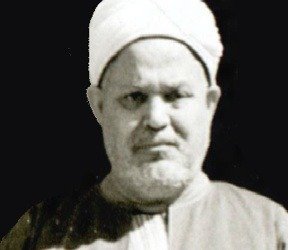
Sheikh Ahmad al-Iskandari: Guardian of Arabic Language and Quranic Heritage
The remarkable life and contributions of a scholar who walked to Cairo for knowledge and shaped Arabic linguistic heritage
The Dean of Arabic Language Scholars
Sheikh Ahmad al-Iskandari (1875-1938) was the dean of Arabic language and literature professors in his generation. His academic stature was so significant that when the government of Sidqi Pasha decided to remove Dr. Taha Hussein from the university, they needed a respected figure to justify this decision. They chose to transfer al-Iskandari from Dar al-Ulum to the Faculty of Arts, as he represented the most prominent academic figure with strong social and administrative influence.
Al-Iskandari derived his social influence from his diligence, integrity, encyclopedic knowledge, and his establishment of an exemplary model of deserved professorship that combined contemporary knowledge with ancient heritage. Beyond this, history records his national service when he successfully defended Classical Arabic against attempts to impose colloquial dialects in education during the 1911 Orientalists Conference.
His Epic Journey for Knowledge
Al-Iskandari’s story of struggle for knowledge clearly demonstrates his faith and asceticism. When he was young, he traveled from Alexandria to Cairo on foot to seek education. His son-in-law, Professor Muhammad Ahmad Branq (who later succeeded him as Dean of Arabic Language), recounted this adventure:
In 1894, he joined Dar al-Ulum, being the youngest among his peers yet the most distinguished in memory and knowledge. The school had a tradition of holding comprehensive exams at the beginning of each academic year on assigned books and general knowledge. Al-Iskandari consistently excelled, winning the school’s awards each year. His compositions impressed his rhetoric professors so much that they published them in their books.
Academic Career and Contributions
Al-Iskandari graduated from Dar al-Ulum in 1898, in the class following that of Sheikh Abdul Aziz Jawish and Sheikh Ahmad Ibrahim. He began teaching in royal schools and was soon appointed principal of the primary teachers’ school in Faiyum, then in Mansoura.
In 1907, just 9 years after his graduation, he moved to Dar al-Ulum to teach composition and Arabic literature. He continued this work for about 27 years, and it’s said that all Dar al-Ulum graduates from 1907 to 1934 studied under him, except for two classes.
فَمَا فَضْلُ الْكَرِيمِ عَلَى اللَّئِيمِ
إِذَا كَانَ الْكَرِيمُ قَلِيلَ مَالٍ
تَحَجَّبَ بِالْحِجَابِ عَنِ الْغَرِيمِ
what virtue does he have over the mean?”
“When the noble man has little wealth,
he hides behind the doorman from his creditors.”
Participation in the Orientalists Conference in Greece
Al-Iskandari represented Egypt at the 1911 Orientalists Conference in Greece, accompanied by three dignitaries: Prince Ahmad Fuad (later King Fuad), the poet Ahmad Shawqi, Sheikh of Arabism Ahmad Zaki Pasha, and Hafni Nasif. He was invited to speak on Classical Arabic and its limited spread among the majority of people in various Islamic countries.
At the conference, the Orientalists were presented with a question proposed by the late Yaqub Artin Pasha, then Undersecretary of the Ministry of Education: “Should the colloquial languages of each country replace Classical Arabic in writing and communication?” He presented various colloquial languages, dialects, and their literature in prose and poetry.
Al-Iskandari argued that Classical Arabic is the language that suits Arab Islamic countries for communication, writing, and authorship, and that governments should work to spread it among the popular classes to eliminate colloquial dialects unsuitable as a primary language for nations united by religion, customs, and morals. The conference’s decision to support Classical Arabic was a great victory that pleased nationalists, as it reinforced al-Iskandari’s position against Artin Pasha’s support for colloquial languages.
Standardizing the Quranic Text
Together with Professors Hafni Nasif and Mustafa Anani, al-Iskandari formed the committee that adopted the Uthmani script for the Noble Quran and edited the introduction attached to the end of the Egyptian government’s authorized edition. This introduction is still included in all Quran editions, including those from Al-Azhar.
This committee is credited with establishing the rules for stop signs in the Quran, prostration symbols, and quarter-hizb divisions. Their work involved reviewing the Quran’s script according to the original Uthmani script. They standardized mandatory stop signs (م), permissible stops (قلي), permissible connections (صلي), and forbidden stops (لا).
Al-Iskandari’s humility is evident in the fact that the names of these three scholars are not mentioned in the Quran’s introduction. This was due to their modesty and self-effacement, as they completed their work without signing it, unlike current Quran reviewers.
Transition to the Faculty of Arts
As mentioned earlier, during the ministry of Ismail Sidqi Pasha, al-Iskandari moved to the Faculty of Arts at Fuad I University (Cairo) as a professor of Arabic literature, replacing Dr. Taha Hussein who had been transferred to the ministry, removed from the university.
His appointment as a member of the Arabic Language Academy in 1933 described him as a professor of Arabic at the Ministry of Education. This led Dr. Muhammad Mahdi Allam to express surprise in his introduction to “The Academicians in Fifty Years,” suggesting he should have been described as a professor at Dar al-Ulum. However, he had left Dar al-Ulum to take up a professorship at the Faculty of Arts, which, like Dar al-Ulum, was under the Ministry of Education.
Prominent Activity in the Arabic Language Academy
Al-Iskandari was among the first founding members of the Arabic Language Academy in Cairo (1933) and was one of three main supporters in this first group, along with Professor Ali al-Jarm (1881-1949) and Professor Ahmad al-Awamari (1876-1954). Alphabetically, he held the second position among the Academy’s founding members.
He actively participated in the Academy’s work and contributed to most of its subcommittees, serving on seven out of the eleven total committees: the Mathematics Committee, Natural and Chemical Sciences Committee, Life Sciences and Medicine Committee, Magazine Committee, Library Committee, Budget Committee, and General Principles Committee.
He also served on temporary subcommittees formed to examine specific scientific issues, such as the Military Terminology Committee and the committee formed to study Sheikh Muhammad al-Khudr Hussein’s proposal regarding the use of hadith in language.
In the Academy’s main and subcommittee sessions, when a matter was unclear or an issue was obscure, al-Iskandari would clarify the confusion and reveal what was ambiguous. All members acknowledged his precedence and considered him a decisive voice that could silence any speaker.
Opposition to Foreign Terms
Al-Iskandari loved the Arabic language and was so passionate about it that he considered those who were lenient in its matters as heretics. He viewed the tolerance and opening the door to foreign languages as a heinous crime against Arabic. The minutes of the Academy’s first-year sessions show his intense efforts to make the Academy agree that Arabization should only be used in cases of extreme necessity.
He was amazed at people who criticized the Academy for using unfamiliar terms for new concepts, as he believed these terms, though seemingly strange at first, would become familiar with use and were better for preserving the language from foreign influence.
Linguistic Jurisprudence
Al-Iskandari was the first to propose teaching linguistic jurisprudence at Dar al-Ulum, which was previously unknown in Egyptian schools. He developed the curriculum and took on the burden of teaching it, dividing it into two sections: a philosophical section dealing with the origin of languages, derivation, coinage, and dialect differences, and a theoretical section concerning the assignment of linguistic terms to their meanings.
He also delivered early lectures on linguistic jurisprudence and published them in 1925. He participated in studies related to Arabic orthography and printing press abbreviations.
His Works on Dialects
Al-Iskandari made pioneering efforts in several fields of linguistic studies. He wrote early works on colloquial dialects and was a pioneer in the correct linguistic rooting of these dialects.
His Legacy
His first book was “History of Arabic Literature in the Abbasid Era,” which literary scholars agree was the foundational work from which all subsequent researchers in literary history drew. He prepared notes for his students on other eras and authored a book on colloquial dialects, which he presented at the 1911 Orientalists Conference (it remained in manuscript form).
He also wrote a reading book for secondary schools in several volumes called “Nuzhat al-Qari” (Reader’s Delight), of which two volumes were printed and approved by the Ministry of Education in 1934. However, formal issues between him and the publisher Macmillan prevented its full execution.
His other works include a comprehensive book on Arabic literature across all eras (thousands of pages long), which he intended to publish. In the last year of his life, he dedicated himself to writing an introduction that he described as occupying a position in literary history similar to Ibn Khaldun’s in general history. He prepared for this but was overtaken by death.
His available works include:
- History of Arabic Literature in the Abbasid Era
- “History of the Arabs Before Islam”
- Colloquial Dialects
- Nuzhat al-Qari (Reader’s Delight) for Secondary Education (2 volumes)
- The Intermediate in Arabic Literature (co-authored)
- Arabic Literature Across All Eras (manuscript)
- Arabic Literature for Secondary Schools (co-authored)
- Arabic Grammar Rules for Primary and Secondary Schools (7 parts) co-authored with Dr. Taha Hussein, Dr. Muhammad Mahdi Allam, and others
- Linguistic Jurisprudence: Lectures delivered at Dar al-Ulum and published in 1925 (He had other works on linguistic jurisprudence that he prepared for his students but didn’t make public, believing this was a matter for the elite)
His research and papers in the Arabic Language Academy include:
- Embedding (Tadmeen)
- Simplifying Arabic Orthography
- The Purpose of the Academy’s Decisions and Their Justification
- Standard Broken Plurals
- Establishing Common Pronunciation Alongside Scientific Origins
Colleagues’ Opinions of Him
Father Anastas al-Karmali, despite his great stature, acknowledged al-Iskandari’s virtue and professorship, as did others. He once wrote to him:
Dr. Mansour Fahmi, a member of the Arabic Language Academy, said in his eulogy:
His spiritual son, Professor Muhammad Ahmad Branq, summarized his opinion of al-Iskandari:
Professor Ali al-Jarm’s Elegy
Professor Ali al-Jarm composed an elegy for the first three members of the Arabic Language Academy who passed away: Professor Ahmad al-Iskandari, Sheikh Hussein Wali, and the Italian orientalist Nallino, titled “Tomorrow in the Sky of Genius We Will Meet.” In this poem, he says:
وتجتمعُ الأنْدادُ بَعْدَ التَّفَرُّقِ
وَنذكر عيْشًا كالأزَاهِر لم يَطُلْ
وَوُدًّا كَمشْمُولِ الرَّحيقِ الْمُصَفقِ
وَنَضْحك من آمالِنا كيف أنَّهَا
أَصَاخَتْ إلى وَعْدِ الزَّمان المُلَفِّق
ونَسْبَحُ في أنْهَارِ عَدْنٍ كأنَّما
سَرَائِرُنَا مِن مائِها المُتَدَفِّق
ونَخْتَرِق الأجْواءَ بَيْنَ مُدَوِّمٍ
يَمَدُّ جَنَاحَيْهِ وبين مُصَفِّق
ذَكَرْتُ أَحِبَّائي وقَدْ سَارَ رَكْبُهُمْ
إلى غير آفاقٍ على غير أَيْنُقِ
أُودِّعهم ما بَيْنَ لَوْعَة ِ وَاجِدٍ
تَطِيرُ به الذِّكْرَى وزفْرَة ِ مُشْفِق
وَأَبْعَثُ في الصَّحْراء أَنَّاتِ شَيِّقِ
وهَلْ تَسْمعَ الصَّحراء أَنَّاتِ شَيِّق
تعلقتُ بالحَدْبَاءِ حَيْرانَ وَالِهًا
وكيف ومَاذَا نافِعِي من تعلٌّقِي
لَمَسْتُ فلم ألْمِسْ سوى أَرْيَحِيَّة ٍ
من النورِ لُفَّتْ في رِدَاءٍ مُخلَّقِ
أَتُدْفَنُ في الأرض الكنوزُ وفوقها
خَلاَءٌ إلى لأْلائِهَا جِدُّ مُمْلِقِ
ويَمْضِي الْحِجَا مَابَيْنَ يومٍ وليلة ٍ
كَلَمْحَة ٍ طَرْفٍ أَو كَوَمْضَة ِ مُبْرِق
يضيق فضاءُ الأرض عن هِمَّة ِ الفَتى
ويُجمَعُ في لَحْدٍ من الأرض ضيِّقِ
تَبَابٌ لهذا الدَّهْرِ مَاذَا يُرِيدُه
وأَيّ جديدٍ عنده لم يُمَزّقِ
يُصَدِّعُ من أَعْلاَمِنَا كلَّ راسخٍ
ويُطفِىء ُ من أَنْوَارِنَا كلَّ مُشْرِقِ
هُوَ المُوتُ مَا أغْنَى اسمه عَنْ صِفَاتِه
وعن كلِّ ألْوَانِ الكلام المُنَمَّقِ
رَمَتْنِي عوَادِيه فإِن قلتُ إِنَّهَا
مَضَتْ بِأَمانِيِّ الحياة فَصَدِّقِ
And equals reunite after separation’s pain.
We’ll recall life like blooming flowers so brief,
And love like honeyed wine brings sweet relief.
We’ll laugh at hopes that heeded time’s deceit,
And swim in Eden’s rivers pure and sweet.
Through stormy skies and clapping hands we’ll soar,
My beloved friends now traveling evermore.
I bid them farewell with a lover’s lament,
As memories take flight on sorrow’s torrent.
I send my cries across the desert wide,
But can the desert hear a lover’s cry?
I cling to fate, confused and lost at sea,
What use my attachment when death sets me free?
I touch but find only a fragrant trace,
Of light wrapped in embroidered heaven’s grace.
Are treasures buried while their light shines bright,
Above them emptiness in starkest night?
Time passes swift between a day and night,
Like lightning’s flash or blinking eye’s quick sight.
The earth’s too narrow for the youth’s great aim,
Yet gathered now in a narrow grave’s claim.
What does this age want? What new can it bring
That hasn’t been torn by time’s unyielding sting?
It shatters our firmest monuments tall,
And extinguishes every shining light’s thrall.
Death needs no description, no words refined,
Its colors are known to all humankind.
Its misfortunes struck me – if I say they’ve passed
With all my life’s hopes, believe me at last.
He also addresses his friend and colleague Professor Ahmad al-Iskandari, expressing what he misses of his defense of truth and accurate arguments:
سِوَى ذِكرياتٍ للخيال المُؤَرِّقِ
كَأَني أراكَ اليومَ تخطُبُ صَائِلًا
وتَهْدِرُ تَهْدَارَ الْفَينقِ المُشَقْشِقِ
تُنَافِحُ عن بِنْتِ الصَّحارِى مُشَمِّرًا
وتَفْتَحُ مِن أسْرَارِهَا كُلَّ مُغْلَقِ
مَضَى حَارِسُ الْفُصْحى فَخَلَّده اسْمُه
كما خلَّد الأَعْشى حَديثَ الْمُحَلَّقِ
فَقدْنَا به زَيْنَ الْفَوَارِسِ إِن رَمَى
أَصَابَ وإِنْ يُرْخِ الْعِنَانَيْنِ يَسْبِقِ
فَقُلْ للَّذِي يَسْمُو لذَيْلِ غُبارِهِ
ظلَمْتَ الْعِتَاقَ الشَّيْظَمِيَّاتِ فَارفُقِ
إذا ما رَمَى عِنْدَ الجِدَالِ عَبَاءَهُ
رَمَاكَ بِسَيْلٍ يَقْذِفُ الصَّخْرَ مُغْرِقِ
فجانِبْ إذا كُنتَ الحكِيمَ سُؤَالَهُ
وَأَطْرِقْ إلى آرائِهِ ثُمَّ أطْرِقِ
Now just memories that haunt my sleepless dawn?
I see you now, debating fiercely still,
Like a charging steed on knowledge’s hill.
Defending Arabic’s daughter, pure and bright,
Unlocking all her secrets, dark and light.
The guardian of eloquence has passed away,
His name immortal like al-A’sha’s lay.
We’ve lost the knight of knights – when he would throw,
He’d hit his mark, and swift as wind would go.
Tell those who boast of dust beneath their feet,
They’ve wronged the noble steeds – show some clemency.
When in debate he’d cast aside his cloak,
He’d drown you in a flood that rocks would choke.
So avoid his questions if you’re truly wise,
And ponder his opinions, then ponder twice.
Then the poet speaks about al-Iskandari’s relationship with Sheikh Hussein Wali, describing their elevated dialogues filled with knowledge and respect for differing opinions. He portrays a scene of their disagreement with sound logic and gentle speech, far from obstinacy:
وَبَلِّغْه أشْوَاقَ الفُؤادِ المُحَرَّقِ
طَوَيناه صيَّادَ الأَوابدِ لَمْ يَدَعْ
عَزِيزًا عَلَى الأفْهامِ غَيْر مُوَثقِ
لَهُ نَظْرَة ٌ لم يحَتَمِلْ وَقعَ سِحْرِهَا
غريبُ ابن حُجْرٍ أَو عَوِيصُ الفَرَزْدَقِ
أَحَاطَ بآثار الْخَلِيلِ بْنَ أَحْمَدٍ
إِحاطَة َ فيَّاضِ البَيَانِ مُدَقِّقِ
إذا مَسَّ بالكَفِّ الجبينَ تدافَعَتْ
جُيُوشُ المعانِي فَيْلقًا إِثْرَ فَيْلَق
ويومًا مع الإِسكندريّ رأيته
يُجاذِبُه فَضْلَ الْحَدِيثِ المشَقَّقِ
فَهَذَا يَرَى في لَفْظَة ٍ غَيرَ مَايَرى
أَخوه ويختارُ الدليلَ وَينْتَقى
فقلت أرى ليثًا وليثًا تَجَمَّعَا
وأَشْدَقَ مِلءَ العَيْنِ يَمْشِي لأَشْدَقِ
وأَعْجَبَنِي رأيٌ سَلِيمٌ وَمَنْطِقٌ
يَصُولُ على رأيٍ سليمٍ ومَنْطِقِ
وقد لوَّحتْ أيْدِيهِمَا فكأنّها
إِشاراتُ راياتِ تروحُ وتَلتَقِي
ولم أرَ في لفْظَيْهِمَا نَبْرَ عَائِبٍ
ولم أَرَ في عَيْنَيْهِمَا لَمْحَ مُحْنَقِ
فقلتُ هِيَ الفُصْحَى بِخَيرٍ وَإنَّهَا
بأَمثالِ هَذَيْنِ الْحَفييْنِ تَرْتَقي
And convey my heart’s burning love to tell.
We folded one who hunted rare game with skill,
Leaving nothing precious but what he’d instill.
His glance had a magic none could withstand,
Like Ghareeb ibn Hujr or al-Farazdaq’s command.
He mastered al-Khalil’s works with precision,
With eloquent abundance and scholarly vision.
When he touched his forehead, meanings would flow,
Like armies of thought in perfect row.
One day with al-Iskandari I saw him debate,
Engaging in profound, intricate discourse so great.
One saw in a word what the other denied,
Each choosing his proof with care applied.
I said: Two lions have met in this place,
A wide-mouthed beast facing another with grace.
I admired sound opinions and logic clear,
That charged against sound opinions without fear.
Their hands would gesture as if flags would wave,
Signals of banners that rise and engage.
I saw no blame in their words’ tone or pitch,
No angry glance in their eyes’ slightest twitch.
I said: Classical Arabic is well with such men,
With these two guardians it will ascend.
His Death, Honors, and Studies About Him
Sheikh Ahmad al-Iskandari passed away on April 19, 1938, after a two-week illness. The magazine “Al-Risala” reported on July 11, 1938, about a commemoration ceremony held by Beirut’s literati, with speeches broadcast from the radio station in Palestine.
A master’s thesis discussing al-Iskandari’s linguistic and literary efforts was presented at the Institute of Higher Arabic Studies at the Arab League. It was submitted by Professor Ibrahim Abdul Razzaq Iz al-Arab, with Dr. Muhammad Mahdi Allam, Professor Muhammad Khalafallah Ahmad, and Dr. Suhair al-Qalmawi participating in its discussion.
Based on historical accounts of Islamic scholars, Arabic Language Academy records, and biographical studies of Sheikh Ahmad al-Iskandari’s life and works.





Be First to Comment