
The History of Al-Aqmar Mosque: A Gem of Fatimid Architecture in Cairo
Exploring the Unique Design and Historical Significance of Cairo’s Al-Aqmar Mosque
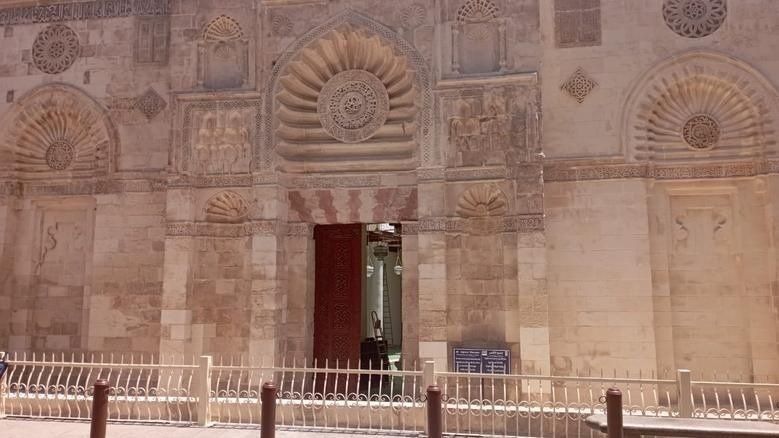
Al-Aqmar Mosque is one of the Fatimid mosques in Cairo, located on Al-Nahhasin Street. It was built by the Fatimid minister Al-Ma’mun Al-Bata’ihi on the orders of the Fatimid Caliph Al-Amir bi-Ahkam Allah Abu Ali Mansur in 519 AH (1125 CE). It is the first mosque in Cairo whose facade features a unique geometric design.
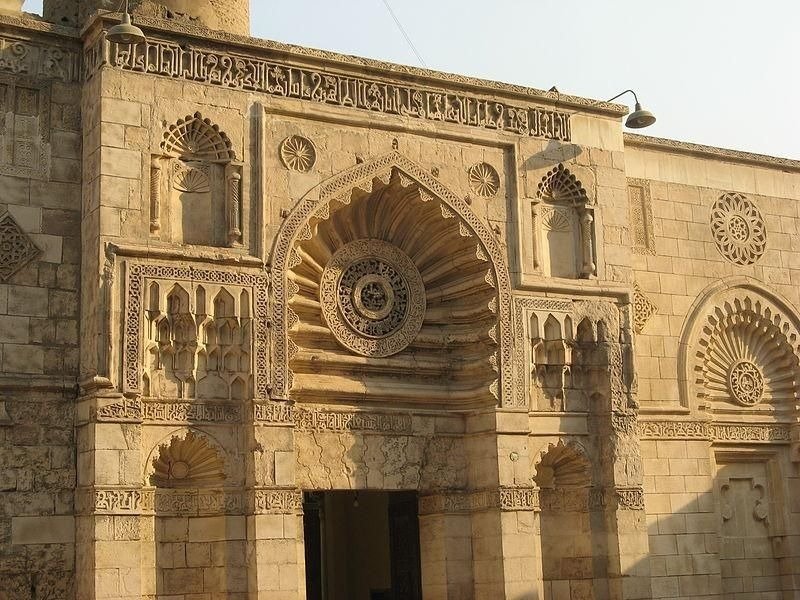
The mosque was named “Al-Aqmar” (meaning “moon-like”) due to the white color of its stones, which resemble the color of the moon. It shares its name with other Fatimid mosques named after luminous objects, such as Al-Anwar and Al-Azhar.
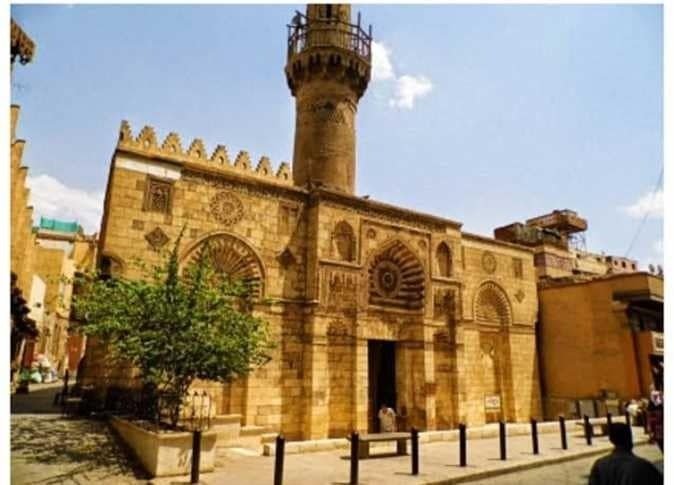
Al-Aqmar Mosque is also the first mosque in which the facade is parallel to the street line rather than to the courtyard. This design was chosen to ensure the correct orientation of the qibla (direction of prayer). As a result, the interior of the mosque is slightly skewed relative to the facade. The mosque consists of a small square courtyard, approximately ten square meters, surrounded by a single portico on three sides and three porticos on the southeastern side, which is the qibla iwan. The arches of the porticos are adorned with ornate Kufic inscriptions and are supported by ancient marble columns with cast bases and varied capitals connected by wooden lintels.
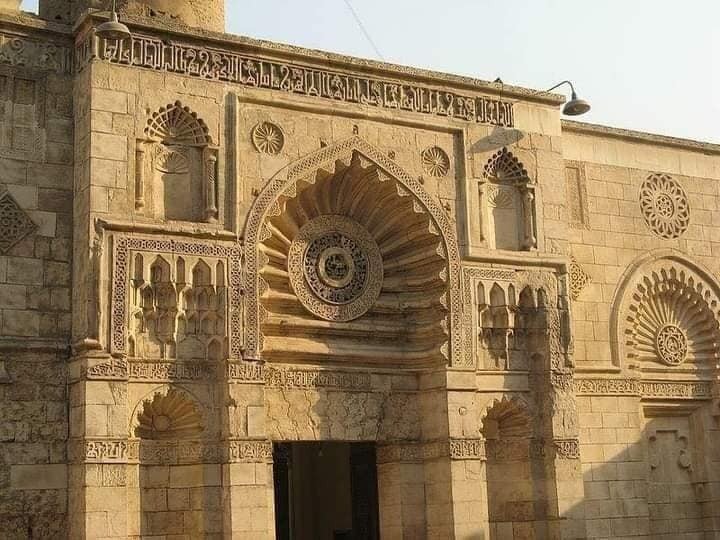
For the first time in mosque architecture, the entrance of Al-Aqmar Mosque features a stalactite (muqarnas) arch, which later became widespread in Mamluk architecture during the 15th century CE. Above this arch is a Persian arch, shaped like a fan with a circle at its center. The mosque’s design also includes muqarnas, which had previously only been used in the minaret of Al-Juyushi Mosque.
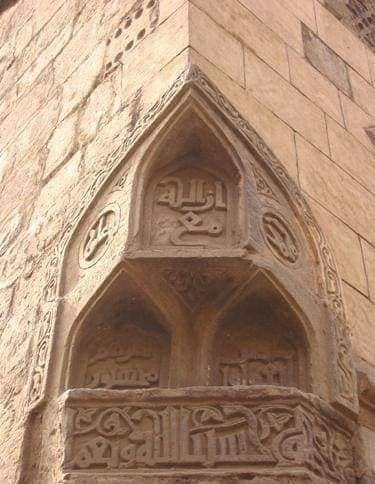
The mosque was built by the Fatimid minister Al-Ma’mun Al-Bata’ihi, who served in this position from 1121 to 1125 CE under the rule of Caliph Al-Amir bi-Ahkam Allah. Al-Ma’mun served during a period of significant political and spiritual crisis for the Fatimid Caliphate, shortly after the First Crusade. He initiated several reforms and restored the ceremonial aspects of the Caliphate, both in palaces and public spaces. He also carried out renovations on the major Fatimid palaces.
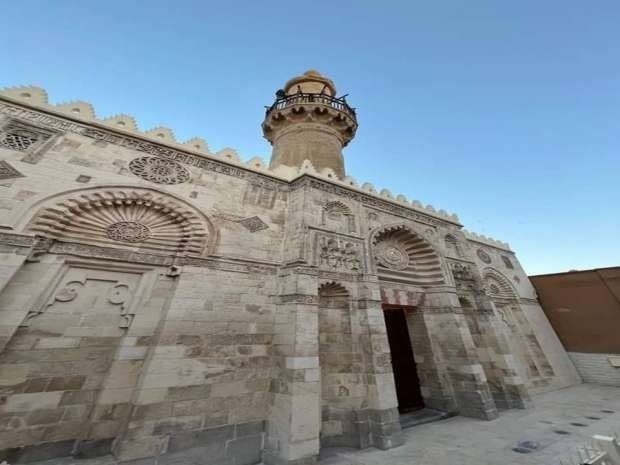
Al-Ma’mun was arrested shortly after completing the mosque in 1125 CE and executed three years later. He had grown up in poverty after his father’s death and, before being appointed by his predecessor, Vizier Al-Afdal Shahanshah, he worked in low-paying jobs. It is reported that these included learning construction skills, which may have contributed to his later architectural achievements.
The mosque was built in the northeastern corner of the large eastern Fatimid palace, possibly serving both the neighborhood and the palace residents. Its proximity to the palace may be why it lacks a minaret, likely to prevent anyone from climbing it and looking into the Caliph’s palaces.
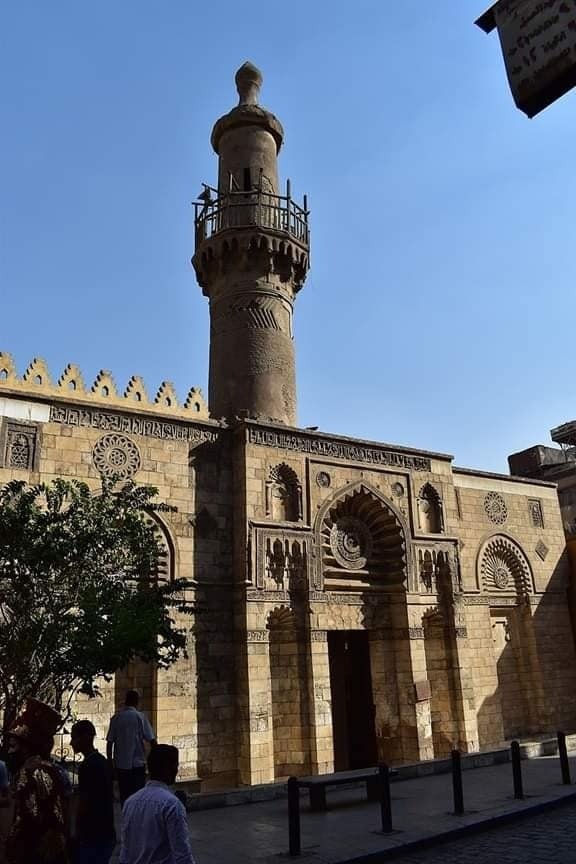
The Mamluk prince Yalbugha Al-Salmi restored the mosque in either 1393 or 1397 CE and added a minaret (which collapsed in 1412 CE and was later restored) as well as shop stalls to the right of the entrance. Al-Salmi also restored or replaced the minbar (pulpit), mihrab (prayer niche), and ablution area.
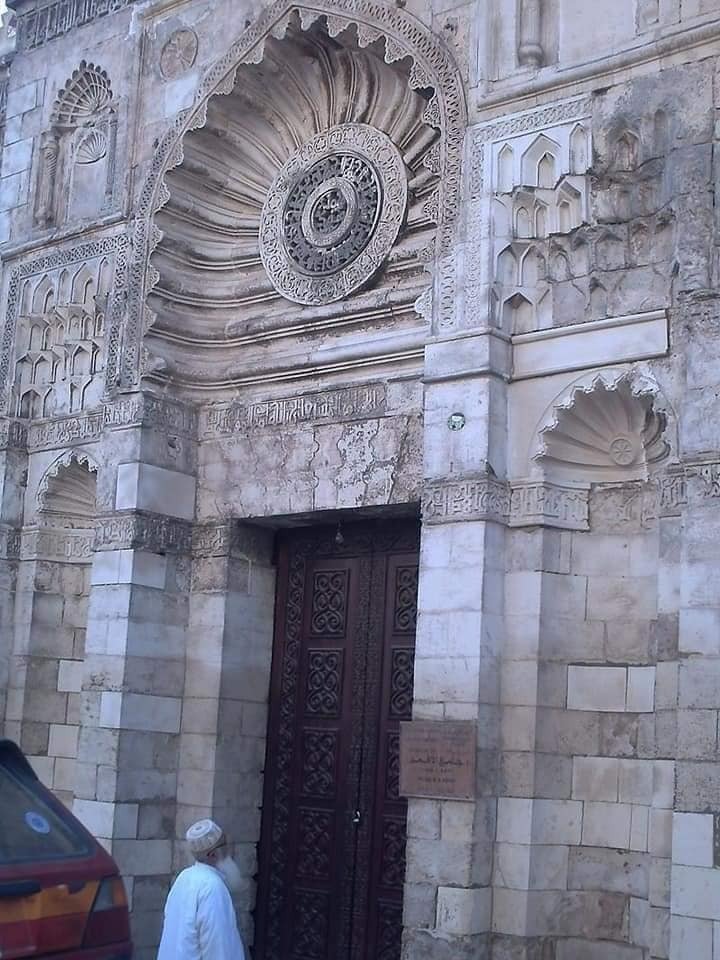
Al-Jabarti recorded that in 1236 AH (1821 CE), during the reign of Muhammad Ali Pasha, Sulayman Agha Al-Silhdar ordered the mosque to be renovated to restore it to service after a period of neglect had weakened its structure.
In 1993, the mosque underwent significant renovations by the Dawoodi Bohra community. This included replacing Al-Salmi’s mihrab with a new marble mihrab and reconstructing the southern half of the external facade to match the remaining northern half. These renovations were criticized for sacrificing some of the mosque’s historical elements, particularly in the interior.
Al-Aqmar Mosque is a masterpiece of Fatimid architecture, notable for its unique facade design, innovative use of muqarnas, and historical importance as one of the earliest mosques to align its facade with the street rather than the courtyard. Its architectural elements influenced later Islamic architecture, particularly during the Mamluk period.
History of Cairo – Published by the Book Authority · New Topographical Plans of Cairo – Volume IV











Be First to Comment