
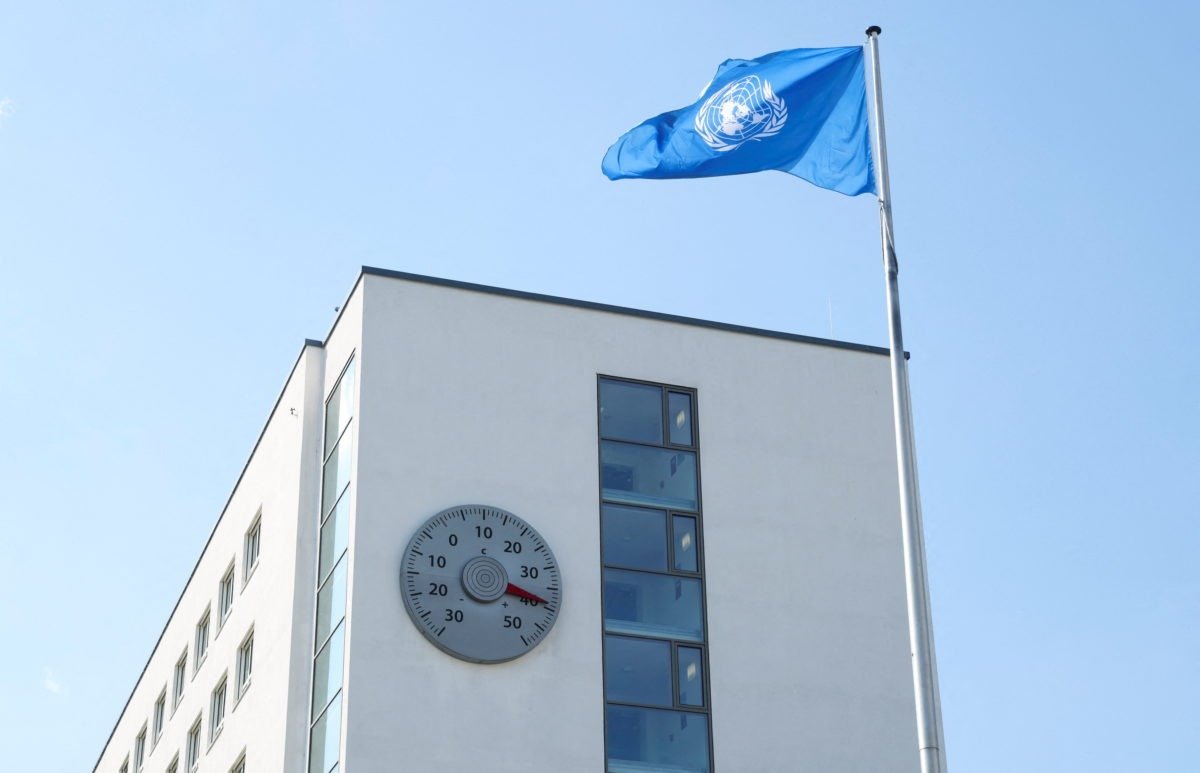
President Donald Trump on Wednesday signed an executive order suspending U.S. support for 66 organizations, agencies, and commissions, following his administration’s review of participation in and funding for all international organizations, including those affiliated with the United Nations
Trump Orders U.S. Withdrawal from 66 International Organizations
Administration suspends support for dozens of U.N. agencies and global bodies, marking dramatic retreat from multilateral cooperation
WASHINGTON — The Trump administration will withdraw from dozens of international organizations, including the U.N.’s population agency and the treaty establishing international climate negotiations, as the United States further retreats from global cooperation.
President Donald Trump on Wednesday signed an executive order suspending U.S. support for 66 organizations, agencies, and commissions, following his administration’s review of participation in and funding for all international organizations, including those affiliated with the United Nations.
Most targets are U.N.-related agencies, commissions and advisory panels focusing on climate, labor, migration and other issues the Trump administration has categorized as catering to diversity and “woke” initiatives. Other non-U.N. organizations on the list include the Partnership for Atlantic Cooperation, the International Institute for Democracy and Electoral Assistance, and the Global Counterterrorism Forum.
A Major Shift in U.S. Multilateralism
Trump’s decision to withdraw from organizations that foster international cooperation comes as his administration has launched military efforts or issued threats that have rattled allies and adversaries alike, including capturing Venezuelan leader Nicolás Maduro and indicating an intention to take over Greenland.
This marks a major shift from how previous administrations—both Republican and Democratic—have dealt with the U.N., forcing the world body, already undergoing its own internal reckoning, to respond with a series of staffing and program cuts.
The administration previously suspended support from the World Health Organization, the U.N. agency for Palestinian refugees (UNRWA), the U.N. Human Rights Council, and UNESCO. The approach represents taking an à la carte approach to paying dues to the world body, picking which operations align with Trump’s agenda and which no longer serve perceived U.S. interests.
Many independent nongovernmental agencies—some that work with the United Nations—have cited numerous project closures because of the administration’s decision last year to slash foreign assistance through the U.S. Agency for International Development (USAID).
Climate Treaty Exit Draws Sharp Criticism
The withdrawal from the U.N. Framework Convention on Climate Change (UNFCCC) marks the latest effort by Trump and his allies to distance the U.S. from international organizations focused on climate change. The UNFCCC, a 1992 agreement between 198 countries to financially support climate change activities in developing countries, is the underlying treaty for the landmark Paris climate agreement.
Trump—who calls climate change a hoax—withdrew from the Paris agreement soon after reclaiming the White House. The U.S. is now the only country in the world not part of the UNFCCC treaty.
Mainstream scientists say climate change is behind increasing instances of deadly and costly extreme weather, including flooding, droughts, wildfires, intense rainfall events, and dangerous heat.
Stanford University climate scientist Rob Jackson, who chairs the Global Carbon Project, warned the U.S. withdrawal could hinder global efforts to curb greenhouse gases because it “gives other nations the excuse to delay their own actions and commitments.”
Experts noted it will be difficult to achieve meaningful progress on climate change without cooperation from the U.S., one of the world’s largest emitters and economies.
Population Agency and Reproductive Health
The U.N.’s population agency, which provides sexual and reproductive health services across the world, has long been a lightning rod for Republican opposition. Trump cut funding for the agency during his first term, accusing it of participating in “coercive abortion practices” in countries like China.
When President Joe Biden took office in January 2021, he restored funding for the agency. A State Department review conducted the following year found no evidence to support GOP claims.
Selective Engagement Strategy
Despite the massive shift, U.S. officials, including Trump himself, say they have seen the potential of the U.N. and want to focus taxpayer money on expanding American influence in standard-setting U.N. initiatives where there is competition with China.
The administration plans to continue engagement with organizations like the International Telecommunications Union, the International Maritime Organization, and the International Labor Organization—bodies where the U.S. competes with China for influence.
Full List of Organizations Targeted
- U.N. Framework Convention on Climate Change (UNFCCC) — Underlying treaty for Paris climate agreement
- U.N. Population Agency — Provides sexual and reproductive health services worldwide
- Carbon Free Energy Compact — International energy cooperation initiative
- United Nations University — Academic and research arm of the U.N.
- International Cotton Advisory Committee — Agricultural commodity organization
- International Tropical Timber Organization — Sustainable forestry body
- Partnership for Atlantic Cooperation — Transatlantic partnership organization
- Pan-American Institute for Geography and History — Regional scientific organization
- International Institute for Democracy and Electoral Assistance — Democracy support organization
- Global Counterterrorism Forum — International security cooperation body
- International Federation of Arts Councils and Culture Agencies — Cultural cooperation body
- International Lead and Zinc Study Group — Commodity research organization
The State Department said additional reviews are ongoing.
Global Implications
The withdrawals represent a fundamental reshaping of America’s role in global governance. The move has forced international organizations to confront a future with dramatically reduced U.S. participation and funding.
The decision aligns with Trump’s broader foreign policy approach, which has included military action in Venezuela, threats regarding Greenland and the Panama Canal, and a general skepticism of multilateral institutions. This approach contrasts sharply with decades of U.S. leadership in establishing and maintaining the post-World War II international order.
Critics warn that the retreat from multilateral engagement weakens American soft power and cedes influence to rivals like China and Russia, who are eager to fill the vacuum left by U.S. withdrawal. Supporters argue the move saves taxpayer money and allows the U.S. to pursue its interests without being constrained by international bureaucracies.
The State Department indicated that the review process is ongoing, suggesting additional withdrawals may be announced in the coming weeks and months.









Be First to Comment