
True Leadership: Knowledge Over Lineage
How Islam Established the Most Revolutionary Meritocracy in History
“It is nothing but religion: whoever preserves it will lead, and whoever neglects it will fall.”
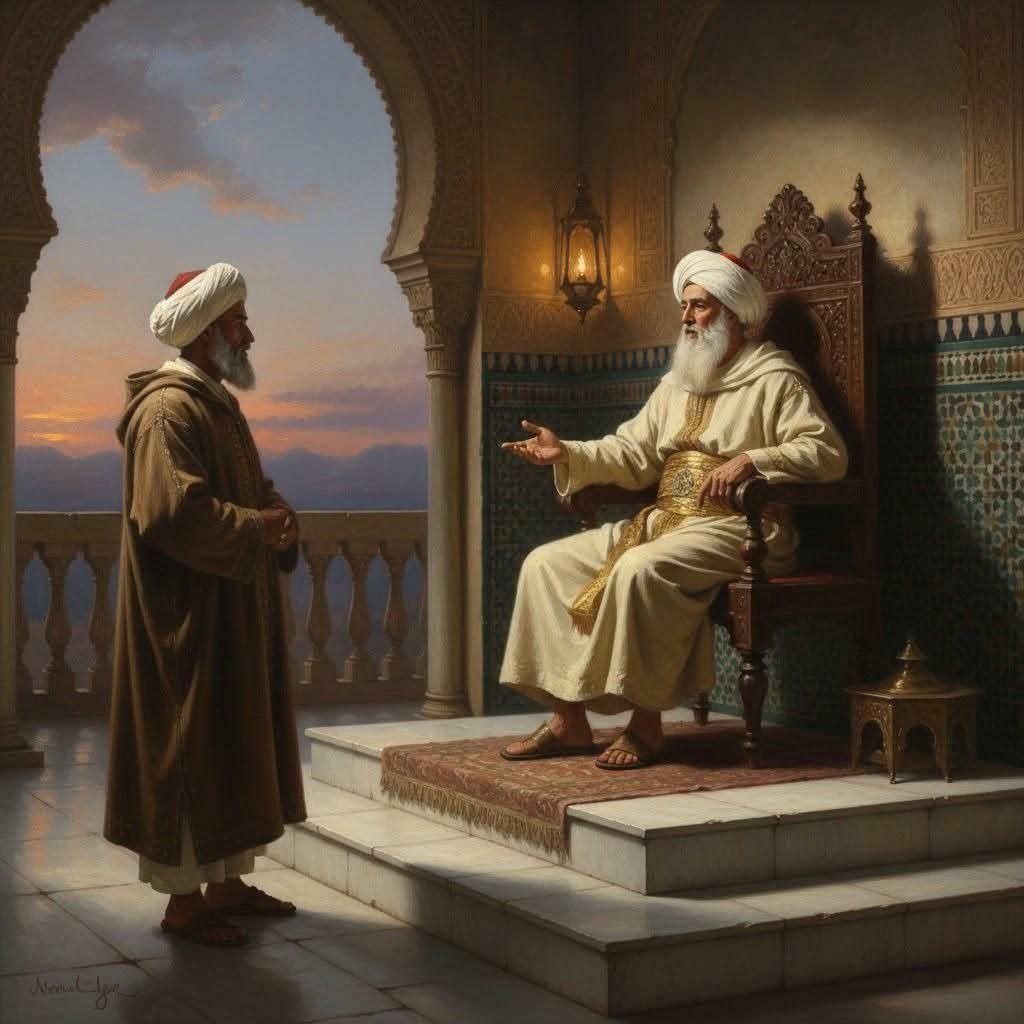
In the court of the Umayyad Caliph Abd al-Malik ibn Marwan, one of the most powerful rulers of his time asked a simple question that would expose a truth so revolutionary, so contrary to everything the world had known, that it would shake him to his core.
The year was early 8th century CE. The Islamic empire stretched from Spain to India. And yet, when the Caliph—a man of pure Arab lineage, descended from the noblest tribes—asked his scholar about the leaders of the Muslim lands, he received an answer that challenged fourteen centuries of human assumptions about power, status, and leadership.
The Remarkable Dialogue
Imam al-Zuhri, one of the greatest scholars of hadith and Islamic law, had just returned from a journey. The Caliph, curious about the state of the empire’s spiritual leadership, began to question him:
But this was only the beginning. The Caliph continued his questioning, region by region, and the pattern that emerged would fundamentally challenge his worldview:
Region after region, the answer was the same: former slaves, freed clients, people of no noble lineage—these were the spiritual leaders of the Muslim world. Finally, almost desperately:
And then came the response that encapsulates the entire message of Islamic meritocracy:
“O Commander of the Faithful, it is nothing but religion: whoever preserves it will lead, and whoever neglects it will fall.”
The Revolutionary Principle
Let’s pause and appreciate what was happening here. This was the 8th century—a time when the entire world operated on rigid hierarchies of birth:
In Europe, feudal lords ruled by divine right of noble blood. In India, the caste system locked people into hereditary stations for life. In China, the mandate of heaven belonged to imperial dynasties. In pre-Islamic Arabia, tribal lineage determined everything—your worth, your opportunities, your future.
Everywhere, without exception, your birth determined your destiny.
Then came Islam with a message so radical it still echoes through history: “The most honored of you in the sight of Allah is the most righteous of you.” (Quran 49:13)
Not the most noble. Not the wealthiest. Not the most powerful. The most righteous. The most knowledgeable. The most committed to preserving and practicing the religion.
The Leaders Al-Zuhri Mentioned
Let’s look at who these leaders actually were—the people the Caliph was so shocked to learn were leading the spiritual life of the Muslim empire:
A former slave, born paralyzed and blind in one eye. Yet he became such a towering figure of Islamic knowledge that scholars would travel for months just to sit at his feet and learn. When Caliph Sulayman ibn Abd al-Malik came to Makkah, he found the great scholar surrounded by students, and the Caliph himself sat in the back, waiting for a chance to ask questions like everyone else.
A Nubian slave who had been freed by a woman from the Hudhayl tribe. He rose to become the leading scholar of Damascus, the very heart of the Umayyad Caliphate. His knowledge of Islamic law and hadith was so comprehensive that people would come from across the empire to consult him on the most complex legal matters.
Born to former slaves, he became one of the most influential figures in early Islamic thought. His insights into spirituality, ethics, and theology shaped Islamic scholarship for centuries. When he spoke, the powerful trembled and the humble found hope. His lineage? It didn’t matter. His knowledge? It transformed the ummah.
The Criteria for True Leadership
Al-Zuhri’s answer to the Caliph identified two essential qualities:
This isn’t merely performing rituals or knowing religious facts. Diyanah means living Islam so completely that it permeates every aspect of your being. It means:
• Your character reflects prophetic teachings
• Your actions match your words
• Your heart is connected to Allah
• Your daily life embodies Islamic ethics
• People see in you a living example of what Islam produces
This is why former slaves could lead nobles—their diyanah made them worthy regardless of their social background.
Riwayah means preserving, understanding, and transmitting the knowledge of Islam—especially the Quran and the Sunnah of the Prophet ﷺ. It means:
• Mastering the sacred texts
• Understanding their meanings and applications
• Memorizing and teaching hadiths accurately
• Explaining complex concepts clearly
• Connecting people to authentic knowledge
These scholars led not because someone appointed them, but because the community naturally turned to them for guidance.
The Timeless Message
The Caliph’s final statement is hauntingly prophetic: “By Allah, the mawali will surely come to lead the Arabs in this land until they are given sermons from the pulpits while the Arabs sit beneath them.”
He said this not as a celebration but almost as a lamentation—he was troubled by this reversal of the social order he had known. But Al-Zuhri’s response puts everything in perspective:
“It is nothing but religion: whoever preserves it will lead, and whoever neglects it will fall.”
This simple statement contains layers of wisdom:
Your lineage, your family name, your tribal connections—none of these guarantee you will lead in Islam. Only knowledge of the religion and commitment to preserving it grant true authority.
If you neglect to learn your religion, if you fail to practice it with excellence, if you don’t strive to preserve and transmit it—you will fall from leadership regardless of who your ancestors were. The Arabs who neglected knowledge lost their leadership to former slaves who preserved it.
Islam created a meritocracy based on the most democratically accessible resource: knowledge. Anyone can learn. Anyone can memorize. Anyone can understand and practice. The doors of knowledge are open to all who seek them earnestly.
Notice that Al-Zuhri didn’t say these scholars were “appointed” or “chosen” by some authority. The people naturally gravitated toward them because their knowledge and character were undeniable. True Islamic leadership is organic—it emerges from excellence, not from election or appointment.
Modern Applications
This principle is as relevant today as it was in the 8th century. In our modern Muslim communities, we face a critical question: Who are we following, and why?
Are we giving authority to those who:
✦ Have deep knowledge of Quran and Sunnah?
✦ Live exemplary lives according to Islamic principles?
✦ Preserve and transmit authentic Islamic knowledge?
✦ Demonstrate both scholarship and righteous character?
Or are we following those who merely:
✦ Have prestigious family names?
✦ Possess wealth and resources?
✦ Hold political positions?
✦ Are charismatic speakers without deep knowledge?
A Call to Action
If you want to lead—truly lead—in the Islamic sense, the path is clear:
Study the Quran deeply. Memorize hadith. Understand Islamic law and theology. Learn from qualified teachers. Read the books of the scholars. Make seeking knowledge a lifelong pursuit.
Remember: Ata ibn Abi Rabah was a disabled former slave, yet he became the scholar of Makkah because he prioritized knowledge above everything else.
Knowledge without action is hollow. Live Islam with such excellence that people naturally want to emulate you. Let your character be the first lesson you teach.
The scholars Al-Zuhri mentioned weren’t just repositories of information—they were living examples of what Islamic knowledge produces in a human being.
Share what you learn. Teach your family. Educate your community. Write, speak, mentor. The riwayah (transmission) of knowledge is a sacred trust.
These great scholars led because they didn’t hoard knowledge—they spread it generously to all who sought it.
The moment you think you’ve learned enough is the moment you begin to fall. Remain humble. Keep studying. Continue developing. Stay connected to authentic sources.
“Whoever preserves it will lead, whoever neglects it will fall”—this applies to every stage of life, not just the beginning of your journey.
Islam established a revolutionary principle that remains unmatched in human history: true leadership belongs to those who know and practice the religion, regardless of their background, lineage, ethnicity, or social class.
A former Nubian slave could lead Damascus because he mastered Islamic knowledge. A paralyzed man could lead Makkah because he embodied Islamic character. Arabs could sit beneath freed slaves on the mimbar (pulpit) because those freed slaves had preserved what the Arabs had neglected.
This wasn’t theoretical equality—this was practical meritocracy in action, fourteen centuries ago, in a world that believed such social mobility was impossible.
The question for us today is simple but profound: Will we preserve this religion through dedicated study, sincere practice, and faithful transmission? Or will we neglect it and watch leadership pass to those more committed than ourselves?



Be First to Comment