
This isn’t a scene from a movie or a fantasy novel. Imagine being so skilled in combat that your name alone becomes a weapon. Imagine facing one hundred enemy champions in single combat and defeating every single one.
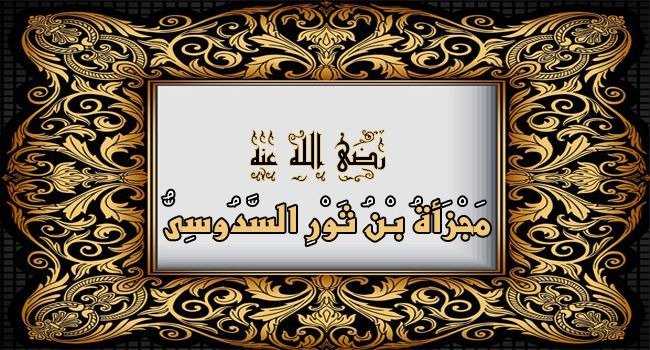
Majza’ah ibn Thawr
The Knight Who Struck Terror in the Hearts of Empires
Imagine being so skilled in combat that your name alone becomes a weapon. Imagine facing one hundred enemy champions in single combat and defeating every single one. This isn’t a scene from a movie or a fantasy novel. This is the real story of Majza’ah ibn Thawr al-Sadousi, a companion of the Prophet Muhammad ﷺ whose legend echoes through the centuries.
“And never think of those who have been killed in the cause of Allah as dead. Rather, they are alive with their Lord, receiving provision.”
— Surah Al-Imran (3:169)
The Early Believer
Before the battles, before the glory, before the legends were written, Majza’ah ibn Thawr made the most important decision of his life. While the Prophet Muhammad ﷺ was still in Mecca, facing persecution and opposition from the powerful Quraysh, Majza’ah heard the message of Islam and his heart recognized the truth immediately.
In those early days in Mecca, accepting Islam meant choosing hardship over comfort, truth over tradition, and Allah over everything the world could offer. Majza’ah was among those brave souls who said “I believe” when it cost everything to do so. He stood with the Prophet ﷺ in the darkest hours, proving his faith not with words alone, but with unwavering loyalty.
True heroism isn’t measured by when you show up, it’s measured by whether you stay. Majza’ah didn’t just accept Islam when it was easy or popular. He embraced it when doing so meant standing against an entire society. That early commitment, that willingness to sacrifice comfort for conviction, would later translate into the extraordinary courage he displayed on the battlefield.
The Call to Jihad
Years later, after the Battle of al-Qadisiyyah had shaken the foundations of the Persian Empire, the Muslim armies gathered their strength for the next phase of their mission. The Persian commander Hormuzan had retreated to the heavily fortified city of Tustar, one of the most beautiful and impregnable cities in all of Persia.
When Caliph Umar ibn al-Khattab, may Allah be pleased with him, sent orders to Abu Musa al-Ash’ari to march toward Tustar, he specifically mentioned one name that must be part of the expedition: Majza’ah ibn Thawr al-Sadousi, the chieftain of Banu Bakr and their undisputed leader.
Umar’s wisdom in choosing Majza’ah wasn’t random. The Caliph understood that some battles require more than numbers. They require warriors whose very presence can shift the momentum of an entire campaign. Majza’ah was given command of the left flank of the Muslim army, a position of critical importance and immense responsibility.
“O you who have believed, when you encounter a company of enemies, stand firm and remember Allah much that you may be successful.”
— Surah Al-Anfal (8:45)
The Siege of Tustar
Tustar was no ordinary city. Built on elevated ground in the shape of a horse, it was protected by one of the greatest walls ever constructed in the ancient world. Historians described it as “the first and greatest wall built on the face of the Earth.” A massive river called Dujayl provided water through an ingenious system of underground tunnels built by King Shapur, reinforced with iron pillars and lined with lead.
When the Muslim army arrived, Hormuzan had prepared an additional defense: a massive trench surrounding the entire wall, making it virtually impossible to approach the city. Behind this fortress, he had gathered the elite forces of the Persian Empire.
For eighteen long months, the Muslim army laid siege to Tustar. During this time, they fought eighty separate battles with the Persian forces. Each battle began with single combat between the champions of both sides, which would then escalate into full-scale warfare.
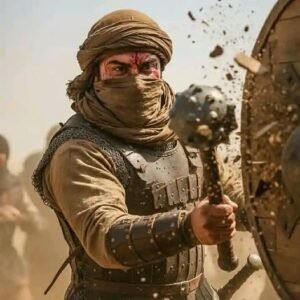
In these eighty battles, Majza’ah ibn Thawr accomplished something that defies imagination. In single combat, following the ancient code of warrior honor, he defeated one hundred Persian champions. Not in the chaos of battle where luck might play a role, but in one-on-one duels where skill, courage, and faith were the only factors that mattered.
His name became a source of terror among the Persian ranks and a rallying cry for the Muslims. Soldiers would whisper his name with awe. The enemy would tremble at his approach. And those who had never met him before finally understood why Umar ibn al-Khattab had insisted he be part of this campaign.
Think about that for a moment. One hundred victories. One hundred times he stepped forward when a champion was needed. One hundred times he faced a skilled warrior in mortal combat. One hundred times he emerged victorious. This wasn’t just martial skill, it was a demonstration of unshakeable faith, extraordinary courage, and the blessing of Allah upon a warrior who fought purely for His sake.
The Impossible Mission
After eighteen months, the Muslims finally pushed the Persians back across the trench and reached the walls of Tustar. But this only led to a worse situation. From the top of the walls, Persian archers rained arrows down on them. Worse still, they lowered chains with red-hot hooks, and any Muslim soldier who tried to scale the walls would be caught by these burning hooks, pulled up, and killed.
The Muslim army was in distress, praying to Allah with sincere hearts to grant them victory. Then something miraculous happened. As Abu Musa al-Ash’ari stood looking at the impenetrable walls, an arrow landed at his feet. Attached to it was a message from a Persian nobleman inside the city.
“I have come to trust you Muslims,” the message read. “I seek your protection for myself, my family, and my wealth. In return, I will show you a secret passage that leads into the city.” The nobleman’s brother had been killed by Hormuzan, and he had decided that the justice of the Muslims was better than the tyranny of his own people.
Abu Musa needed someone brave, intelligent, and skilled in swimming to explore this secret passage. When he consulted with his commanders, there was only one name on everyone’s lips: Majza’ah ibn Thawr.
When Abu Musa asked him to undertake this dangerous mission, Majza’ah didn’t hesitate. “Make me that man, O Commander,” he said simply. No questions. No doubt. Just absolute trust in Allah and readiness to serve.
Into the Depths
Under the cover of darkness, Majza’ah followed the Persian guide into an underground tunnel that connected the river to the city. The passage was treacherous, sometimes wide enough to walk through, sometimes so narrow that Majza’ah had to swim. It twisted and turned through the darkness, a labyrinth beneath the earth that would have broken a lesser man’s spirit.
But Majza’ah had strict orders: observe the path, identify the gate, locate Hormuzan’s position, and return without taking any action. When he finally emerged inside Tustar and saw Hormuzan, the man responsible for so much Muslim bloodshed, every instinct in his warrior’s heart wanted to strike. His hand moved toward his bow, ready to end the Persian commander right there.
But then Majza’ah remembered Abu Musa’s command: “Do not initiate anything other than your mission.” In that moment, he demonstrated a courage greater than defeating any champion. The courage to restrain himself. The courage to obey. The courage to trust the plan even when immediate action seemed so tempting. He lowered his bow and returned the way he came.
The Final Assault
Abu Musa selected three hundred of the bravest, strongest, and most skilled swimmers from the Muslim army. He placed them under Majza’ah’s command, gave them their instructions, and established a signal: when they heard the takbir from inside the city, the entire Muslim army would storm the gates.
Majza’ah instructed his men to strip down to light clothing so the water wouldn’t weigh them down, to carry only their swords, and to bind them tightly to their bodies. Then, in the last watch of the night, they entered the tunnel.
For two hours, Majza’ah and his warriors struggled through that dark, dangerous passage. Sometimes the tunnel defeated them, sometimes they defeated it. The water pulled at them, the darkness disoriented them, and the narrow passages nearly crushed them. When they finally emerged on the other side, Majza’ah counted his men. Out of three hundred who had entered, only eighty remained. Two hundred and twenty brave souls had been claimed by the tunnel.
“Indeed, Allah loves those who fight in His cause in a row as though they are a structure joined firmly.”
— Surah As-Saff (61:4)
But those eighty men were enough. The moment their feet touched solid ground inside Tustar, they drew their swords and fell upon the fortress guards. Then they raced to the gates and threw them open, their voices rising in unison: “Allahu Akbar! Allahu Akbar!”
Their takbir from inside the city met the takbir of their brothers outside. At dawn, the Muslim army poured through the gates of Tustar. What followed was one of the most terrible battles in history, a confrontation so intense that historians would speak of it for centuries to come.
The Hero’s Final Stand
In the chaos of the battle, Majza’ah ibn Thawr caught sight of Hormuzan. The Persian commander who had caused so much suffering, who had fortified this city against them, who had made eighteen months of siege necessary. For a moment, the two warriors were separated by the tide of combat. Then they saw each other again.
Majza’ah charged forward. Hormuzan met his advance. Two legendary warriors, each at the peak of their skill, clashed in the heart of the battle. Their swords met in a final, decisive exchange. Both struck simultaneously, each aiming for a killing blow.
Majza’ah’s sword glanced off Hormuzan’s armor. But Hormuzan’s blade found its mark. The great warrior, the champion of one hundred duels, the man whose name had become synonymous with courage and faith, fell on the battlefield. He collapsed with his eyes serene, knowing that Allah had granted him what he had been fighting for all along: martyrdom in the path of truth.
The Muslim soldiers, inspired by Majza’ah’s sacrifice and the opening he had created, pressed forward with renewed determination. By the will of Allah, victory was theirs. Hormuzan was captured alive and would later be brought to Umar ibn al-Khattab in Madinah, still wearing his jeweled crown and golden robes.
But with their victory came a profound grief. The soldiers who brought news of triumph to Madinah also brought a message of sorrow for the Commander of the Faithful: Majza’ah ibn Thawr, the fearless knight of Islam, had fallen as a martyr in the conquest of Tustar.
Lessons for the Modern Warrior
Majza’ah’s story isn’t just ancient history. It’s a blueprint for excellence that speaks directly to us today. Here’s what this legendary companion teaches us:
Majza’ah believed in Islam when it was dangerous to do so. Today, standing for truth still requires courage. Whether it’s standing against injustice, maintaining your principles in a corrupt environment, or simply being openly Muslim in an unfriendly environment, the question is: Will you stand when it costs you something?
One hundred victories didn’t happen by accident. Majza’ah trained, prepared, and honed his skills to perfection. Whatever your field—whether it’s academics, athletics, business, or dawah—excellence requires the same dedication. No shortcuts. No excuses. Just relentless pursuit of mastery.
When Majza’ah had the chance to kill Hormuzan in the tunnel, he restrained himself because his commander had ordered him not to act. In our age of instant gratification and impulsive reactions, this level of discipline seems almost superhuman. But it’s exactly what separates those who achieve great things from those who merely want to achieve great things. This is why laws should be respected and followed in the street, at school, or anywhere.
Majza’ah didn’t send others into the tunnel while he waited safely outside. He went first. He took the greatest risk. He bore the heaviest burden. Real leaders don’t ask others to do what they themselves won’t do. They set the standard by their own example.
“Among the believers are men who have been true to their covenant with Allah. Some of them have fulfilled their vow by death, and some are still waiting, but they have never changed in the least.”
— Surah Al-Ahzab (33:23)
The Legacy Lives On
When historians write about the Islamic conquests, they speak of strategies and numbers, of cities taken and empires that fell. But the real story is about individuals like Majza’ah ibn Thawr, men who transformed their faith from words into action, who measured their lives not in years but in how much they gave for what they believed in.
Majza’ah was among the first to believe while the Prophet ﷺ was still in Mecca, facing persecution and hardship. He held firm through the migrations, through the battles, through years of struggle. And when his moment came, when Allah called him to the ultimate test, he answered with the same courage that had defined his entire life.
Today, we face different battles and harships. We’re not storming fortress cities or facing Persian champions in single combat. But we face challenges that require the same qualities Majza’ah embodied: unwavering faith, relentless discipline, absolute courage, and complete commitment to truth regardless of the cost.
The question isn’t whether you’re as skilled a warrior as Majza’ah ibn Thawr. The question is: Are you willing to be as committed to your principles? Are you prepared to work as hard toward excellence? Will you lead when leadership is needed? Will you stand when standing requires sacrifice?
Majza’ah’s story challenges us. It refuses to let us settle for mediocrity. It demands that we ask ourselves: What am I fighting for? What am I willing to sacrifice? What legacy am I building?
The companions of the Prophet ﷺ weren’t mythical beings with superhuman abilities. They were real people who made real choices. They chose faith over comfort. They chose discipline over ease. They chose courage over safety. And through those choices, they became legendary.
The same choice is available to you today. You might not face a Persian army, but you face hardships in your school, your workplace, your community. You have opportunities every single day to choose excellence over mediocrity, courage over cowardice, commitment over convenience, to add to your community some value and be useful. The question is: What will you choose?
Majza’ah ibn Thawr al-Sadousi fell as a martyr on the soil of Tustar, but his legacy rises with every young Muslim who reads his story and decides to pursue excellence. With every person who chooses to stand for truth when it’s difficult. With every believer who remembers that faith isn’t just what you say, it’s what you do when everything is on the line. It is what you add to this life and to the people. Majza’ah worked to being freedom to others and free them from tyrant who ruled them.
May Allah have mercy on Majza’ah ibn Thawr and grant him the highest ranks of Paradise with the martyrs and the righteous. May Allah make us among those who follow in his footsteps, who live with purpose, fight for truth, and die with faith. And may He count us among those who never change, never compromise, and never surrender the principles we hold dear.
“The best people are those of my generation, then those who come after them, then those who come after them.”
Majza’ah ibn Thawr was of that first blessed generation. His story isn’t just history. It’s an invitation. An invitation to greatness. An invitation to purpose. An invitation to live a life that matters.
The question is: Will you accept it?

Be First to Comment