
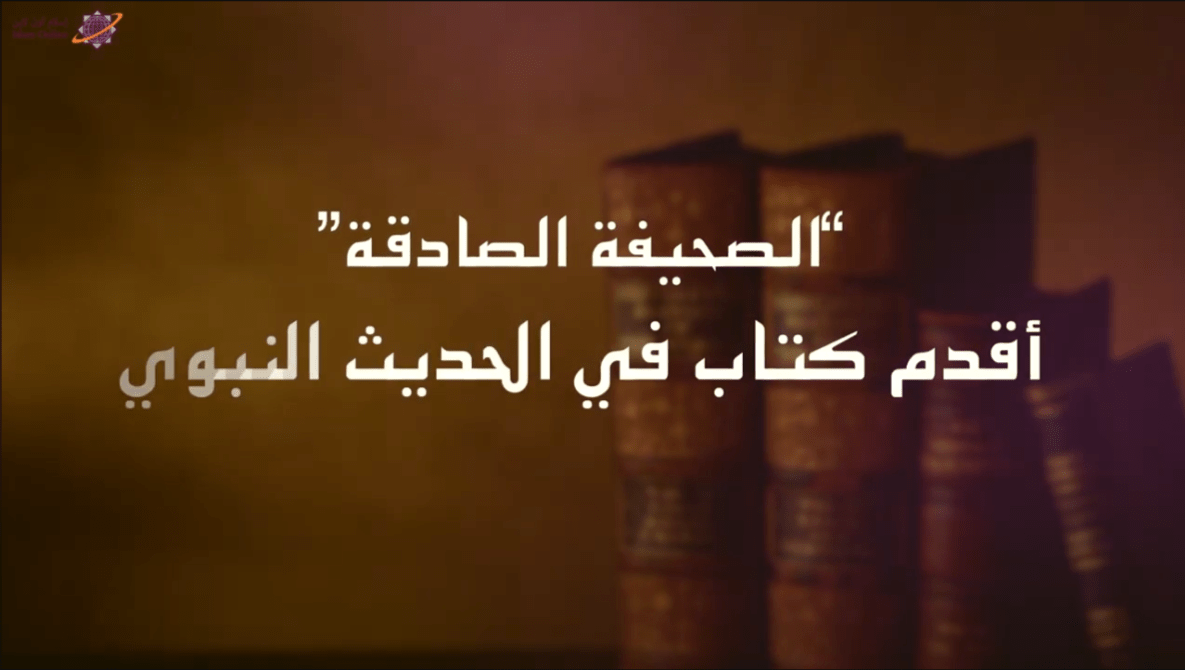
The Sadiqah: The Oldest Book of Prophetic Hadith
Abdullah ibn Amr ibn al-Aas and His Historic Preservation of the Prophet’s Teachings
Introduction: The First Written Hadith Collection
The “Sadiqah” (الصحيفة الصادقة) is the oldest and most authentic book in the science of hadith, compiled by the noble companion Abdullah ibn Amr ibn al-Aas (may Allah be pleased with him and his father). It represents the first method of recording hadith by writing it down during the lifetime of the Prophet (peace and blessings be upon him).
The Sadiqah demonstrates how the companions began preserving the Prophet’s teachings in writing during his lifetime, marking the beginning of hadith documentation.
The Three Stages of Hadith Transmission
The transmission of hadith went through three distinct phases:
Writing Hadith During the Prophet’s Lifetime
During the Prophet’s (peace and blessings be upon him) lifetime, hadiths were written in the form of scrolls (صحف) with his permission. Sometimes he would even order them to be written. Several important scrolls were compiled:
- The scroll of Amir al-Mu’minin Ali ibn Abi Talib (may Allah be pleased with him) containing rulings about the sanctity of Madinah, diyah (blood money), and ransoming captives
- The book of Amr ibn Hazm al-Ansari containing rulings on zakat, purification, and prayer
- The document the Prophet (peace and blessings be upon him) ordered to be written upon his arrival in Madinah, outlining the rights of Muslims and Jews
Abdullah ibn Amr’s Sadiqah
The Sadiqah that Abdullah ibn Amr ibn al-Aas (may Allah be pleased with him) compiled was among the scrolls written during the Prophet’s (peace and blessings be upon him) era. Abdullah ibn Amr was the most prolific writer of the Prophet’s hadith among the companions.
Abdullah ibn Amr reported that Ahmad ibn Hanbal and others said: “I used to write down everything I heard from the Messenger of Allah (peace and blessings be upon him) because I wanted to memorize it. The Quraysh forbade me from this, saying: ‘Do you write down everything you hear from the Messenger of Allah (peace and blessings be upon him)? He speaks when he is pleased and when he is angry.’ So I stopped.”
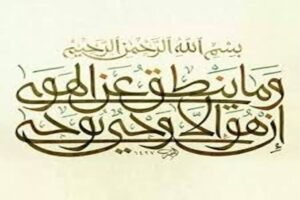
He continued: “I mentioned this to the Messenger of Allah (peace and blessings be upon him), and he pointed to his mouth and said: ‘Write, for by the One in whose hand is my soul, nothing comes out of it except the truth.'”
Abdullah’s Continued Writing
Abdullah ibn Amr continued writing after receiving the Prophet’s (peace and blessings be upon him) permission, expanding his efforts. Abu Hurayrah (may Allah be pleased with him) said:
“No one among the companions of the Messenger of Allah (peace and blessings be upon him) narrated more hadiths than me, except Abdullah ibn Amr, for he wrote while I did not write.”
This shows the importance of writing in preserving knowledge, as Abdullah’s written collection became one of the most authentic sources of hadith.
The Significance of the Sadiqah
The result of Abdullah ibn Amr’s writing was the Sadiqah (الصحيفة الصادقة), named thus because it was one of the most authentic and well-known collections written during the Prophet’s (peace and blessings be upon him) time.
Abdullah was extremely protective of the Sadiqah. He kept it in a secure box and rarely allowed anyone to approach it. Mujahid ibn Jabr al-Makki said:
“I came to Abdullah ibn Amr and reached for the scroll under his mattress, but he prevented me. I said: ‘You never prevented me from anything before!’ He said: ‘This is the Sadiqah – this contains what I heard directly from the Messenger of Allah (peace and blessings be upon him) with no one between us.'”
The Importance of the Sadiqah in Hadith Science
Though called a “scroll” (صحيفة), the Sadiqah was not small in size. Due to its extensive hadith content, some scholars like Ibn Ma’in referred to it as a “book.” This demonstrates the Sadiqah’s importance among the written and trusted hadith collections.
The Sadiqah represents the beginning of systematic hadith preservation, setting the foundation for all later hadith collections.
Scholars’ Opinions on the Sadiqah
Al-Dhahabi mentioned that some scholars said:
“This scroll should be more authentic than anything else because it was written by Abdullah ibn Amr ibn al-Aas directly from the Prophet (peace and blessings be upon him), and writing is more accurate than human memory.”
This statement highlights the importance of written documentation in preserving the authenticity of hadith, as writing reduces the risk of errors that can occur in oral transmission.
Lessons from the Story of the Sadiqah
The story of Abdullah ibn Amr and his Sadiqah teaches us several important lessons:
- Preservation of Knowledge: The importance of writing down and preserving religious knowledge for future generations.
- Following the Prophet’s Guidance: Abdullah sought and followed the Prophet’s (peace and blessings be upon him) permission to write hadiths.
- Dedication to Learning: Abdullah’s commitment to recording everything he heard from the Prophet shows true dedication to seeking knowledge.
- Protecting Sacred Knowledge: His careful preservation of the Sadiqah demonstrates the responsibility of protecting religious texts.
- Authenticity in Transmission: The Sadiqah shows how early Muslims ensured the accurate transmission of the Prophet’s teachings.
The story of the Sadiqah reminds us that Islam has always valued knowledge preservation, and that the companions took great care to accurately transmit the Prophet’s teachings to future generations.
Conclusion: The Legacy of the Sadiqah
The Sadiqah represents:
- The Beginning of Hadith Documentation: It marks the start of systematic hadith preservation during the Prophet’s lifetime.
- A Model of Knowledge Preservation: It demonstrates the companions’ commitment to accurately recording the Prophet’s teachings.
- Foundation for Hadith Sciences: It laid the groundwork for all later hadith collections and classifications.
- Authenticity in Transmission: It shows the importance of direct, written transmission in preserving religious knowledge.
- Inspiration for Scholars: It continues to inspire Muslims to value and preserve their religious heritage.
May Allah be pleased with Abdullah ibn Amr ibn al-Aas and have mercy on him for his dedication to preserving the Prophet’s teachings, which has benefited generations of Muslims.






Be First to Comment