

So, what made the nobles of his people hasten to his words and to his religion? Abu Bakr, Talhah, Az-Zubair, Uthman ibn Affan, Abd al-Rahman ibn Awf, and Sa’d ibn Abi Waqqas all quickly abandoned the wealth and glory that surrounded them in their community, accepting instead heavy burdens in a life full of cares, troubles, and struggle.
What made the weak of his community seek his protection and hasten to his banner and his call, even when they saw him without wealth or weapons, with harm inflicted upon him and evil following him in a terrifying way, without any worldly means to protect himself?
What made the pre-Islamic tyrant Umar ibn al-Khattab, who once set out with sword in hand to cut off his noble head, return to cut off, with the same sword made sharper through faith, the heads of the Prophet’s enemies and persecutors?
What made the city’s elite and noble men go to him and pledge to be his companions, willingly embracing a life filled with hardship and danger, knowing that the struggle between them and Quraysh would be more dreadful than terror itself?
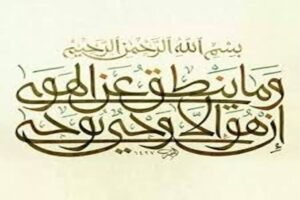
What made those who believed in him increase rather than decrease, even though he openly said, day and night, “I hold no power of good or harm for you. I do not know what will become of you or of me.”?
What made them believe that the world would open its lands to them, that their feet would tread upon the gold and crowns of kings, and that the Qur’an they recited in secret would echo in strong, ringing tones not only in their own generation or peninsula, but throughout the ages and across the earth?
What made them believe the prophecies the Messenger told them, though when they looked right and left they saw nothing but heat, barren land, and stones emitting boiling vapor, their pointed tops like devils’ heads?
What filled their hearts with certainty and willpower? It was Ibn Abd Allah—who else could it have been? They saw with their own eyes all his virtues and all that distinguished him. They saw his chastity, his purity, his honesty, his straightforwardness, and his courage. They saw his superiority and his compassion. They saw his intellect and his eloquence. They saw the sun itself shining in the same way that his truth and eminence shone.
They felt the pulse of life running through his veins when Muhammad began to bestow upon them his daily revelation and his earlier contemplation. They saw all this and more, not through a mask but directly, face to face, and in practice, through their own observation and experience.






Be First to Comment