
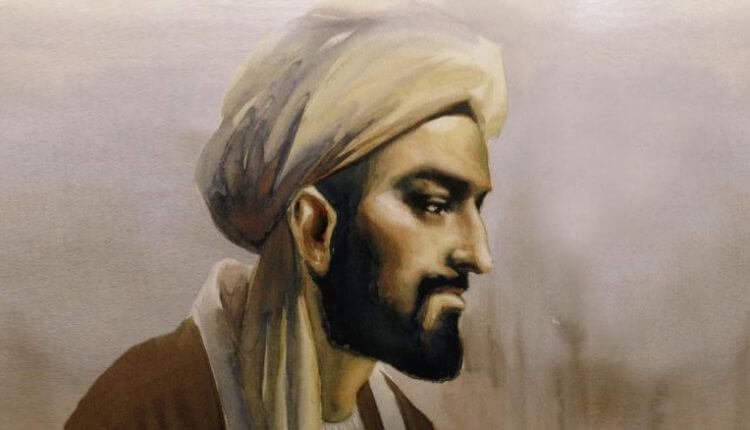
Ibn Khaldun: The Forgotten Father of Modern Sociology and Economics
How a 14th-century North African scholar laid the foundations for modern social sciences
The history of modern intellectual thought is often told through a familiar constellation of European Enlightenment thinkers. Standard school textbooks teach that Adam Smith single-handedly birthed modern economics in 1776 with his landmark work, “The Wealth of Nations,” and that French philosopher Auguste Comte invented sociology in the nineteenth century. Yet, four centuries before the European Enlightenment, a brilliant North African polymath had already laid down the exact empirical and mathematical foundations for both sciences.
His name was Valiuddin Abd al-Rahman ibn Khaldun. Writing from a desert cave in modern-day Algeria in 1377, he penned the “Muqaddimah,” or “The Introduction.” This monumental text stands as one of the most astonishing intellectual achievements in human history, serving as the true, unrecognized blueprint for modern sociology, economics, and historiography.
The Birth of Sociology: Ilm al-Umran
Long before Western thinkers recognized that human societies follow predictable, structural laws rather than the arbitrary whims of rulers, Ibn Khaldun invented an entirely new field of study to explain them, which he termed “Ilm al-Umran,” or the Science of Human Social Organization. At the heart of his sociological theory was the concept of “Asabiyyah,” a term translating closely to social cohesion, group solidarity, or collective consciousness.
Ibn Khaldun argued that human civilizations fluctuate in a predictable, cyclical rhythm driven by this solidarity. Tribal or nomadic groups possess intense social bonds born out of the harsh realities of survival. This intense cohesion eventually allows them to conquer weakened, fragmented urban empires. However, once established in the luxury and comfort of the city, the ruling class grows complacent. Over generations, the social bond decays, luxury breeds vulnerability, and the dynasty ultimately crumbles when the next cohesive group emerges from the periphery. This sophisticated macro-sociological understanding of human systems predates European sociology by nearly half a millennium.
Ibn Khaldun’s theory of Asabiyyah represents one of the first attempts in history to scientifically analyze the rise and fall of civilizations, predating modern sociological thought by centuries.
The Father of Economics
While Adam Smith is universally celebrated as the pioneer of free markets, Ibn Khaldun outlined the core principles of modern macroeconomics in the fourteenth century with breathtaking precision. Smith famously utilized the example of a pin factory to demonstrate how the division of labor increases productivity. Four hundred years earlier, Ibn Khaldun wrote in the “Muqaddimah” that the power of the individual human being is not sufficient to obtain the food he needs to survive, and that it is only through cooperation that the needs of a community can be satisfied many times over. He asserted that true wealth is not the hoarding of gold or silver, but the value created by human labor through cooperation.
Ibn Khaldun also detailed the laws of supply and demand long before the classical economists of Europe. He noted that when a commodity is scarce, its price rises, and when it is abundant, its price falls, breaking down how market prices are fundamentally composed of the cost of labor, raw materials, and administrative overhead.
Even the famous “Laffer Curve” of modern supply-side economics—the theory that lowering tax rates can actually increase total government revenue by stimulating business—carries Ibn Khaldun’s fingerprints. When economist Arthur Laffer popularized this concept in the 1970s, he openly admitted that he took the idea directly from the fourteenth-century Muslim scholar.
Ibn Khaldun had accurately deduced that at the beginning of a dynasty, taxation yields a large revenue from small assessments, because low tax rates incentivize citizens to work, trade, and innovate. Conversely, at the end of a dynasty, a greedy state raises tax rates, which destroys business incentives, shrinks the economy, and causes total tax revenue to plummet.
Beyond Economics: A Polymath’s Contributions
The brilliance of this medieval scholar extended far into other disciplines. In historiography, he completely rejected the blind acceptance of historical myths and flattery, introducing rigorous source criticism, geographic factors, and psychological analysis to verify historical claims. In demographics, he analyzed how population density directly impacts economic growth and urban development, viewing the chaos of human history not as a series of random events, but as a reflection of hidden, scientific laws.
Correcting the Historical Record
Omitting Ibn Khaldun from the standard global narrative of science and progress remains a profound historical oversight. He did not merely hint at these groundbreaking concepts; he constructed an exhaustive, empirical framework for them that mirrors our modern world.
Recognizing Ibn Khaldun is not about diminishing the valuable contributions of Adam Smith or the Western Enlightenment. Rather, it is about correcting the global intellectual ledger to honor a fourteenth-century genius who looked across the sands of time and charted the laws of human civilization long before the rest of the world caught up.
As we continue to study the development of human thought, it’s essential that we give credit where credit is due. Ibn Khaldun’s contributions to sociology, economics, and historiography were not just ahead of their time—they were so far ahead that it would take the Western world centuries to catch up. His work serves as a reminder that intellectual progress is not the exclusive domain of any one culture or civilization, but a shared human heritage.
• Muqaddimah (The Introduction) – 1377
• Kitab al-Ibar (Book of Lessons) – A comprehensive history of the world













Be First to Comment