
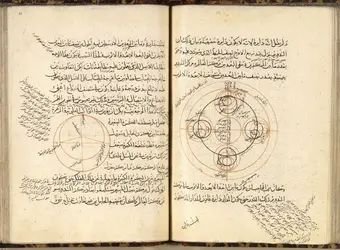
Sharaf al-Din al-Tusi: The Polymath of the Islamic Golden Age
A Genius in Mathematics, Astronomy, and Philosophy
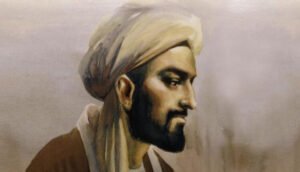
Sharaf al-Din al-Muzaffar ibn Muhammad ibn al-Muzaffar al-Tusi (1135–1213 CE) was one of the most brilliant and versatile scholars of the Islamic Golden Age. Born in Tus, in the Khorasan region of Persia (modern-day Iran), al-Tusi made groundbreaking contributions to mathematics, astronomy, philosophy, and medicine. His work not only advanced Islamic science but also laid the foundation for later developments in Europe during the Renaissance.
Al-Tusi was born into a family of scholars, which provided him with an intellectual environment from an early age. He received his education in Tus and later in Baghdad, the cultural and scientific hub of the Islamic world at the time. His thirst for knowledge led him to study under some of the most renowned scholars of his era, mastering disciplines such as mathematics, astronomy, logic, philosophy, and medicine.
His early works already demonstrated a deep understanding of the sciences and a unique ability to synthesize knowledge from various fields. This interdisciplinary approach would become a hallmark of his career.
Al-Tusi is perhaps best known for his work in mathematics, particularly in algebra. He wrote several influential treatises that expanded on the works of earlier mathematicians like Al-Khwarizmi. One of his most notable contributions was in the study of cubic equations. In his book “Al-Mu’adalat” (The Equations), he provided geometric solutions to cubic equations, which were among the most advanced mathematical problems of his time.
Al-Tusi also made significant strides in trigonometry. He was one of the first mathematicians to study the properties of spherical triangles, which are triangles drawn on the surface of a sphere. His work in this area was crucial for advancements in astronomy and navigation.
Additionally, he contributed to the development of numerical analysis and was one of the first to use iterative methods to approximate the roots of equations. His methods for solving equations numerically were far ahead of his time and foreshadowed techniques that would later be developed in Europe.
Al-Tusi was also a pioneering astronomer. He worked extensively on the Ptolemaic model of the universe, which was the dominant cosmological model of his time. While he initially worked within the Ptolemaic framework, his observations and calculations led him to question some of its assumptions.
One of his most significant contributions to astronomy was his work on the motion of the planets. He proposed a model that improved upon Ptolemy’s equant model, which was used to explain the apparent irregularities in the motion of the planets. Al-Tusi’s model was more accurate and influenced later astronomers, including Copernicus, who referenced al-Tusi’s work in his own heliocentric model of the universe.
Al-Tusi also wrote commentaries on Ptolemy’s Almagest, the most important astronomical text of antiquity. His commentaries were widely read and studied in both the Islamic world and Europe.
Beyond mathematics and astronomy, al-Tusi was a prolific writer in philosophy and medicine. He wrote extensively on logic, ethics, and metaphysics, contributing to the intellectual discourse of his time. His philosophical works often explored the relationship between reason and revelation, a topic of great importance in Islamic thought.
In medicine, al-Tusi wrote treatises that built upon the works of earlier physicians like Avicenna. His medical writings covered a wide range of topics, from anatomy to the treatment of diseases. He was particularly interested in the practical application of medical knowledge and the importance of empirical observation in diagnosis and treatment.
Al-Tusi’s work had a profound impact on both the Islamic world and Europe. His mathematical and astronomical treatises were translated into Latin and studied by European scholars during the Middle Ages and the Renaissance. His ideas influenced the development of algebra and trigonometry in Europe, and his astronomical models contributed to the eventual transition from the Ptolemaic to the Copernican model of the universe.
In the Islamic world, al-Tusi is remembered as one of the greatest scholars of the Golden Age. His interdisciplinary approach to knowledge and his ability to synthesize ideas from various fields made him a model for later generations of scholars. His works continue to be studied and admired for their depth, originality, and clarity.
Al-Tusi passed away in 1213 CE, but his legacy lives on. His works remain a testament to the intellectual vibrancy of the Islamic Golden Age and the enduring power of human curiosity and ingenuity.
Key Themes
Sharaf al-Din al-Tusi’s life and work exemplify the spirit of inquiry and innovation that defined the Islamic Golden Age.










Be First to Comment