
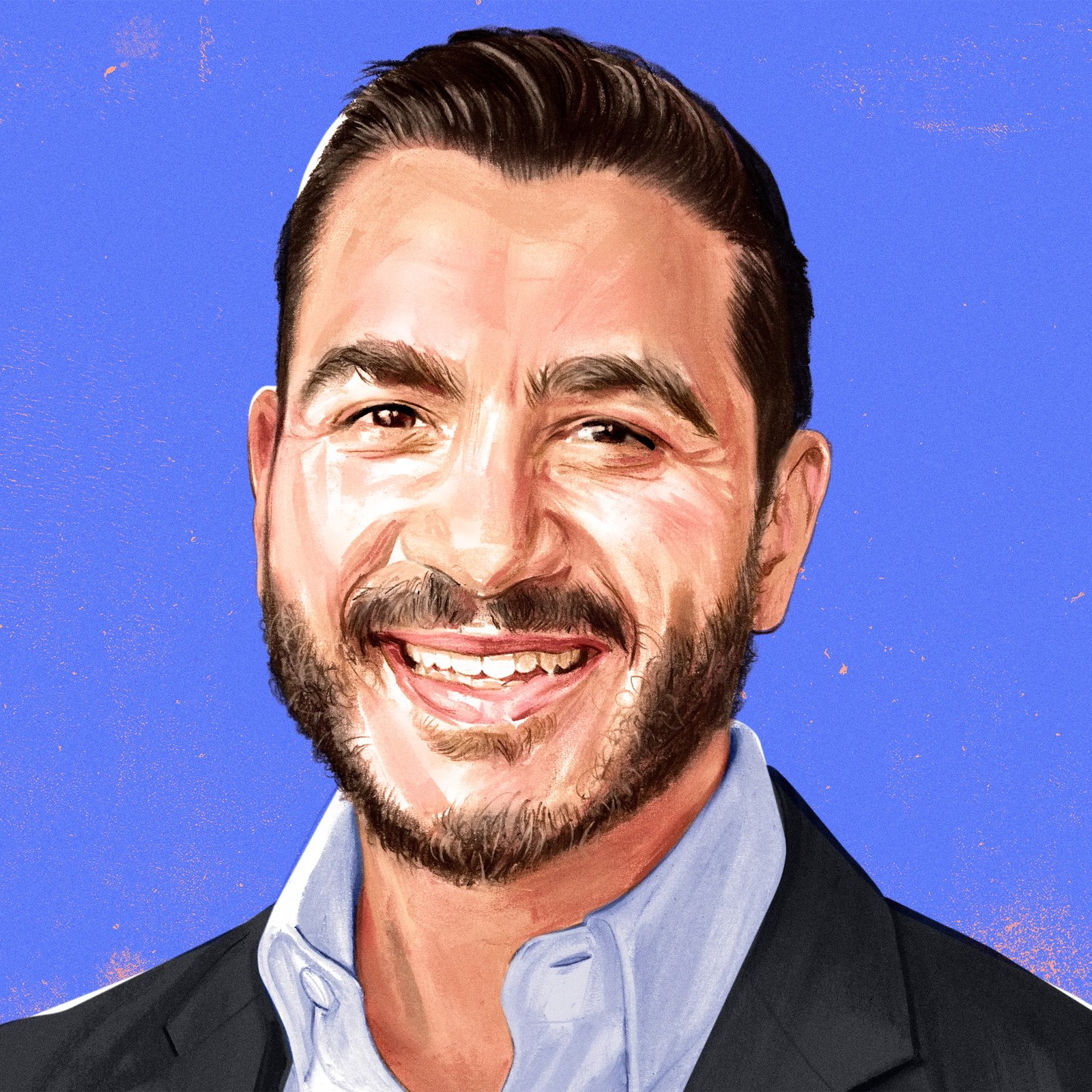
When Abdul Became Abdul El-Sayed — And America Walked In
How a Michigan Senate candidate is quietly rewriting the grammar of immigrant politics in America
When Abdul came out of Dearborn, America walked in. Abdul El-Sayed now stands in that fine margin between being an ordinary candidate who might win or lose, and founding a historic shift in contemporary American political history. He is the son of an Egyptian immigrant, a Muslim, a physician, raised in Michigan — and America could easily have reduced him to those four words, turning him into the Arab-Muslim candidate carrying his community’s grievances to Washington, asking for a wider seat at the table. But he understood that the real road to the heart of American politics doesn’t begin by asking the table for a chair for the minority you belong to. It begins by asking who built the table, who sits around it, who pays for the meal, and why millions remain standing outside the room.
This is where the El-Sayed phenomenon lies. He is not the first Arab American to enter politics, nor the first Muslim to run for high office, nor the first progressive to rail against corporate influence, nor the first child of immigrants to stand before a white audience and talk to them about America. What’s new in his experience is that identity, for him, doesn’t appear to be the room his message lives in — it’s the door he walked through into a wider conversation. That is a genuinely significant shift in the history of Arab and Muslim Americans in U.S. politics.
A Different Political Grammar
Traditional diaspora politics tells the American: I am Arab, this is my cause, and I want you to understand it. El-Sayed instead tries to say: I understand this cause because I am Arab, but I also understand why you can’t pay your doctor’s bill, why the hospital in your town closed, why food prices rose, why your son is going to a war you didn’t want, and why a billionaire can reach a senator while you wait three months for a doctor’s appointment. In doing so, he doesn’t ask the worker in Flint to step into the Arab cause. He takes the Arab cause and places it beside the Flint worker’s bill, then tells them both: look closely — there may be the same system behind both stories. That is a far shrewder political craft than identity politics.
The Lesson of 2018
El-Sayed tried this path before. In 2018, he arrived as a young man seeking the Michigan governorship, carried by the Bernie Sanders wave and the new left, talking about Medicare for All, corporations, and money in politics. He lost the primary. That could have been the end of his story. But defeat sometimes teaches a politician what victory cannot: that enthusiasm is not a coalition, that the crowd cheering for you is not necessarily the electorate that will vote for you, and that in American politics it isn’t enough to be the owner of a cause — you must make others discover that your cause speaks about them too.
He returned eight years later, more experienced, and won the Democratic Senate nomination last August despite institutional opposition and enormous outside spending against him. Today, the very party he battled in the primary is sending Kamala Harris to Detroit to stand beside him — a scene worth reflecting on in itself. The man who, weeks earlier, faced the question of whether he could break through the establishment now watches the establishment ask how to rally around him. This doesn’t mean he will win, nor that all of Michigan is behind him — the general election is an entirely different matter, and his opponents are already trying to make his religion and his positions on Israel central to the race. Recent reports have documented rising anti-Muslim rhetoric surrounding his candidacy, while his positions on Gaza and Israel remain among the most divisive elements of his campaign. But history doesn’t always move by complete victories. Sometimes it moves by making what was impossible yesterday debatable today.
A Shift Inside the American Left
El-Sayed should be read alongside a broader transformation within the American left. For a long time, the American left spoke the language of the university more than the language of the gas station. It had its own vocabulary, identities, terminology, and culture-war battles — better understood by someone who spent twenty years in seminars than a worker who spent twenty years on a factory floor. Then came a new generation relearning something very old: that a poor white person, a poor Black person, an Arab immigrant, and a single mother don’t necessarily share an identity — but they may well share a bill. That is populism’s old genius, when used well: shifting politics from the question “who are you?” to the question “who took what from you?”
This is exactly what El-Sayed does whenever opponents try to drag him toward his name, his religion, or Gaza — he redirects the conversation back to prices, healthcare, tariffs, war, and what a Michigan family pays each month. In his recent CBS interview, he tried to turn an attack on his identity and alliances into a conversation about gas, groceries, the doctor, and the war. He does not easily let an opponent choose the stage he stands on. That is the difference between an immigrant who enters politics and a politician who redefines what immigration means within politics. The first says: look at me, I’ve become American like you. The second no longer needs that sentence at all — he simply stands and talks about the American’s tax bill, the American’s hospital, the American’s son going to war, the broken American road, the American company buying influence. If his opponent tries to remind voters that his father came from Egypt, the opponent himself starts to look like the one who hasn’t understood that the story has already moved elsewhere.
- 2018: El-Sayed runs for Michigan governor on a Bernie Sanders-aligned platform; loses the Democratic primary.
- August: Wins the Democratic Senate nomination despite institutional opposition and heavy outside spending against him.
- Kamala Harris travels to Detroit to campaign alongside him, despite his past disagreements with the Biden-Harris administration’s Gaza policy.
- Opponents have sought to center his religion and his positions on Israel and Gaza in the general election campaign.
- Reports have documented a rise in anti-Muslim rhetoric tied to his candidacy.
From “Uncommitted” to a Politics of Power
This is an anthropological moment before it is an electoral one, because communities don’t assimilate into nations when their foreign-sounding names disappear. They assimilate when their causes stop being merely “the community’s causes” — when the Palestinian that the Arab speaks of becomes a subject debated by a student at the University of Wisconsin, and when the hospital that closed in a white town becomes a cause discussed by a doctor named Abdul El-Sayed.
This is why the “Uncommitted” movement of 2024 mattered. For the first time, a significant share of Michigan’s Arabs and Muslims didn’t simply tell Democrats “we are angry about Gaza.” They said something more distinctly American in its political logic: “I have votes, and I will use them to pressure my own party.” That is a shift from a politics of grievance to a politics of power. El-Sayed was part of that moment, then endorsed Harris once she became the party’s nominee. Today, Harris herself stands beside him — despite the deep rift between him and the Biden-Harris administration’s record on Gaza. This is what politics looks like when a community matures from being an audience into being a number that can no longer be bypassed.
Yet the stranger truth is that for El-Sayed to succeed in representing this minority, he needs to avoid appearing as its representative alone. This is the equation understood by the great minority politicians in American history. You don’t enter history by telling the country that your group deserves a place. You enter it when your group can see itself in you, and others see themselves in you too. This is why the real test for El-Sayed isn’t the number of Arab votes he wins in Dearborn — those are, relatively, the easy votes. The test is the man in a small town who has never heard of Egypt, never set foot in a mosque, and may not even agree with him on Gaza — yet hears him talk about the hospital that closed in his own area and thinks: this man is talking about me.
An Old American Test, A New Face
The Irishman entered American politics accused of loyalty to the Pope. The Catholic entered required to prove Rome would not rule Washington. So did the Jew. So did the Black American. So did the woman. Each time, America placed the newcomer before a test both absurd and profound at once: prove that you are one of us. Then a generation comes along that no longer understands why the question was ever asked in the first place.
We may still be far from that moment for the Arab and Muslim American — and the attacks on El-Sayed prove as much. But history doesn’t always move in leaps. It moves by turning a name that yesterday needed explaining into a name printed today on a Senate ballot. And this is why the story of Abdul El-Sayed is not only the story of Abdul El-Sayed. It is the story of a community shifting its place in the American sentence — once the object acted upon in American politics, watching the wars Washington decided in its homelands, watching immigration laws, watching the rhetoric of terrorism, watching politicians talk about it. Then it began turning into a subject: voting, punishing, organizing, funding, running for office, joining the party to help decide what the country will do. Between being the object and being the subject lies the distance of generations.
Perhaps this, in the end, is the most important thing to watch in the El-Sayed phenomenon — not whether he wins in November, since that remains an open electoral contest, and the meaning of the phenomenon shouldn’t be reduced to its outcome. The deeper question is whether the language he represents can endure. Can an Arab American carry Palestine without being confined inside it? Can a Muslim be Muslim without every interview about him becoming a referendum on Islam? Can the child of an immigrant speak of his father, then move in the next sentence to the auto worker, then the Black nurse, then the white farmer — so that the four stories no longer sit side by side, but read as one single American story? If that happens, Abdul El-Sayed will have done more than shift a community’s position within the Democratic Party. He will have taken part in something subtler: changing the way a community imagines itself. Because the most dangerous prison an immigrant can live in isn’t the neighborhood where his countrymen gathered — it’s the idea that convinces him the neighborhood’s causes are the boundaries of his political world. El-Sayed is trying to walk out of that prison without denying the neighborhood he came from. He hides neither his name, nor his religion, nor his position on Gaza. He simply refuses to let them be the end of the sentence.










Be First to Comment