
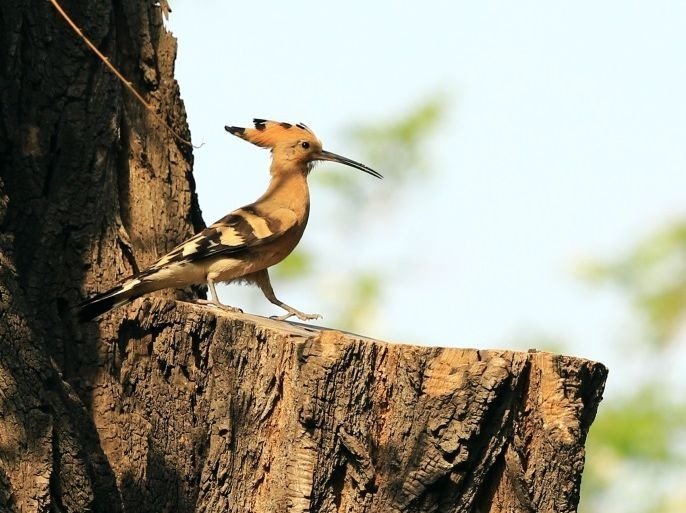
Prophet Solomon (Sulaymān)
Peace Be Upon Him – A Story of Wisdom, Power, and Unwavering Faith
Prophet Solomon (Sulaymān), peace be upon him, is one of the honored prophets in the Qur’an, endowed with wisdom, just authority, and miracles, yet always presented as a humble servant of Allah. He was the son and heir of Prophet David (Dāwūd), inheriting both prophethood and a kingdom, as the Qur’an says:
“And Solomon inherited David. He said, ‘O people, we have been taught the speech of birds and have been given from all things. Indeed, this is the evident bounty (of Allah).'”
— Surah An-Naml (27:16)
His story in Islam is not just that of a powerful king, but of a righteous prophet whose knowledge, power, and miracles were all means to worship and obey Allah.
His Status as a Prophet and Divine Understanding
In one of the key passages, the Qur’an recounts a legal case involving Dāwūd and Sulaymān, peace be upon them, in which another’s sheep damaged some people’s crops. Both prophets judged, but Allah singled out Sulaymān’s subtle insight:
“And We gave understanding of it to Solomon, and to each [of them] We gave judgment and knowledge.”
— Surah Al-Anbiya (21:79)
This phrase means that Allah inspired Sulaymān with the finer, more beneficial ruling, while affirming that both he and Dāwūd were endowed with ḥukm (sound judgment) and ʿilm (knowledge). This shows that prophets may differ in ijtihād within the bounds of revelation, but all are guided and honored. Their judgments are not personal whims; Allah guides them to what is right and confirms their integrity.
From the standpoint of Islamic creed, prophets and messengers are considered the best of creation and are protected (maʿṣūmūn) from deliberate sins, particularly major and moral transgressions. They may be tested, may face hardship, and may even make non-moral human mistakes, but they do not commit acts that would undermine their reliability or tarnish their moral example—such as adultery, oppression, or idolatry.
Sulaymān in Islam is therefore a pure, righteous prophet, in contrast to later narratives that ascribe moral corruption to him.
Sulaymān’s Extraordinary Gifts
The Qur’an highlights several extraordinary gifts given to Sulaymān. He was granted the ability to understand the speech of animals and birds; he led armies composed of humans, jinn, and birds; and he was given command over the wind.
“And to Solomon We subjected the wind, raging, which ran at his command toward the land which We had blessed; and We are Knowing of all things.”
— Surah Al-Anbiya (21:81)
Another passage adds that the wind was made gentle and swift for him, carrying him wherever he wished in a day what would normally take a month’s journey. These verses show that Sulaymān’s authority extended not just over people but over natural forces, yet the Qur’an constantly ties this back to Allah’s will:
“This is Our gift, so bestow or withhold without account.”
— Surah Sad (38:39)
Sulaymān’s powers were never independent divinity; they were gifts of the one God, used in the service of justice and faith.
The Qur’an also mentions that jinn were placed at his command, building palaces, statues, large basins, and heavy cauldrons: “And of the devils were those who dived for him and did work other than that; and We were guardians over them” (Qur’an 21:82; see also 34:12–13). This shows the breadth of his kingdom but also underscores that even powerful jinn were subject to a human prophet by Allah’s decree.
Sulaymān’s true greatness was not in material splendor, but in his recognition that all power belongs to Allah and in his constant gratitude:
“My Lord, inspire me to be thankful for Your favor which You have bestowed upon me and upon my parents, and to do righteousness that You approve.”
— Surah An-Naml (27:19)
The Story of the Ant and the Hoopoe
One of the most beloved Qur’anic scenes is Sulaymān’s march with his armies through a valley of ants. The Qur’an says:
“Until, when they came upon the valley of the ants, an ant said, ‘O ants, enter your dwellings lest Solomon and his armies crush you while they do not perceive.’ So he smiled, amused at her speech, and said, ‘My Lord, enable me to be grateful for Your favor which You have bestowed upon me and upon my parents, and to do righteousness that You approve, and admit me by Your mercy among Your righteous servants.'”
— Surah An-Naml (27:18–19)
The passage shows both his miraculous understanding of the ant’s words and his mercy. The ant knows that Sulaymān would not intentionally harm Allah’s creatures, and Sulaymān responds not with pride, but with humility and gratitude.
The story of the hoopoe (hudhud) further illustrates his prophetic leadership. Sulaymān inspects the birds and notices that the hoopoe is missing. He threatens severe punishment unless it brings a valid excuse. The bird returns and informs him:
“I have encompassed in knowledge that which you have not encompassed and have come to you from Sheba with certain news. Indeed, I found there a woman ruling over them, and she has been given of all things, and she has a great throne. I found her and her people prostrating to the sun instead of Allah…”
— Surah An-Naml (27:22–24)
This report sets the stage for the encounter with Queen Balqīs (Bilqees) of Sheba.
Balqīs and the Throne: Wisdom, Diplomacy, and Justice
On hearing of a powerful queen whose people worship the sun, Sulaymān sends a letter inviting her to submit to Allah:
“Do not exalt yourselves above me, but come to me in submission [to Allah].”
— Surah An-Naml (27:31)
Balqīs consults her nobles and initially sends a rich gift to test him, but Sulaymān rejects the idea that he can be “bought,” declaring that what Allah has given him is far better than their worldly gifts. He signals that if they persist in arrogance, he will come against them with hosts they cannot resist. This shows a balance of diplomacy and firm principle: invite with wisdom, but stand up to idolatrous power when necessary.
Before Balqīs arrives in person, Sulaymān demonstrates another miracle. He asks: “O assembly [of jinn], which of you will bring me her throne before they come to me in submission?” One mighty jinn offers to bring it before Sulaymān rises from his place, but another being “who had knowledge from the Book” says, “I will bring it to you before your glance returns to you.” The Qur’an continues:
“And when he saw it placed before him, he said, ‘This is from the favor of my Lord to test me whether I will be grateful or ungrateful.'”
— Surah An-Naml (27:38–40)
Sulaymān orders the throne to be slightly altered so they can test whether Balqīs will recognize it. When she arrives, she says, “It is as though it were the very one,” and acknowledges the power and knowledge she is witnessing.
The Qur’an then narrates that she is invited to enter a palace whose floor is made of glass over water; she thinks it is a pool and lifts her garment to avoid getting wet. Sulaymān explains that it is a smooth glass surface, revealing the sophistication Allah has granted him. At this point, she declares:
“My Lord, indeed I have wronged myself, and I submit with Solomon to Allah, Lord of the worlds.”
— Surah An-Naml (27:44)
Her story illustrates how true leadership recognizes the truth when it becomes clear and abandons arrogance and idolatry.
An important point occurs earlier in her consultation with her advisors. Balqīs says: “Indeed kings, when they enter a town, ruin it and make the most honored of its people the lowest; and thus do they do” (Qur’an 27:34). The striking phrase “وَكَذَٰلِكَ يَفْعَلُونَ” (“and thus they do”) is not merely her opinion; the Qur’an confirms her observation as a true description of how unjust worldly rulers often behave. This is a rare example where the Qur’an endorses the insight of a non-Muslim ruler, emphasizing that wisdom and moral clarity can be found beyond the immediate community, and that Islam recognizes truth wherever it appears.
The Islamic View of Sulaymān vs. the Biblical Narrative
In the Bible, especially in 1 Kings and related books, Solomon is portrayed as a wise king who builds the Temple in Jerusalem and receives unparalleled wealth and wisdom. However, the later chapters also describe him as falling into grave sins. The text states that in his old age, his many foreign wives “turned his heart after other gods,” and that he built high places for pagan deities like Chemosh and Molech. His story culminates in a narrative of idolatry and divine punishment: God declares that the kingdom will be torn from his son, leaving only a fragment for the house of David.
The Qur’anic image of Sulaymān is fundamentally different. The Qur’an explicitly rejects the idea that Sulaymān ever fell into unbelief or sorcery:
“They followed what the devils recited during the reign of Solomon. Solomon did not disbelieve, but the devils disbelieved…”
— Surah Al-Baqarah (2:102)
This verse is a direct defence of his prophetic purity against accusations that he used magic or worshipped other gods. In Islam, Sulaymān remains throughout his life a loyal monotheist, a just ruler, and a grateful servant of Allah. He is tested with great power and extraordinary gifts but remains steadfast in obedience and gratitude.
More broadly, Islam insists on the moral integrity of all prophets and messengers. While the Bible sometimes narrates serious moral lapses for figures like Noah, Lot, David, and Solomon, Islamic tradition, based on the Qur’an and sound hadith, holds that prophets are preserved from such sins. As one classical summary states, the majority of Muslim jurists affirm that prophets are protected from major sins and from persistent minor sins, and that it is obligatory to believe in their moral integrity. If a prophet were to commit adultery, idolatry, or deliberate injustice, it would confuse the message and undermine people’s trust; therefore, Allah, in His wisdom and mercy, protects them from this.
Thus, while both the Bible and Qur’an present Solomon/Sulaymān as a figure of great wisdom and power, the Islamic narrative is free of accusations of idolatry or moral corruption. Instead, Sulaymān stands as an example of how immense authority can be combined with humility, justice, and sincere worship.
Lessons from the Life of Prophet Sulaymān
His interactions with the ant, the hoopoe, and Balqīs show not only miraculous knowledge, but also gentleness, strategic thinking, and respect for truth, wherever it appears. His life, as portrayed in the Qur’an and strengthened by prophetic traditions, invites believers to:
Sulaymān was granted understanding beyond others. His ability to comprehend the speech of animals and birds, and his wisdom in judgment, remind us that knowledge is a divine gift to be sought earnestly and used righteously.
Despite having command over the wind, jinn, and vast armies, Sulaymān never used his power for oppression or self-glorification. Every gift was acknowledged as coming from Allah and was used in service of justice and faith.
At every turn—when hearing the ant, when receiving the throne, when witnessing Balqīs’s submission—Sulaymān’s response was gratitude to Allah. He recognized that all power, all knowledge, and all success come from the Creator alone.
The Qur’an’s endorsement of Balqīs’s wisdom about unjust rulers shows that truth and moral clarity are not confined to one community. Islam recognizes and honors truth from any source.






Be First to Comment