
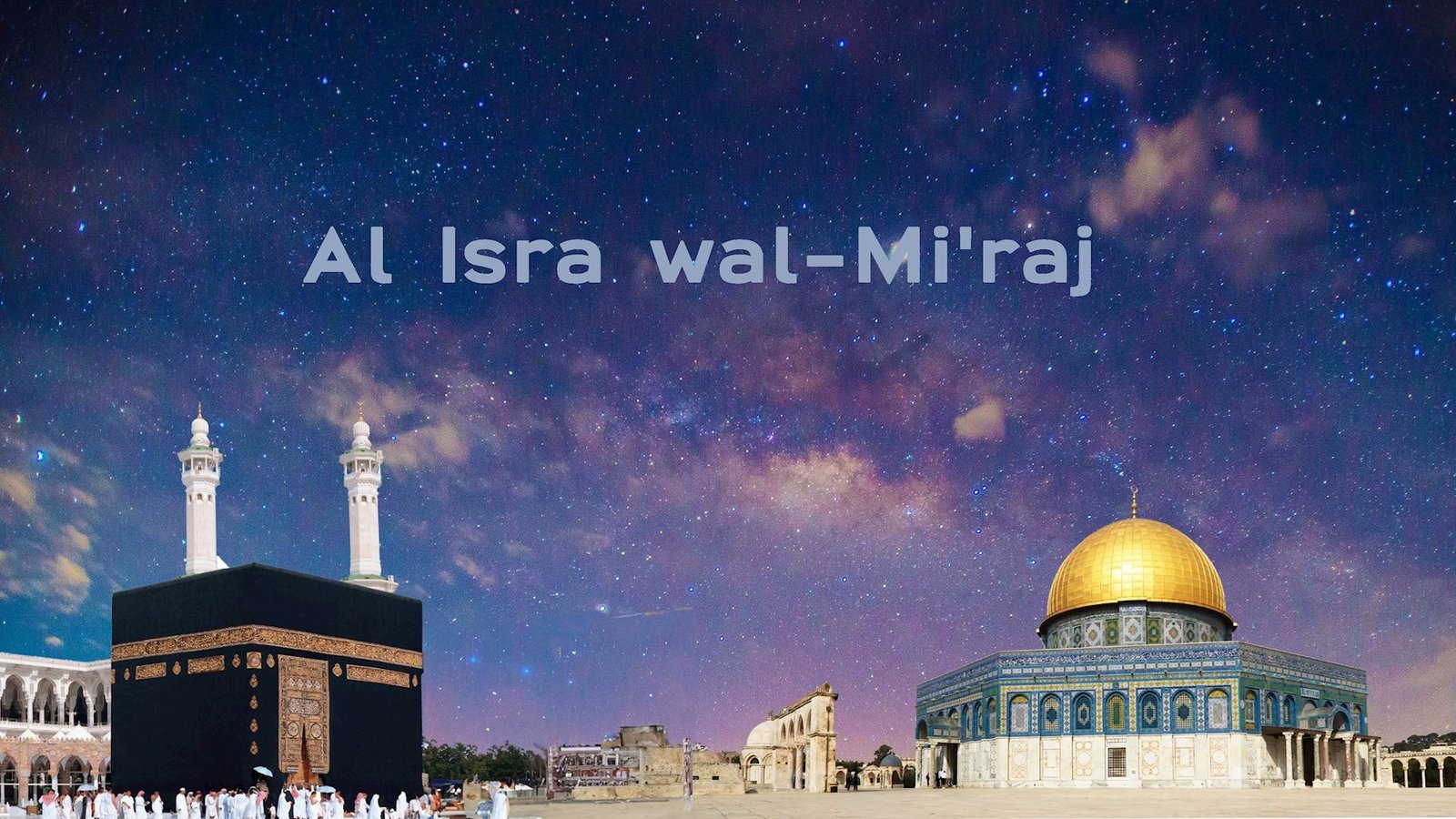
🌙 The Night Journey and Ascension
Al-Isra wal-Mi’raj: Prophet Muhammad’s ﷺ Miraculous Journey from Makkah to the Highest Heavens
Occurred in the 10th year after Prophethood (approximately 620 CE)
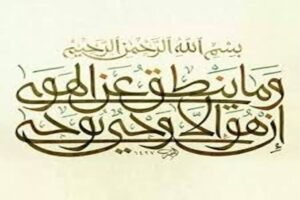
“Exalted is He who took His Servant by night from al-Masjid al-Haram to al-Masjid al-Aqsa, whose surroundings We have blessed, to show him of Our signs. Indeed, He is the Hearing, the Seeing.”
— Surah Al-Isra (17:1)
The story of Al-Isra wal-Mi’raj stands as one of the greatest miracles granted to Prophet Muhammad ﷺ, and among the most profound events in the prophetic biography. In this miraculous night, Allah combined for His Messenger both an earthly journey (Al-Isra) and a heavenly ascension (Al-Mi’raj) in a single night.
This miracle occurred in the tenth year after the beginning of the Prophet’s mission (approximately 620 CE), following a period filled with sorrows and hardships. It came as an honor and strengthening for the heart of the Prophet ﷺ, elevating him from the burdens of earth to witness the magnificence of the heavenly realms.
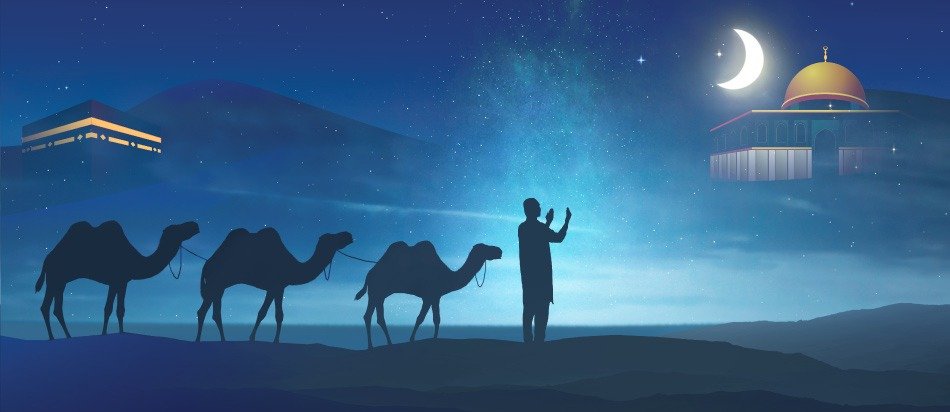
Prelude to the Journey: The Year of Sorrow
In the tenth year of Prophet Muhammad’s ﷺ mission, calamities descended upon him that weighed heavily on his heart. This year became known as the Year of Sorrow (عام الحزن).
The Prophet ﷺ lost his uncle Abu Talib, who had been his protector and primary defender against the persecution of Quraysh. Soon after, his beloved wife Khadijah رضي الله عنها passed away—she who had been his greatest support and comfort during the early years of his prophetic mission.
With this successive grief and the doors of dawah seeming to close before him, the Prophet ﷺ traveled to Ta’if seeking a new opening for his message. But the people of Ta’if rejected him harshly. The hearts of the believers were weak and vulnerable to crisis.
“We know that you, [O Muhammad], are saddened by what they say. And indeed, they do not call you untruthful, but it is the verses of Allah that the wrongdoers reject.”
— Surah Al-An’am (6:33)
And thus began the blessed journey—to relieve the Prophet ﷺ and lift him from earthly concerns toward the grandeur of the Divine Kingdom.
Preparation for the Journey: The Opening of the Chest
On a quiet night in Makkah, while the Prophet ﷺ was sleeping, Jibreel (Gabriel) عليه السلام suddenly entered through the roof of the house to begin the first miracle.
Jibreel approached the Prophet ﷺ and gently opened his chest, removed his heart, and first washed it in a golden vessel, then with the water of Zamzam, and filled his heart with faith and wisdom in preparation for the journey.
Anas ibn Malik رضي الله عنه narrated that Abu Dharr رضي الله عنه used to relate that the Messenger of Allah ﷺ said: “The roof of my house was opened while I was in Makkah, and Jibreel descended and opened my chest, then washed it with Zamzam water. Then he brought a golden basin filled with wisdom and faith and poured it into my chest, then closed it.”
The Prophet ﷺ was awake, conscious of every moment, aware of the magnitude of what was about to occur.
Al-Buraq: The Miraculous Steed
When it was time to depart, Al-Buraq appeared—a white, elongated creature, faster than lightning, somewhere between a donkey and a mule in size.
It had a hoof at its end, with a saddle and bridle properly fitted.
When the Prophet ﷺ approached to mount it, Al-Buraq hesitated slightly. But Jibreel reassured it: “O Buraq, no one more honored in the sight of Allah than him has ever ridden you.”
Then the Prophet ﷺ mounted it, and the journey began.
The Night Journey (Al-Isra): Makkah to Jerusalem
The Prophet ﷺ rode Al-Buraq, and it flew through the sky, covering the distance from the Sacred Mosque (Masjid al-Haram) to the Farthest Mosque (Masjid al-Aqsa) in Jerusalem.
Upon arrival, he tied Al-Buraq to the ring where the prophets before him had tied their mounts, and entered Masjid al-Aqsa to find all the prophets gathered—from Adam عليه السلام to Jesus (Isa) عليه السلام.
In Masjid al-Aqsa, the Prophet ﷺ prayed two units of prayer behind Jibreel, alongside all the prophets. This was an inspiring and historic moment.
Then the Prophet ﷺ was brought two vessels: one containing milk, the other wine. He chose the milk. Jibreel said: “You have been guided to the fitrah (natural disposition). Had you taken the wine, your nation would have gone astray.”
The Messenger of Allah ﷺ said: “On the night of my journey, I met Moses,” and he described him as a man with wavy hair as if he were from the tribe of Shanu’ah. “I met Jesus,” and the Prophet ﷺ described him as fair-skinned with a reddish tint, as if he had just come out of a bath. “I saw Ibrahim, and I am the one among his children who most resembles him. Then I was brought two vessels—one containing milk, the other wine. It was said to me: ‘Take whichever you wish.’ I took the milk and drank it. Then it was said to me: ‘You have been guided to the fitrah (natural way). Had you taken the wine, your nation would have gone astray.'”
After praying with all the prophets and drinking the milk offered by Jibreel, the Messenger returned with Jibreel to Al-Buraq. Al-Buraq then ascended with them toward the heavens. Al-Mi’raj refers to the heavenly journey—the ascension and elevation from the earthly realm to the celestial realm.
The Heavenly Ascension (Al-Mi’raj): Meeting the Prophets
Al-Buraq ascended with them until they reached the first heaven. Jibreel عليه السلام knocked on its gate.
“Who is it?” came the voice.
“Jibreel,” he replied.
“Who is with you, O Jibreel?”
“The Messenger of Allah.”
“Has he been sent forth?”
“Yes.”
And the gate was opened for them.
When the gate opened, there was a man sitting with multitudes on his right and multitudes on his left. When he looked to his right, he laughed, and when he looked to his left, he wept. The Prophet ﷺ asked Jibreel, “Who is this?” Jibreel said: “This is your father Adam, and these multitudes on his right and left are his descendants. Those on the right are the people of Paradise, and those on the left are the people of Hell. So when he looks to his right, he laughs, and when he looks to his left, he weeps.” The Prophet ﷺ greeted him, and Adam عليه السلام said: “Welcome to the righteous son, the righteous prophet, the righteous servant,” and he prayed for him.
Jibreel عليه السلام ascended with the Messenger to the second heaven. There, the Prophet ﷺ saw the two maternal cousins: Jesus son of Mary and John son of Zachariah, peace be upon them both. They welcomed the Prophet and prayed for him.
The Prophet ascended to the third heaven and saw Prophet Yusuf عليه السلام. He had been given half of all beauty—meaning he possessed half of all beauty in creation, with the other half distributed among the rest of humanity. Yusuf welcomed the Prophet and prayed for him.
The Prophet ascended to the fourth heaven and saw Idris عليه السلام. He welcomed him and prayed for him.
The Prophet ascended to the fifth heaven and saw Harun عليه السلام. He welcomed him and prayed for him.
The Prophet ascended to the sixth heaven and saw Musa عليه السلام. He welcomed him and prayed for him. Then Prophet Musa wept. When asked why he was crying, he said: “I weep because a young man was sent after me, and more of his nation will enter Paradise than of my nation.”
Jibreel ascended with the Prophet to the seventh heaven. There, the Messenger saw a man who resembled him—it was Ibrahim, the Friend of the Most Merciful, reclining against Al-Bayt Al-Ma’mur (the Frequented House)—a house entered by seventy thousand angels daily, never to return to it again.
The Prophet ﷺ greeted him, and Ibrahim عليه السلام said: “Welcome to the righteous son and the righteous prophet.”
Then Ibrahim said: “O Muhammad, convey my greetings to your nation and tell them that Paradise has pleasant soil and sweet water, and that it is level plains. Its seeds are: Subhan Allah (Glory be to Allah), Al-Hamdu Lillah (All praise is due to Allah), La ilaha illa Allah (There is no deity worthy of worship except Allah), and Allahu Akbar (Allah is the Greater [that anything compared with Him]).” Meaning: when you say these four remembrances, you plant a tree in Paradise.
Sidrat al-Muntaha: The Lote Tree of the Utmost Boundary
Jibreel then ascended with the Prophet to Sidrat al-Muntaha (the Lote Tree of the Utmost Boundary). It is described as beautiful beyond description—no creation of Allah can truly portray its magnificence. Its leaves are like the ears of elephants in size, and its fruits are like large jars.
The Messenger of Allah ﷺ described Sidrat al-Muntaha upon his return from the journey of Mi’raj saying: “Sidrat al-Muntaha was raised up for me, and its fruits were like the large jars of Hajar, and its leaves were like the ears of elephants. He said: ‘This is Sidrat al-Muntaha.’ And there were four rivers: two hidden rivers and two visible rivers. I said: ‘What are these, O Jibreel?’ He said: ‘As for the two hidden ones, they are two rivers in Paradise. As for the two visible ones, they are the Nile and the Euphrates.'”
Jibreel عليه السلام stopped at Sidrat al-Muntaha, leaving the Prophet of Allah there. Jibreel became like a worn-out rag from the fear of Allah the Most High.
The Messenger of Allah ﷺ asked: “Have you seen your Lord, O Jibreel?”
Jibreel trembled and said: “O Muhammad, between me and Him are seventy veils of light. If I were to draw near to even one of them, I would be burned.”
In the Divine Presence
After this, all sounds ceased around the Messenger of Allah ﷺ. He heard the speech of his Lord, the Almighty and Exalted, saying to calm him: “Draw near, draw near, O Muhammad. You are upon the carpet of Allah’s intimacy, O Muhammad.” The Prophet knew he was in the Divine Presence.
The Prophet Muhammad heard the scratching of the pens—the sound of what the angels عليهم السلام were writing of Allah’s decree and revelation.
When the Messenger was in the Divine Presence, Allah prescribed upon the Prophet ﷺ—and then upon every Muslim—fifty prayers every day and night.
The Messenger then descended until he reached Musa عليه السلام, who detained him and asked: “What has your Lord prescribed upon your nation?” He said: “Fifty prayers every day and night.”
Musa said: “Return to your Lord and ask Him to lighten it, for your nation will not be able to bear that. I tested the Children of Israel and found them wanting.”
The Messenger ﷺ returned to Allah the Almighty and said: “O Lord, lighten our burden, for my nation cannot bear this.” Allah removed ten prayers.
The Prophet returned to Musa, who said: “Return to your Lord. By Allah, I tried to make the Children of Israel, my people, do less than this, but they were too weak and abandoned it. Your nation is weaker in bodies, hearts, hearing, and sight. Return and ask your Lord to lighten it for you.”
The Messenger ﷺ returned to Allah the Most High and said: “O Lord, my people are weak in their bodies, hearts, hearing, sight, and physiques, so lighten our burden.”
The Compeller said: “O Muhammad.” He said: “At Your service and pleasure.” Allah said: “The word does not change with Me, O Muhammad. They are five prayers every day and night, each prayer worth ten, so that makes fifty prayers. Whoever intends a good deed but does not do it, one good deed is written for him. If he does it, ten are written. Whoever intends an evil deed but does not do it, nothing is written. If he does it, only one evil deed is written.”
The Prophet of Allah returned to Musa, who said: “Return to your Lord and ask Him to lighten it.” The Prophet said: “O Musa, by Allah I have become too shy before my Lord from repeatedly going back to Him.”
Then Jibreel عليه السلام said to the Messenger: “Descend in the name of Allah.” It should be noted that on this night, the closing verses of Surah Al-Baqarah were revealed, and on that night, whoever does not associate anything with Allah from this nation was forgiven.
The Return to His Bed
After this, the Messenger descended to Jerusalem, then returned to his bed in Makkah at night to find it still warm as he had left it.
As for the people of Makkah and how he informed them about the night of Isra and Mi’raj, it is narrated from Abdullah ibn Abbas رضي الله عنه that the Prophet ﷺ said:
“When it was the night I was taken on the Night Journey, and I woke up in Makkah in the morning, I was distressed by my situation, knowing that people would deny me. I sat apart, grieving. Then the enemy of Allah, Abu Jahl, passed by and came and sat next to me, saying mockingly: ‘Has anything happened?’ The Messenger of Allah ﷺ said: ‘Yes.’ Abu Jahl said: ‘What is it?’ He said: ‘I was taken on a Night Journey last night.’ Abu Jahl said: ‘To where?’ He said: ‘To Bayt al-Maqdis (Jerusalem).’ Abu Jahl said: ‘Then you woke up among us?!’ He said: ‘Yes.’
Abu Jahl did not want to deny him for fear that if he called his people, the Prophet would deny the conversation. He said: ‘If I call your people, will you tell them what you told me?’ The Messenger of Allah ﷺ said: ‘Yes.’ Abu Jahl said: ‘O assembly of the sons of Ka’b ibn Lu’ayy!’ And the gatherings scattered toward him, and they came and sat with them. Abu Jahl said: ‘Tell your people what you told me.’ The Messenger of Allah ﷺ said: ‘I was taken on a Night Journey last night.’ They said: ‘To where?’ He said: ‘To Bayt al-Maqdis.’ They said: ‘Then you woke up among us?!’ He said: ‘Yes.’
Some clapped their hands, and some put their hands on their heads in amazement at what they claimed was a lie. They said: ‘Can you describe the mosque to us?’ (Among the people were those who had traveled to that land and seen the mosque.) The Messenger of Allah ﷺ said: ‘I began to describe it, and I kept describing until some of the description became confused for me.’ He said: ‘Then the mosque was brought to me, and I looked at it until it was placed before the house of ‘Aqil or ‘Uqayl, and I described it while looking at it.’ He said: ‘This was accompanied by a description I had not memorized.’ The people said: ‘As for the description, by Allah, he was accurate!'”
Narrated by Ahmad and authenticated by Al-Albani.
The Night Journey and Ascension stand as one of the greatest miracles in Islamic history—a journey that defies all laws of physics and time, accomplished in a single night. From Makkah to Jerusalem, then through the seven heavens, meeting the prophets, witnessing Paradise and Hell, reaching Sidrat al-Muntaha, and being honored with direct divine communication.
This journey came at the Prophet’s darkest hour—after losing his beloved wife and protective uncle, after being rejected in Ta’if. Allah elevated His Messenger ﷺ from the depths of earthly grief to the heights of celestial glory.
The prescription of the five daily prayers—the gift from this journey—remains the most tangible connection between Muslims and their Lord, a direct legacy from that miraculous night.
May the peace and blessings of Allah be upon the one who journeyed through the night,
ascended through the heavens and returned with the greatest gift to humanity.





Be First to Comment