
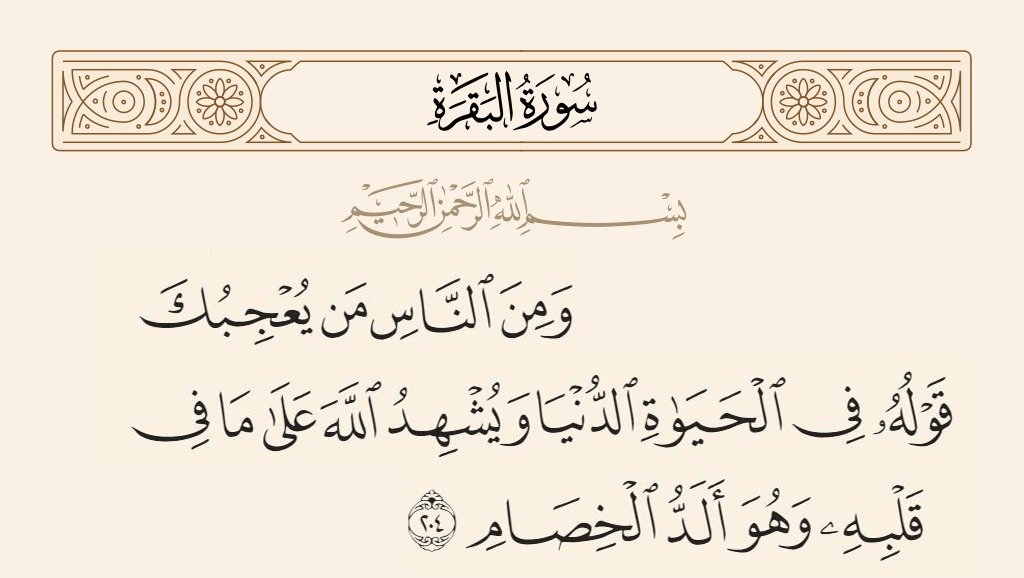
Surah Al‑Baqarah 2:204–206
A detailed explanation (Exegesis) of verses exposing the hypocritical, destructive individual whose pleasing speech hides inner hostility and corruption.
“And among the people is he whose speech about the life of this world impresses you, and he even calls upon Allah as a witness to what is in his heart, yet he is the most severe of opponents. But when he turns away, he strives throughout the land to spread corruption therein and to destroy crops and offspring; and Allah does not love corruption. And when it is said to him, ‘Fear Allah,’ pride in sin takes hold of him. Then Hell is sufficient for him, and how wretched a resting place it is.”
Surah Al‑Baqarah (2:204–206)
These verses present a vivid portrait of a dangerous type of person: someone whose charming language and religious claims hide a heart full of hostility, corruption, and arrogance when confronted with the truth.
Overall Theme of the Verses
The passage warns against being deceived by outwardly impressive speech and displays of piety when they are not supported by sincere faith and righteous conduct. The individual described here uses beautiful words, swears by Allah, and presents himself as trustworthy, yet his actions in private and in positions of influence reveal a completely different reality.
The verses also show how such a person moves from hypocrisy in speech, to active corruption on earth, to stubborn rejection of advice and admonition, ultimately earning a deserved and severe end in the Hereafter.
“His speech impresses you…” (v. 204)
The opening phrase, “Among the people is he whose speech in the worldly life impresses you,” describes someone with polished, persuasive, and attractive words. He speaks in a way that gains admiration, trust, and acceptance from listeners, including believers and sometimes even scholars and leaders.
The verse then adds that he “calls upon Allah as a witness to what is in his heart,” meaning he frequently uses the Name of Allah, swears by Allah, and claims that his inner intentions are pure and sincere. This is a form of religious posturing: using sacred language to cover an insincere heart.
The verse concludes by exposing his true nature: “yet he is the most severe of opponents.” The expression indicates a person who is extremely stubborn in argument, harsh in dispute, and relentless in opposition to the truth and to those who stand for it. He is not merely a person who disagrees; he is a combative adversary who uses every tactic to resist guidance when it conflicts with his interests.
From Hypocrisy in Speech to Corruption on Earth (v. 205)
The next verse reveals what happens “when he turns away” – that is, when he leaves the presence of those he was impressing, or when he gains power, independence, or opportunity. The mask drops, and his real agenda becomes visible.
He “strives throughout the land to spread corruption therein,” indicating deliberate, active effort. This is not accidental harm; it is planned and persistent work to undermine order, justice, and righteousness in society.
- Literal meaning: Some scholars mention actual destruction of agriculture, property, and livestock or the harming of families and children through oppression and injustice.
- Broader meaning: It includes ruining people’s livelihoods, destabilizing communities, and damaging the moral and spiritual upbringing of the next generation.
- Modern application: Policies, speech, or actions that spread moral corruption, break families, encourage injustice, or damage the environment and social fabric all fall under this pattern of فساد (corruption).
By pairing “crops and offspring,” the verse points to the foundations of worldly continuity and human survival: food, resources, and future generations. The corrupt person attacks both, directly or indirectly, driven by selfish aims, hatred, or the desire for control.
The verse concludes with a decisive principle: “And Allah does not love corruption.” This anchors the entire description in a clear value: no matter how skillfully corruption is justified, no matter how religiously it is packaged, Allah never loves or accepts فساد.
Arrogance When Advised: “Fear Allah” (v. 206)
The final verse describes his reaction when someone gives sincere advice: “When it is said to him, ‘Fear Allah,’ pride in sin takes hold of him.” The phrase “Fear Allah” is a simple, gentle reminder. It does not insult him; it calls him back to consciousness of his Lord and accountability.
Yet his response is not humility or reflection. Instead, a proud, stubborn attitude rooted in sin seizes him. He refuses to admit fault, rejects counsel, and may even become more hostile. His ego, not the truth, becomes the standard he defends.
The verse then states his ultimate outcome: “Then Hell is sufficient for him, and how wretched a resting place it is.” This shows that his behavior is not a minor flaw but a path that, if not repented from, leads to a severe and fitting punishment. The one who used his influence to damage others, mock guidance, and persist in sin faces a “resting place” that reflects the destruction he caused.
Spiritual Lessons and Warnings
- Do not be deceived by eloquence alone. Character, actions, and consistency matter more than impressive speech and religious slogans.
- Beware of using Allah’s Name to cover worldly agendas. Swearing by Allah and claiming pure intentions is serious; it must be matched by sincerity and obedience.
- True piety rejects فساد (corruption). Any project, policy, or action that produces widespread harm, injustice, or moral decay is opposed to Allah’s love, no matter how nicely it is presented.
- The believer welcomes the advice “Fear Allah.” Being reminded is a mercy, not an insult. The arrogant heart treats it as an attack and reacts with anger.
- Power tests sincerity. When this person “turns away” and acts without supervision, his real nature appears. The believer strives to be consistent in private and in public.
Practical Reflection for Our Time
These verses are highly relevant in an age of media, politics, and public relations. Many people are skilled at saying the right words, invoking high values, and even using religious language to gain trust, while their actions undermine justice, family, faith, and community.
For individuals and institutions, the passage calls for vigilance: to evaluate people by their deeds, their humility when corrected, and the actual impact of their leadership on “crops and offspring” – on livelihoods, families, and the next generation’s faith and character.
May Allah protect us from hypocrisy in speech, arrogance in the face of advice, and any role in spreading corruption on earth, and may He make us among those whose tongues, hearts, and actions are united in truth and sincerity.








Be First to Comment