
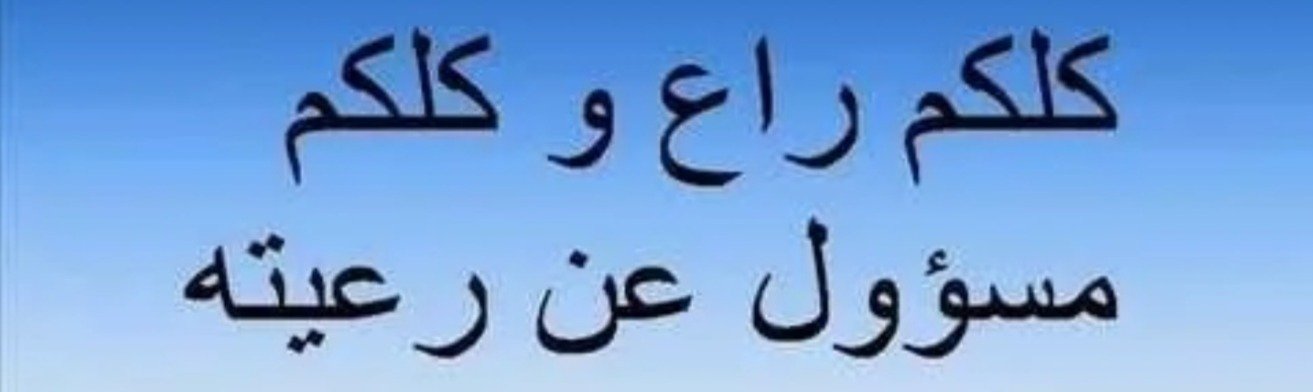
The Hadith of Responsibility
Every Person is a Guardian — كلكم راع وكلكم مسؤول عن رعيته
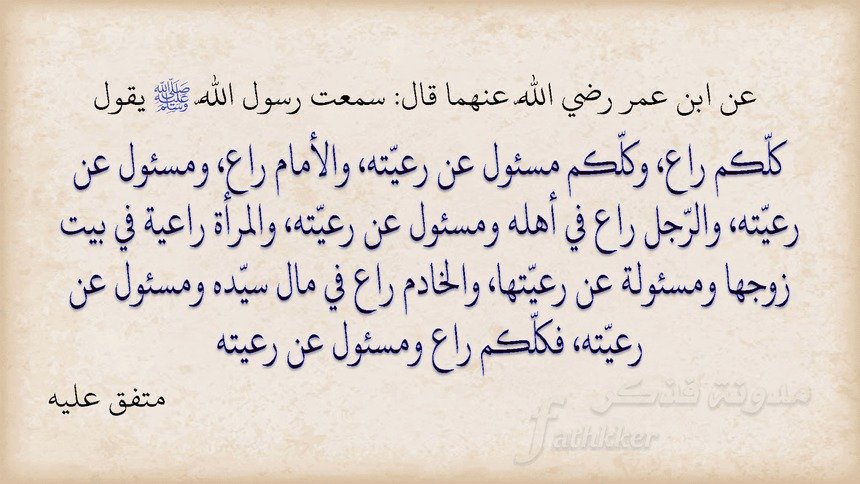
Ibn ‘Umar (May Allah be pleased with them) reported: I heard the Messenger of Allah ﷺ saying, “All of you are guardians and are responsible for your wards. The ruler is a guardian and responsible for his subjects; the man is a guardian and responsible for his family; the woman is a guardian and is responsible for her husband’s house and his offspring; and so all of you are guardians and are responsible for your wards.”
— Narrated by Al-Bukhari and Muslim
This magnificent hadith, narrated by the noble companion Abdullah ibn Umar (may Allah be pleased with him and his father), is one of the most comprehensive teachings of the Prophet Muhammad ﷺ on the subject of responsibility and leadership. It establishes a profound principle that permeates every level of society, from the highest political authority to the most intimate family relationships.
The word “راع” (ra’in) means shepherd or guardian, evoking the image of someone who watches over, protects, and cares for those entrusted to their care. Just as a shepherd ensures the safety, nourishment, and well-being of his flock, every person in a position of authority or influence bears a similar responsibility toward those under their care.
The Universal Principle of Responsibility
The hadith begins with a universal declaration: “All of you are guardians.” This is not limited to formal positions of leadership. Rather, it encompasses every human being in their various roles and capacities. The Prophet ﷺ is teaching us that responsibility is not merely a burden carried by kings and rulers, but a sacred trust held by every member of society.
The Quran reinforces this principle in numerous verses, establishing that every individual will be held accountable for their deeds and the trusts placed upon them. Allah the Exalted says:
“Indeed, Allah commands you to render trusts to whom they are due and when you judge between people to judge with justice.”
— Surah An-Nisa (4:58)
The Responsibility of the Ruler
The Prophet ﷺ begins with the highest level of earthly authority: “The ruler is a guardian and responsible for his subjects.” This places an enormous responsibility upon those who govern nations, cities, and communities. The ruler is not a tyrant who exploits his position for personal gain, nor is he indifferent to the welfare of the people.
Rather, Islamic leadership is characterized by service, justice, and accountability. The ruler must ensure the protection of his people’s lives, honor, and property. He must establish justice, maintain security, and facilitate the conditions necessary for people to worship Allah and lead righteous lives.
The Prophet Muhammad ﷺ said in another hadith: “A man who has been given authority over people and does not strive for their betterment will not even smell the fragrance of Paradise.” This demonstrates the severe consequences of neglecting one’s duty as a leader. The ruler’s guardianship extends to ensuring education, healthcare, infrastructure, and all that contributes to the welfare of society.
The righteous caliphs after the Prophet ﷺ exemplified this principle magnificently. Umar ibn al-Khattab (may Allah be pleased with him) said: “If a mule stumbles on the bank of the Euphrates, I fear that Allah will ask me why I did not pave the road for it.” Such was his sense of responsibility for every matter under his care.
The Responsibility of the Head of Household
Moving from the political sphere to the domestic, the Prophet ﷺ states: “The man is a guardian and responsible for his family.” This establishes the man’s role as the primary guardian and maintainer of his household. His responsibilities include providing financial support, ensuring the Islamic upbringing of his children, maintaining a peaceful and loving home environment, and guiding his family toward what pleases Allah.
This guardianship is not one of oppression or dominance, but of care, protection, and guidance. The father is responsible for teaching his children the fundamentals of their faith, instilling good character, and preparing them to be productive members of society. He must lead by example, for his actions speak louder than his words.
“O you who have believed, protect yourselves and your families from a Fire whose fuel is people and stones.”
— Surah At-Tahrim (66:6)
This verse emphasizes that the father’s guardianship extends to protecting his family from the Hellfire by ensuring they receive proper religious education and moral guidance. This is perhaps the greatest responsibility a father bears—the eternal well-being of his loved ones.
The Responsibility of the Wife and Mother
The Prophet ﷺ continues: “The woman is a guardian and is responsible for her husband’s house and his offspring.” This recognizes the vital and honored role of women in Islamic society. Far from being diminished or marginalized, the woman’s guardianship over the home is presented as a position of tremendous importance and trust.
The mother is the first teacher, the primary nurturer, and the foundation of a stable home. Her influence on her children’s character, faith, and worldview cannot be overstated. As the famous saying goes: “The mother is a school; if you prepare her well, you prepare a people of good character.”
When a man came to the Prophet ﷺ and asked, “Who is most deserving of my good companionship?” The Prophet ﷺ replied, “Your mother.” The man asked, “Then who?” The Prophet ﷺ said, “Your mother.” The man asked again, “Then who?” The Prophet ﷺ said, “Your mother.” The man asked once more, “Then who?” Only then did the Prophet ﷺ say, “Your father.” This hadith shows the elevated status of mothers and the magnitude of their responsibility in raising righteous children.
The woman’s guardianship includes managing the household affairs, creating a loving and peaceful atmosphere, preserving the family’s wealth and honor, and supporting her husband in his responsibilities. Her role is not subordinate but complementary, and it is essential to the functioning of a healthy society.
The Responsibility of the Servant
The hadith also mentions: “The servant is a guardian over his master’s property and is responsible for it.” In the historical context, this referred to household servants or employees. Today, we can extend this to include all workers and employees in any capacity.
This teaches us that every worker has a responsibility to their employer. They must fulfill their duties with honesty, diligence, and integrity. They should protect the property and resources entrusted to them and perform their work to the best of their ability. Stealing from one’s workplace, wasting time, or neglecting duties are all violations of this sacred trust.
The Prophet Muhammad ﷺ said in another hadith:
“Indeed, Allah loves that when one of you does something, he perfects it.”
— Narrated by Al-Bayhaqi
This hadith encourages excellence in all work. Whether one is a CEO or a janitor, their work should be performed with care and excellence because they are accountable to Allah for how they discharge their responsibilities.
The Comprehensive Nature of Responsibility
The Prophet ﷺ concludes the hadith by repeating the opening statement: “All of you are guardians and are responsible for your wards.” This repetition serves to emphasize the universal application of this principle and to ensure that no one feels excluded from this responsibility.
Whether you are a teacher responsible for your students, a doctor responsible for your patients, a neighbor responsible for checking on those living near you, or a Muslim responsible for advising fellow believers—everyone has some form of guardianship. The key is to recognize these responsibilities and fulfill them with sincerity and excellence.
Practical Applications in Modern Life
Managers should treat their employees with justice and kindness, ensuring fair wages, reasonable working conditions, and opportunities for growth. Employees should give their honest effort, protect company resources, and maintain professional integrity even when unsupervised.
Teachers are guardians of their students’ intellectual and moral development. They must teach with dedication, inspire love of learning, and model good character. Students, in turn, have a responsibility to seek knowledge earnestly and respect their teachers.
Community leaders, whether religious, civic, or social, must serve the needs of their communities with transparency and dedication. Every citizen has a responsibility to contribute positively to society, uphold good values, and work toward the common good.
Each individual is a guardian over their own self—their health, time, talents, and spiritual well-being. We must use these gifts wisely, avoiding waste and excess, and striving for continuous self-improvement in our relationship with Allah.
The Consequences of Neglecting Responsibility
Just as fulfilling one’s responsibilities brings reward and blessing, neglecting them carries serious consequences. Allah says in the Quran:
“So by your Lord, We will surely question them all about what they used to do.”
— Surah Al-Hijr (15:92-93)
On the Day of Judgment, each person will be questioned about how they discharged their responsibilities. The ruler will be asked about his subjects, the father about his family, the mother about her children, and the employee about his work. No responsibility is too small to escape divine accountability.
The Prophet Muhammad ﷺ warned about the severe punishment for those who betray their trust, saying:
“There is no servant whom Allah has put in charge of subjects, and he dies on the day he dies while he is deceiving them, except that Allah will forbid Paradise for him.”
— Narrated by Al-Bukhari and Muslim
This stern warning should make every person reflect deeply on their responsibilities and how they are fulfilling them.
The Balance of Rights and Responsibilities
Islamic teachings emphasize that with every responsibility comes rights, and with every right comes responsibility. The ruler has authority over his subjects, but they have rights upon him. The husband has authority in his household, but his wife and children have rights upon him. The employer has authority over workers, but they have rights to fair treatment and just compensation.
This reciprocal system of rights and responsibilities creates a balanced society where everyone knows their duties and can expect their rights to be honored. When each person fulfills their role with excellence and sincerity, society flourishes with justice, mercy, and prosperity.
Conclusion: Living the Hadith Daily
This profound hadith calls each of us to examine our lives and ask ourselves: What responsibilities has Allah placed upon me? Am I fulfilling them with the excellence they deserve? Whether we are parents, spouses, employees, employers, students, teachers, or community members—we all carry the mantle of guardianship in some form.
The beauty of this teaching is that it transforms every aspect of life into an act of worship. When we fulfill our responsibilities with consciousness of Allah and dedication to excellence, even the most mundane tasks become means of earning divine reward. Providing for one’s family, managing a home, performing one’s job with integrity, or serving the community—all of these become acts of devotion when done with the right intention.
Let us strive to be the best guardians we can be in every role Allah has assigned us. Let us remember that we will stand before Allah one day and be asked about those under our care. May Allah grant us the wisdom to recognize our responsibilities, the strength to fulfill them with excellence, and the sincerity to seek only His pleasure in all that we do.
Indeed, the person who fulfills their trust faithfully, regardless of how big or small, embodies the character of the Prophet Muhammad ﷺ himself, who was known even before his prophethood as “Al-Amin”—the Trustworthy. May we follow his example and earn Allah’s pleasure through our dedication to our responsibilities.














Be First to Comment