
Qur’an 4:109: A Warning Against Defending the Wrong
Understanding the Consequences of Advocating for Injustice in This Life and the Hereafter
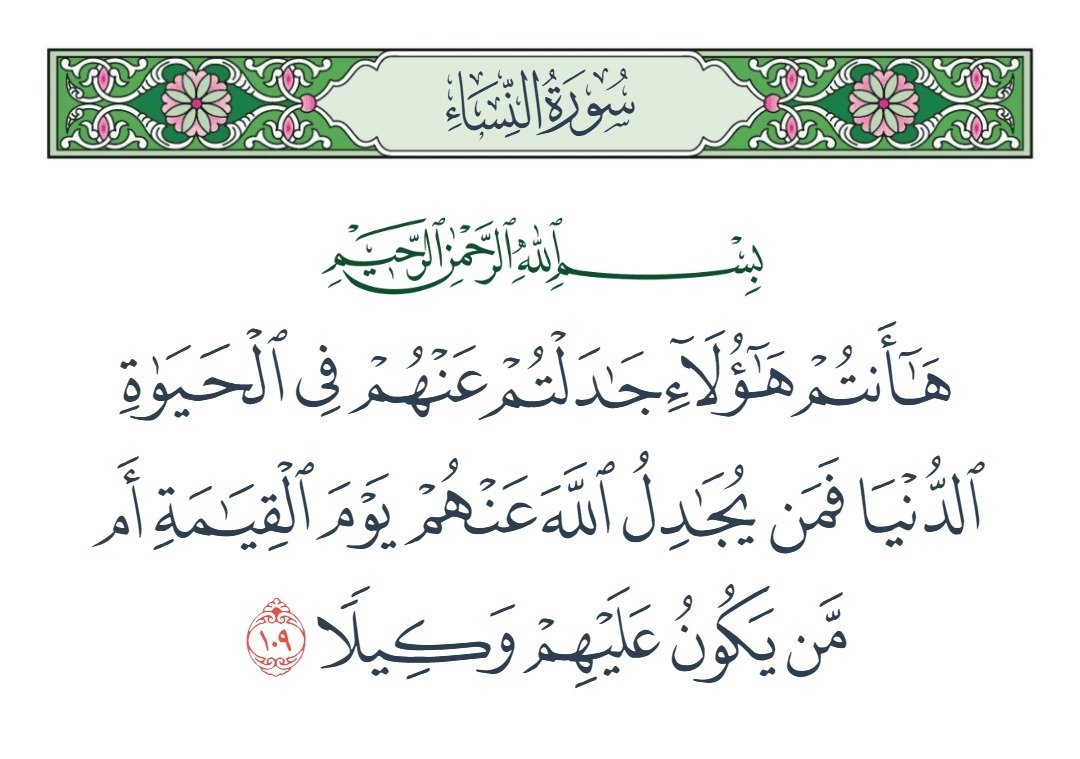
The Qur’anic verse 4:109 serves as a profound reminder and stern warning to those who defend, support, or advocate for those on the wrong path. The verse states:
“Here you are, arguing on their behalf in this life, but who will argue on their behalf before Allah on the Day of Resurrection? Or who will be their advocate?”
(Qur’an 4:109)
The Context of the Verse
This verse is part of a broader discussion in Surah An-Nisa (Chapter 4) about justice, hypocrisy, and the consequences of defending wrongdoers. It addresses those who, for worldly gains or personal interests, advocate for individuals or groups engaged in injustice, oppression, or corruption.
The verse highlights a stark contrast between the temporary nature of worldly life and the eternal reality of the Hereafter. In this life, people may manipulate laws, bend rules, or use their influence to defend the wrongdoers. However, on the Day of Judgment, no one will be able to intercede or advocate for those who committed injustices.
The verse serves as a reminder that defending or supporting wrongdoers is a temporary act with eternal consequences. Allah (SWT) questions those who engage in such behavior: Who will defend you when you stand before Him on the Day of Judgment? Who will advocate for you when you are held accountable for your actions?
Lessons from the Verse
1. The Temporary Nature of Worldly Power: The verse reminds us that worldly laws and influences are temporary. People may defend wrongdoers today, but on the Day of Judgment, only deeds will matter. No one will be able to intercede without Allah’s permission.
“That Day, no intercession will benefit except [that of] one to whom the Most Merciful has given permission and has accepted his word.”
— Qur’an 20:109
2. Accountability for Actions: The verse emphasizes that every individual will be held accountable for their deeds. Those who defend wrongdoers will be questioned about their motives and actions.
“And every soul will be fully compensated for what it did; and He is best aware of what they do.”
— Qur’an 39:70
3. The Danger of Hypocrisy: The verse warns against hypocrisy—supporting wrongdoers outwardly while knowing the truth inwardly. Hypocrisy is a grave sin in Islam, and those who engage in it will face severe consequences.
“The hypocrites will be in the lowest depths of the Fire—you will not find for them any helper.”
— Qur’an 4:145
Practical Implications
1. Upholding Justice: Muslims are commanded to uphold justice, even if it means going against personal interests or relationships. The Qur’an repeatedly emphasizes the importance of justice:
“O you who have believed, be persistently standing firm for Allah, witnesses in justice, and do not let the hatred of a people prevent you from being just. Be just; that is nearer to righteousness.”
— Qur’an 5:8
2. Avoiding Worldly Temptations: The verse warns against letting worldly interests dictate behavior. Muslims should prioritize pleasing Allah (SWT) over temporary gains.
“And do not let their speech grieve you. Indeed, honor [due to power] belongs to Allah entirely. He is the Hearing, the Knowing.”
— Qur’an 10:65
3. The Role of Advocacy: The verse reminds believers that true advocacy is for the oppressed and the righteous, not for wrongdoers. The Prophet Muhammad ﷺ emphasized the importance of standing up for justice:
“Help your brother, whether he is an oppressor or he is oppressed.” People asked, “O Allah’s Messenger! It is all right to help him if he is oppressed, but how should we help him if he is an oppressor?” The Prophet said, “By preventing him from oppressing others.”
— Sahih al-Bukhari
Scholarly Interpretations
Scholars have explained that this verse serves as a warning to those who use their influence, wealth, or power to defend wrongdoers. Imam Ibn Kathir, in his tafsir, explains that the verse is directed at those who argue on behalf of hypocrites and wrongdoers, reminding them that no one will be able to defend them before Allah on the Day of Judgment.
Imam Al-Qurtubi further elaborates that the verse is a reminder of the temporary nature of worldly life. Those who defend wrongdoers may gain temporary benefits in this life, but they will face severe consequences in the Hereafter.
Reflections for Today
In today’s world, where injustice and corruption are prevalent, this verse serves as a reminder for Muslims to:
- Stand firm for justice, even when it is unpopular or difficult.
- Avoid defending or supporting wrongdoers for personal gain or fear of repercussions.
- Remember that accountability before Allah (SWT) is inevitable, and no worldly power can protect us from His justice.
- Prioritize the Hereafter over temporary worldly gains, as true success lies in pleasing Allah (SWT).
Qur’an 4:109 · Qur’an 20:109 · Qur’an 39:70 · Qur’an 5:8 · Qur’an 10:65 · Qur’an 4:145 · Sahih al-Bukhari · Tafsir Ibn Kathir · Tafsir Al-Qurtubi










Be First to Comment