
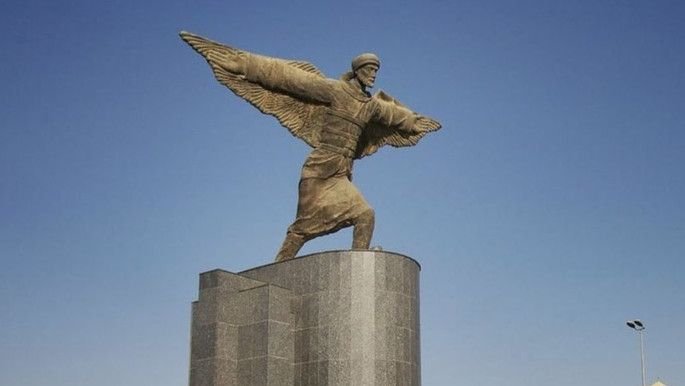
Abbas Ibn Firnas: The First Human to Fly
The Forgotten Pioneer of Aviation
Every airplane you’ve ever boarded, every flight you’ve ever taken, every dream of human flight, it all traces back to one man. His name was Abbas Ibn Firnas.
In the year 875 CE, at the age of 65, he built wings, climbed a tower, and jumped.
Born in 810 CE in Andalusia, Spain, Abbas Ibn Firnas was a true polymath—an inventor, an engineer, a physician, a musician, and a poet. But one idea consumed him: human flight.
For years, he studied birds—how they spread their wings, how they rode the wind, how they controlled their descent.
Then he built his invention: wings made of silk and wood, covered with real feathers, attached to a frame fitted to his body.
At 65, when most people step away from their work, Abbas climbed to the top of the Rusafa Palace Tower. He jumped, and he flew.
For several minutes, Abbas Ibn Firnas glided through the air. He adjusted his direction, he controlled his descent. But he made one critical mistake.
He designed wings, but no tail for landing. He crashed, injuring his back. But he survived.
And he understood what went wrong. Birds use their tails to land. His design had none.
He began planning improvements, but passed away before completing them. That was the year 875 CE, more than a thousand years before the Wright Brothers.
Today, aviation historians recognize Abbas Ibn Firnas as the first person to design, build, and test a controllable flying machine.
A crater on the moon bears his name. A statue of him stands in Baghdad. But most textbooks never mention him.
His name, Abbas Ibn Firnas. His achievement, the first human flight. His legacy, every airplane in the sky.
His recognition, almost none. It’s time the world knew who truly flew first.
Key Themes
This story highlights the ingenuity, courage, and legacy of Abbas Ibn Firnas, the first human to achieve controlled flight.










Be First to Comment