
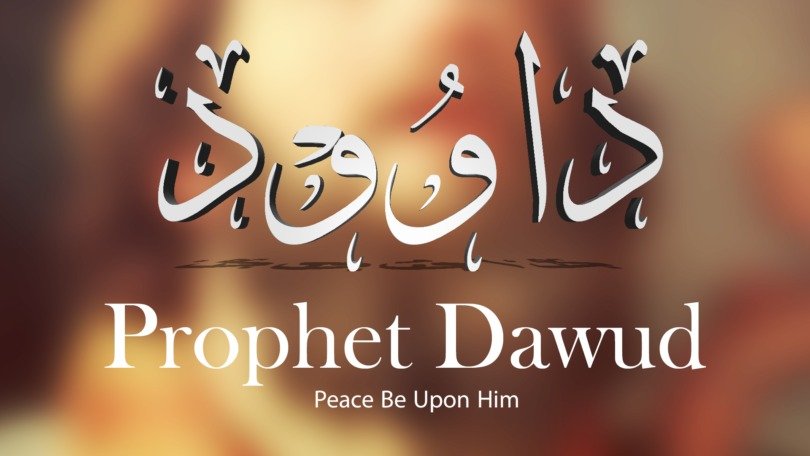
Prophet Dawud (David), peace be upon him, stands as one of the most honored and beloved prophets in Islamic tradition. He was among the great prophets sent to the Children of Israel (Banī Isrā’īl), chosen by Allah to guide his people and establish justice on earth.
Prophet Dawud (David) عليه السلام
The Righteous King and Prophet of Allah
Prophet Dawud (David) عليه السلام was a Prophet (Nabī نبي), not a Messenger (Rasūl رسول). In Islamic terminology, all messengers are prophets, but not all prophets are messengers. A messenger brings a new law or scripture, while a prophet follows and reinforces an existing law. Dawud عليه السلام followed the Torah (Tawrāh) revealed to Prophet Musa (Moses) عليه السلام and called his people back to its guidance, though he was given the Zabur (Psalms) as divine inspiration and wisdom.
Introduction
Prophet Dawud (David), peace be upon him, stands as one of the most honored and beloved prophets in Islamic tradition. He was among the great prophets sent to the Children of Israel (Banī Isrā’īl), chosen by Allah to guide his people and establish justice on earth. Born in Bethlehem (Bayt Lahm), Dawud عليه السلام combined in his person two extraordinary roles: he was both a righteous prophet receiving divine revelation and a powerful king ruling with wisdom and fairness.
The Qur’an mentions Prophet Dawud in sixteen verses across nine different Surahs, honoring him with praise for his devotion, wisdom, gratitude, and unwavering commitment to worship. His story teaches us about courage in the face of overwhelming odds, humility despite great power, constant repentance even in righteousness, and the integration of worldly leadership with spiritual guidance.
“The most beloved prayer to Allah is the prayer of Dawud, and the most beloved fasting to Allah is the fasting of Dawud—he would fast one day and break his fast the next day.”
— Sahih al-Bukhari and Sahih Muslim
This hadith reveals the exceptional devotion of Prophet Dawud. Despite his responsibilities as king and prophet, he maintained a rigorous schedule of worship, alternating days of fasting in a pattern that demonstrated both dedication and balance. The Prophet Muhammad ﷺ highlighted this practice as beloved to Allah, showing us that Prophet Dawud’s worship was a model for all believers.
His Early Life and the Confrontation with Jalut (Goliath)
Before becoming king and prophet, Dawud was a young shepherd tending his flock in the hills near Bethlehem. (Historical details from Islamic tradition, not explicitly in the Qur’an.) At this time, the Children of Israel were facing a grave threat from the army of Jalut (Goliath), a mighty warrior whose strength and size terrified even the bravest soldiers.
The Israelite king, Talut (Saul), had been chosen by Allah through the prophet Samuel to lead the people, but many doubted his authority because he lacked wealth. Allah tested the people’s faith and obedience through various trials, and when they faced Jalut’s army, most of the soldiers abandoned Talut. Only a small, faithful band remained—and among them was the young Dawud.
“So they defeated them by Allah’s permission, and Dawud killed Jalut; and Allah gave him kingship and wisdom and taught him what He willed. And if Allah did not check some people by means of others, the earth would have been corrupted, but Allah is full of bounty to all the worlds.”
— Surah Al-Baqarah (2:251)
This verse captures the pivotal moment that changed Dawud’s life forever. While still a youth, armed with nothing but his faith, a sling, and a few stones, Dawud stepped forward to face the giant Jalut. With Allah’s permission and help, he struck down the fearsome warrior, turning the tide of battle and securing victory for the believers.
The verse emphasizes several crucial points: First, victory came “by Allah’s permission”—it was not merely Dawud’s skill or strength, but divine will and support. Second, Allah immediately granted Dawud both kingship and wisdom, showing that his victory was not just a military feat but the beginning of his divinely appointed leadership. Third, Allah “taught him what He willed,” indicating that Dawud received special knowledge and abilities beyond what humans typically possess.
The verse concludes with a profound principle: Allah allows conflicts between people as a means of maintaining balance and preventing corruption. Without righteous people like Dawud standing against tyranny and oppression, evil would overwhelm the earth. This teaches us that courage and action in defense of justice are not just virtuous—they are necessary for the preservation of moral order in the world.
Dawud Among the Prophets: Allah’s Acknowledgment
“Indeed, We have revealed to you [O Muhammad] as We revealed to Nuh (Noah) and the prophets after him. And We revealed to Ibrahim (Abraham), Isma’il (Ishmael), Ishaq (Isaac), Ya’qub (Jacob), the Descendants, ‘Isa (Jesus), Ayyub (Job), Yunus (Jonah), Harun (Aaron), and Sulayman (Solomon), and to Dawud We gave the Zabur.”
— Surah An-Nisa (4:163)
This verse places Prophet Dawud among the illustrious company of Allah’s greatest prophets. The verse addresses Prophet Muhammad ﷺ, assuring him that revelation has always been the way Allah guided humanity, and lists the prophets by name to establish continuity in the prophetic tradition.
Notably, the verse specifically mentions that Dawud was given the Zabur (Psalms). This sacred scripture contained divine wisdom, supplications, and guidance. While Dawud followed the law of the Torah revealed to Musa عليه السلام, the Zabur represented Allah’s direct communication with him, teaching him how to worship, how to govern, and how to guide his people in righteousness.
“And We gave to him [Ibrahim] Ishaq and Ya’qub—each [of them] We guided. And Nuh We guided before; and among his descendants, Dawud and Sulayman and Ayyub and Yusuf and Musa and Harun. Thus do We reward those who do good.”
— Surah Al-An’am (6:84)
This verse appears in a passage listing the prophets descended from or connected to Prophet Ibrahim عليه السلام. It emphasizes that Dawud was among those chosen for divine guidance—not by his own merit alone, but as part of Allah’s plan to guide humanity through righteous leaders. The conclusion, “Thus do We reward those who do good,” teaches us that prophethood and leadership are rewards from Allah for righteousness, sincerity, and devotion.
The Zabur and Dawud’s Melodious Voice
“And your Lord is most knowing of whoever is in the heavens and the earth. And We have made some of the prophets exceed others [in various ways], and to Dawud We gave the Zabur.”
— Surah Al-Isra (17:55)
This verse acknowledges that while all prophets were chosen by Allah, some were given special distinctions. For Dawud, that distinction included the Zabur—a book of divine praise, wisdom, and supplication. The Zabur was not a book of law like the Torah or a complete code like the Qur’an, but rather a collection of divinely inspired prayers, praises, and moral teachings.
(From Islamic tradition, not explicit in the Qur’an:) Prophet Dawud was blessed with an extraordinarily beautiful voice. When he recited the Zabur, his voice was so melodious and moving that it captivated all of creation. Birds would gather around him, people would stop to listen in awe, and even the mountains would respond to his glorification of Allah.
“Indeed, We subjected the mountains [to praise] with him, exalting [Allah] in the [late] afternoon and [after] sunrise. And the birds were assembled, all with him repeating [praises].”
— Surah Sad (38:18-19)
These remarkable verses describe a miraculous phenomenon granted to Prophet Dawud. The mountains themselves joined him in glorifying Allah, echoing his praises in the evening and morning. The birds—creatures known for their songs—gathered around him and participated in his worship. The word “Awwāb” (أَوَّاب) at the end means “one who constantly returns to Allah” or “one who repeatedly repents and glorifies.” It describes both Dawud and the creation that joined him in worship.
This miracle served several purposes: it demonstrated Allah’s power and favor upon Dawud, it reinforced the truth of his prophethood, and it taught a profound lesson—all of creation naturally glorifies Allah. Humans, who possess intellect and free will, should be at the forefront of worship and praise, joining the rest of creation in constant remembrance of the Creator.
Dawud’s Craftsmanship: The Art of Making Armor
“And We certainly gave Dawud from Us bounty. [We said], ‘O mountains, repeat [Our] praises with him, and the birds [as well].’ And We made the iron soft for him, [commanding him], ‘Make full coats of mail and calculate [precisely] the links, and work [all of you] righteousness. Indeed, I, of what you do, am Seeing.'”
— Surah Saba (34:10-11)
These verses reveal another extraordinary blessing granted to Prophet Dawud: Allah softened iron for him. This was a miraculous gift that allowed him to work with iron as easily as one might work with clay or wax. Dawud became the first human to craft armor by hand, specifically chain mail (sābiġāt سَـٰبِغَـٰتٍ), which provided excellent protection in battle.
The command to “calculate precisely the links” shows that this was not just about supernatural ability—it required skill, precision, and careful work. Dawud had to master the craft, ensuring that the armor was well-made and effective. This teaches us that even when Allah grants special abilities, effort and expertise are still required.
Most significantly, Dawud earned his living through his own labor, crafting and selling armor rather than living off the wealth of his kingdom. (From Islamic tradition:) He would work with his hands, craft armor, sell it in the marketplace, and use that income to support himself and give charity. This demonstrated remarkable humility—here was a powerful king and prophet who could have lived in luxury, yet he chose to earn his sustenance through honest work.
The Prophet Muhammad ﷺ said: “No one has ever eaten better food than that which he earns by working with his own hands. The Prophet of Allah, Dawud, used to eat from the earnings of his manual labor.” (Sahih al-Bukhari) This hadith praises Dawud’s independence and work ethic, establishing his example as a model for all Muslims—that earning one’s living through honest labor is the best and most honorable way.
Dawud and Sulayman: Judgment and Wisdom
“And [mention] Dawud and Sulayman, when they judged concerning the field—when the sheep of a people overran it [at night], and We were witness to their judgment. And We gave understanding of the case to Sulayman, and to each [of them] We gave judgment and knowledge. And We subjected the mountains to exalt [Us], along with Dawud, and [also] the birds. And We were doing [that]. And We taught him the fashioning of coats of armor to protect you from your [enemy in] battle. So will you then be grateful?”
— Surah Al-Anbiya (21:78-80)
This passage recounts an incident where Prophet Dawud and his son Sulayman (Solomon)—also a prophet—were both judging a legal case. A flock of sheep had wandered into a farmer’s field at night and destroyed his crops. The question was: what compensation should the owner of the sheep provide to the farmer?
Dawud rendered one judgment, but his young son Sulayman offered a different solution. (From classical Islamic commentaries:) Dawud ruled that the sheep should be given to the farmer as compensation. Sulayman, however, suggested a more nuanced solution: the farmer should keep the sheep temporarily, benefiting from their wool and milk, while the sheep owner worked to restore the damaged field. Once the field was restored to its original condition, the sheep would be returned to their owner. This judgment was more equitable because both parties would be compensated fairly.
The Qur’an says Allah “gave understanding of the case to Sulayman,” but immediately adds, “and to each [of them] We gave judgment and knowledge.” This is crucial: while Sulayman’s judgment was more insightful in this particular case, both were wise judges blessed with divine knowledge. This teaches us humility—even prophets could learn from one another, and being corrected or shown a better way is not a sign of failure but an opportunity for growth.
The passage then returns to praising Dawud’s special blessings: the mountains and birds glorifying Allah with him, and the knowledge of making protective armor. The final question, “So will you then be grateful?” reminds us that all these bounties—whether miraculous abilities, prophetic wisdom, or practical skills—call for gratitude to Allah.
Dawud and Sulayman: Gratitude and Legacy
“And We had certainly given to Dawud and Sulayman knowledge, and they said, ‘Praise [is due] to Allah, who has favored us over many of His believing servants.'”
— Surah An-Naml (27:15)
This verse highlights a beautiful quality shared by both Dawud and his son Sulayman: gratitude. Despite being blessed with prophethood, kingship, wisdom, miraculous abilities, and worldly power, they did not become arrogant or complacent. Instead, they immediately praised Allah and acknowledged that their blessings were favors from Him, not their own achievements.
Their statement, “Praise is due to Allah, who has favored us over many of His believing servants,” demonstrates several virtues: humility before Allah, recognition that excellence comes from divine favor, and awareness that their position was a responsibility rather than a privilege. They understood that they had been favored not for their own glory, but to serve Allah’s purpose and guide His creation.
This verse also shows the beautiful legacy Dawud left through his son. Sulayman inherited not just the kingdom, but also prophethood, wisdom, and—most importantly—the character of gratitude and righteousness. A parent’s greatest legacy is not wealth or status, but the values and faith they pass on to their children.
The Test of Dawud: Repentance and Humility
Among the most profound passages about Prophet Dawud in the Qur’an is the story of a test he faced, as recounted in Surah Sad. This passage has been subject to much misinterpretation, so it requires careful understanding from an Islamic perspective.
“And has there come to you the news of the adversaries, when they climbed over the wall of [his] prayer chamber— When they entered upon Dawud and he was alarmed by them? They said, ‘Fear not. [We are] two adversaries, one of whom has wronged the other, so judge between us with truth and do not exceed [it] and guide us to the sound path. Indeed this, my brother, has ninety-nine ewes, and I have one ewe; so he said, “Entrust her to me,” and he overpowered me in speech.’ [Dawud] said, ‘He has certainly wronged you in demanding your ewe [in addition] to his ewes. And indeed, many associates oppress one another, except for those who believe and do righteous deeds—and few are they.’ And Dawud became certain that We had tried him, and he asked forgiveness of his Lord and fell down bowing [in prostration] and turned in repentance [to Allah]. So We forgave him that; and indeed, for him is nearness to Us and a good place of return.”
— Surah Sad (38:21-25)
This passage describes a test that came to Prophet Dawud while he was in his prayer chamber (miḥrāb). Two men climbed over the wall—an unusual entrance that startled him—and presented a dispute: one had ninety-nine ewes (female sheep) and wanted to take the single ewe belonging to the other.
Dawud immediately recognized the injustice and ruled that the man with ninety-nine ewes had wronged the other by demanding his only ewe. Then he added a broader observation: many business partners oppress one another, except those who are righteous believers—and such people are few.
At that moment, Dawud “became certain that We had tried him.” The two men were not ordinary litigants—they were angels sent by Allah to convey a message through a parable. Dawud realized that this case was actually about himself, teaching him a lesson about judgment, humility, or some aspect of his own conduct.
The Bible contains a story that this passage is sometimes associated with—a story of Prophet Dawud committing adultery with Bathsheba and arranging her husband’s death. Islam categorically rejects this narrative as false and slanderous.
In Islamic theology, all prophets are ‘Ismah (معصوم)—protected from major sins and from anything that would contradict their role as moral exemplars. Allah would never choose someone who commits adultery and murder to be His prophet and representative. Such accusations are considered grave insults to the prophets and to Allah’s wisdom in choosing them.
The Qur’anic passage does not specify what the test was about, and Islamic scholars have offered various interpretations—perhaps Dawud showed preference in judgment, or perhaps he made a ruling hastily without hearing both sides fully, or perhaps the lesson was about something else entirely. What matters is that Dawud immediately recognized the test, sought forgiveness, prostrated to Allah, and repented—showing perfect humility and devotion. The verse concludes that Allah forgave him and granted him nearness and an excellent return, confirming his righteousness.
The fact that Dawud sought forgiveness does not mean he committed a sin in the way ordinary people do. Prophets are held to the highest standards, and what might be a minor oversight or preference for others becomes a matter requiring immediate correction for them. Their repentance demonstrates their exceptional consciousness of Allah and their commitment to perfection in their conduct.
This story teaches us several profound lessons: First, even the greatest among us should constantly examine our actions and seek improvement. Second, when we realize we have erred or could have done better, immediate repentance and turning to Allah is the proper response. Third, Allah’s mercy encompasses all who sincerely turn to Him—the verse confirms that Allah forgave Dawud and granted him an honored position with Him.
“[We said], ‘O Dawud, indeed We have made you a successor upon the earth, so judge between the people in truth and do not follow [your own] desire, as it will lead you astray from the way of Allah.’ Indeed, those who go astray from the way of Allah will have a severe punishment for having forgotten the Day of Account.”
— Surah Sad (38:26)
Following the test and repentance, Allah addressed Dawud directly with this powerful reminder. He was made a khalīfah (خَلِيفَة)—a successor or vicegerent—upon the earth, meaning he had authority to govern and judge among people. But this authority came with a critical warning: he must judge with truth and not follow personal desires.
This verse establishes a fundamental principle of Islamic governance: those in authority must prioritize justice and truth over personal preferences, relationships, or interests. Even prophets—who are protected from sin—are reminded of this principle, showing how important it is for all leaders to remain vigilant against bias and desire.
The warning about those who go astray and forget the Day of Judgment applies to everyone, but especially to leaders and judges whose decisions affect many people. It reminds us that we will all be held accountable for our actions, and positions of power increase rather than diminish that accountability.
Dawud’s Devotion to Worship
“Be patient over what they say and remember Our servant Dawud, the possessor of strength. Indeed, he was one who repeatedly turned back [to Allah].”
— Surah Sad (38:17)
This verse, which introduces the longer passage about Dawud’s test, beautifully summarizes his character. Allah addresses Prophet Muhammad ﷺ, telling him to be patient with the opposition he faces, and to remember the example of Dawud.
Dawud is described as dhā al-ayd (ذَا ٱلْأَيْدِ)—”possessor of strength.” This refers not just to physical strength, but to strength in faith, strength in patience, strength in worship, and strength in judgment. Despite his power as a king and his status as a prophet, Dawud remained humble and devoted.
Most beautifully, he is called Awwāb (أَوَّاب)—one who constantly returns to Allah. This word appears multiple times in the Qur’an describing Dawud, and it captures the essence of his spirituality. No matter how busy he was with affairs of state, no matter how much power and blessing he possessed, he continually turned to Allah in worship, repentance, supplication, and remembrance.
This is the model for all Muslims, especially those in positions of leadership or worldly success. Power, wealth, and status should not distance us from Allah—rather, they should increase our gratitude and devotion. Dawud showed us how to maintain spiritual consciousness while engaged in worldly responsibilities.
The Qualities of Prophet Dawud
Characteristics That Made Dawud a Model Prophet
As a youth, he faced the giant Jalut with nothing but faith and a sling, trusting that Allah would grant victory against overwhelming odds. This teaches us that when we stand for truth, Allah’s help is more powerful than any worldly force.
Despite his responsibilities as king and prophet, Dawud maintained rigorous worship, fasting alternate days and spending long hours in prayer. His devotion was so profound that creation itself joined him in glorifying Allah.
Dawud judged between people with truth, never allowing personal preference or desire to influence his decisions. He understood that leadership was a trust from Allah, requiring absolute integrity.
Though he was a powerful king with miraculous abilities, Dawud worked with his hands to earn his living and remained humble before Allah. He never allowed his status to make him arrogant or complacent.
When tested by Allah or when he realized he could have done better, Dawud immediately turned to Allah in repentance and prostration. He exemplified the characteristic of Awwāb—constantly returning to Allah.
Dawud never took his blessings for granted. Whether it was prophethood, kingship, wisdom, or miraculous abilities, he always praised Allah and acknowledged that everything came from divine favor.
Dawud showed that being engaged in worldly affairs does not mean neglecting spirituality. He successfully balanced political authority, judicial responsibilities, military leadership, and craftsmanship with prophetic duties and constant worship.
His Rule and Legacy
(From Islamic historical tradition, not explicit in the Qur’an:) Prophet Dawud ruled from Jerusalem (Bayt al-Maqdis), establishing it as the center of worship and governance for the Children of Israel. He united the scattered tribes, organized their religious practices according to the Torah of Musa عليه السلام, and brought justice and prosperity to the land.
His rule was characterized by wisdom, fairness, and devotion to Allah. He established systems of justice, built places of worship, and ensured that the law of Allah was implemented among his people. Unlike many rulers who use power for personal gain, Dawud used his authority solely to serve Allah and benefit his community.
Dawud lived approximately seventy years, though exact dates are not certain in Islamic sources. (From tradition:) It is said that he passed away while praying in his sanctuary, engaged in worship until his final breath—a fitting end for one who was Awwāb, constantly turning to Allah.
His son Sulayman (Solomon) عليه السلام succeeded him in both kingship and prophethood, continuing his father’s legacy of just rule and devotion to Allah. Sulayman would become even more renowned for his wisdom, power, and the extraordinary kingdom Allah granted him, but he always acknowledged the foundation his father laid and the lessons he learned from him.
Lessons from the Life of Prophet Dawud
The story of Prophet Dawud عليه السلام offers countless lessons for Muslims in every era:
Never underestimate the power of faith. When Dawud faced Jalut, he was young, inexperienced in warfare, and facing a legendary warrior. But his trust in Allah transformed him into the victor. We too should never feel that a challenge is too great when we rely on Allah.
Balance worldly responsibilities with spiritual devotion. Dawud was extremely busy—he was king, judge, prophet, craftsman, and father. Yet he never neglected worship. In fact, his worship was so exceptional that the Prophet Muhammad ﷺ highlighted it as most beloved to Allah. This teaches us that no matter how occupied we are, we must prioritize our relationship with Allah.
Work with your hands and earn honestly. Despite being king, Dawud worked as a blacksmith and armor-maker, earning his living through manual labor. The Prophet Muhammad ﷺ praised this, teaching us that there is honor and dignity in working with our hands and being self-sufficient.
Lead with justice, not desire. Allah warned Dawud not to let personal preferences influence his judgments. For anyone in a position of authority—whether in government, family, or business—this principle is crucial. Justice must be based on truth, not on what benefits us personally.
Always be ready to repent. Even when we have done nothing wrong by ordinary standards, we should constantly examine ourselves and turn to Allah. Dawud’s immediate prostration and repentance when he realized he was being tested shows us the mindset of the righteous—always seeking to improve, always turning back to Allah.
Be grateful for every blessing. Dawud and Sulayman were given extraordinary gifts, yet they never became arrogant. Their first response was praise and gratitude to Allah. We too should recognize that every blessing we have—our health, our families, our abilities, our opportunities—comes from Allah and requires thankfulness.
Let all creation remind you of Allah. When Dawud worshipped, the mountains and birds joined him. For us, this means that nature itself should be a reminder—the beauty of creation should turn our hearts to the Creator. When we see mountains, hear birds, or witness any of Allah’s creation, it should increase our remembrance and worship.
Conclusion
Prophet Dawud (David) عليه السلام stands as one of the most remarkable figures in Islamic history. He was a shepherd who became a king, a warrior who became known for his devotion to worship, a ruler who earned his living through manual labor, and a prophet whose voice could move mountains and birds to join him in glorifying Allah.
The Qur’an mentions him in multiple contexts—as the victor over Jalut, as the recipient of the Zabur, as the craftsman who mastered working with iron, as the just judge warned against following desire, and as the Awwāb who constantly turned to Allah. Each reference adds another dimension to our understanding of this great prophet.
What makes Dawud particularly relevant for us today is that he lived in the world—he was engaged in politics, economics, justice, and daily affairs—yet he never let these worldly involvements distance him from Allah. He showed us that it is possible to be powerful yet humble, busy yet devoted, engaged with creation yet focused on the Creator.
His legacy continues through the example he set and the lessons his story teaches. Every time we face overwhelming challenges, we can remember the young Dawud facing Jalut. Every time we are tempted to let worldly success distract us from worship, we can remember Dawud fasting alternate days despite his kingdom. Every time we must make a difficult judgment, we can remember Allah’s warning to Dawud about following desire. Every time we realize we could have done better, we can remember Dawud’s immediate repentance and prostration.
Most importantly, Dawud teaches us the meaning of being Awwāb—one who constantly returns to Allah. In a world full of distractions, responsibilities, and temptations, this quality is perhaps more important now than ever. No matter where we are, what we’re doing, or what we’ve done, we can always turn back to Allah. And when we do, we follow in the footsteps of one of His most beloved prophets.
May Allah grant us the courage of Dawud, the devotion of Dawud, the justice of Dawud, the humility of Dawud, and the constant repentance of Dawud. May He make us among those who remember Him constantly, who work righteously with our hands, who lead with justice, and who always turn back to Him in every circumstance.









Be First to Comment