
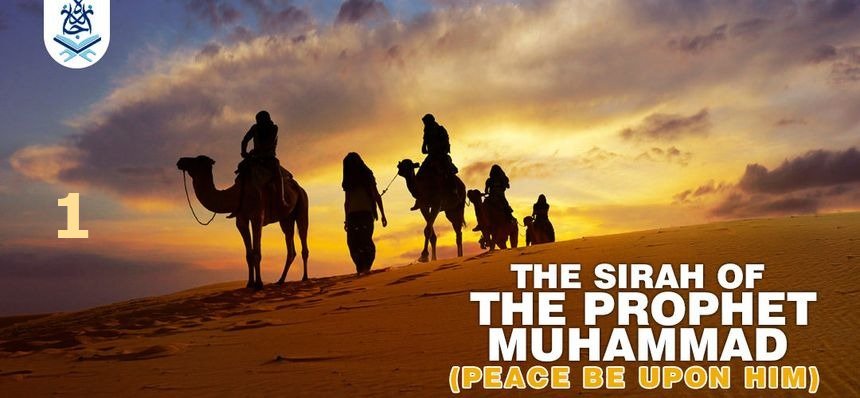
The Sirah
The City of Mecca
The Sacred Valley and the House of Abraham
The name Mecca has become synonymous in the English language with any place that attracts enormous throngs of devotees. This is a fair and accurate use of the word, for its roots can be traced to a real city, in a real place, which at last count was visited by over two million pilgrims in just one week!
However, Mecca is not a new kind of Disneyland or vacation resort. It is an old city—an ancient one—that has been continuously inhabited for over two and a half thousand years. It is an oasis in the Arabian Desert. It is also the birthplace of Muhammad ﷺ, who was arguably the most influential human being who ever lived.
Situated at the nexus of a series of important merchant roads, Mecca’s three main functions in ancient days consisted in providing water to passing caravans in an otherwise hot and dry region, offering a merchant bazaar second to none, but most importantly, serving as a religious center, for in it lay the ancient House of Abraham, a cube-shaped shrine whose first prototype was built by the venerable patriarch over two thousand years before.
Of the two most important sons of Abraham, Ishmael and Isaac, it was Ishmael who was settled by his father in that valley before it was ever inhabited.
Abraham left both Ishmael and his mother there on God’s instructions, but they did not perish from thirst, for they soon discovered a bubbling spring that saved them. This unfailing well also gave them a valuable commodity, which they used to trade for food with passing nomads. Upon a return visit, Abraham saw his family had survived, and in a show of thanks both he and his son built a shrine dedicated to the One True God. Today that shrine is known as the Ka’bah or Cube.
Bedouins eventually began to settle in the valley, and it was Ishmael himself who was their first patriarch and prophetic guide. He instilled within his budding people the importance of monotheism and of pilgrimage to God’s shrine in Mecca as a way to rededicate themselves to God.
“Blessed are those whose strength is in you, whose hearts are set on pilgrimage. As they pass through the Valley of Baca, they make it a place of springs…”
Psalm 84:5-6
The Jewish Old Testament bears witness to these ancient rites and to Mecca being an age-old center of pilgrimage. In the Psalms of David (84:6), we read about the pilgrimage to Becca (the ancient name of the city) and its famed well.
However, something happened along the centuries to the ancient purpose of this town and its shrine.
To be continued in Part 2…



Be First to Comment