
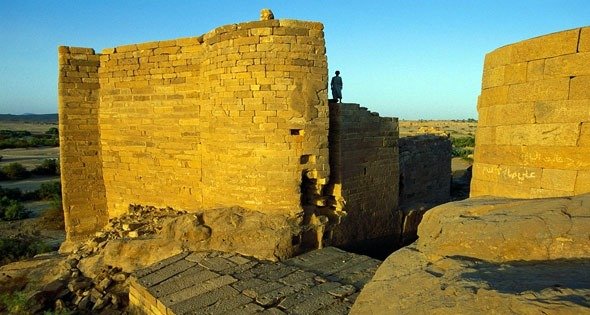
The Ma’rib Dam: When Ignorance Destroyed a Civilization
The Story of Amr ibn Amer and the Mouse That Warned of Collapse
In the ancient land of Yemen, long before the rise of Islam, stood one of the most magnificent engineering marvels of the ancient world—the Great Dam of Ma’rib. For over a millennium, this colossal structure sustained an entire civilization, transforming the harsh Arabian desert into a garden paradise. Yet, despite its grandeur and the prosperity it brought, the dam eventually collapsed, not from the forces of nature, but from something far more destructive: human ignorance and negligence.
This is the story of how wisdom was ignored, warnings were dismissed, and one of history’s greatest civilizations crumbled—a timeless lesson that resonates powerfully in our modern world.
The Glory of Ancient Saba’
The Kingdom of Saba’ (known in the West as Sheba) flourished in what is now Yemen from approximately 1200 BCE to 275 CE. This was a sophisticated, prosperous civilization that controlled the lucrative incense trade routes connecting Arabia to the Mediterranean world. The Sabaeans were master engineers, astronomers, architects, and traders whose wealth became legendary across the ancient world.
The dam featured sophisticated spillways to prevent overflow, distribution channels that ensured equitable water allocation, and maintenance systems that had sustained it for over a millennium. It was not merely a dam—it was the heart of an entire civilization’s agricultural economy.
The prosperity brought by the Ma’rib Dam was so remarkable that it is mentioned in the Quran itself. The gardens of Saba’ were described as a symbol of Allah’s blessings upon a grateful people:
“There was for [the tribe of] Saba’ in their dwelling place a sign: two [fields of] gardens on the right and on the left. [They were told], ‘Eat from the provisions of your Lord and be grateful to Him. A good land [have you], and a Forgiving Lord.'”
— Surah Saba’ (34:15)
Travelers from across the ancient world spoke of the beauty and abundance of Saba’. The land was so fertile that a person could walk through the shaded gardens from one end of the kingdom to the other without ever being exposed to the harsh desert sun. The fragrance of flowers and spices filled the air, and the prosperity seemed endless.
The Warning: Amr ibn Amer and the Mouse
Among the leaders of Saba’ was a wise and observant man named Amr ibn Amer al-Muzayqiya (also known as Amr ibn Amer). He was a chief of the Azd tribe and was known for his intelligence, foresight, and deep understanding of the kingdom’s infrastructure. Unlike many of his contemporaries who had grown complacent in their prosperity, Amr remained vigilant about the condition of the dam that sustained their entire civilization.
He realized that if a mouse could burrow into the dam, it meant the structure had developed vulnerabilities. Water seepage was likely compromising the integrity of the earthworks. What began as small holes could expand with water pressure, eventually leading to catastrophic failure. The mouse was not the problem—it was the symptom of a much larger issue that required immediate attention.
Alarmed by this observation, Amr ibn Amer immediately went to the leaders and people of Saba’. He warned them urgently: “The dam is weakening. I have seen the signs. We must act now to repair and reinforce it, or we will face disaster.”
But the people of Saba’, fat with prosperity and complacent in their abundance, dismissed his warnings. “You worry over nothing,” they told him. “This dam has stood for centuries. It has weathered countless storms. A tiny mouse? This is foolishness. We have more important matters to attend to.”
This is the tragedy of negligence—by the time the danger becomes obvious to everyone, it is often too late to prevent disaster.
The Wisdom of Amr ibn Amer
Realizing that his people would not heed his warning, and understanding the magnitude of the coming catastrophe, Amr ibn Amer made a difficult decision. He would not stay to witness the destruction he knew was inevitable. With his family and those who believed him, he prepared to leave the land of his ancestors.
But Amr was wise in another way as well. He knew that if he simply announced his departure and its reasons, he would be ridiculed and possibly prevented from leaving. So he devised a clever plan to sell his property and gather his family without raising suspicion.
According to historical accounts, Amr ibn Amer invited the nobles and wealthy merchants of Saba’ to a grand feast. During the celebration, he pretended to have a violent quarrel with his son, even striking him in front of the guests. This staged conflict gave him a pretext to declare that he could no longer live in Saba’ and needed to leave to “preserve family honor.”
The people, believing this theatrical display, allowed him to sell his properties and depart with his tribe. In reality, Amr was executing a carefully planned evacuation, taking with him those who had the wisdom to trust his judgment about the dam’s impending failure.
Amr ibn Amer and his followers migrated northward from Yemen. The Azd tribe eventually split into several groups, with some settling in Yathrib (later known as Medina), others in Syria, and others in various parts of Arabia. These migrations would have profound historical consequences—the Aws and Khazraj tribes of Medina, who would later become the Ansar (helpers) of Prophet Muhammad ﷺ, were descendants of this very migration from Saba’.
The Collapse: The Flood of al-‘Arim
Years passed after Amr’s departure. The people of Saba’ continued in their prosperity, their complacency, and their negligence. The warnings were forgotten. The dam still stood—until it didn’t.
Around 570 CE (some accounts place it earlier, around 450-500 CE), the Ma’rib Dam finally failed catastrophically. The collapse was sudden and devastating. The tremendous volume of water that had been held back by the dam was released all at once, destroying everything in its path. This catastrophic flood is known in Arabic as Sayl al-‘Arim (سَيْل الْعَرِم) – the Flood of the Dam.
The consequences were total and irreversible. The elaborate irrigation system that had taken centuries to build was destroyed in a matter of hours. The fertile gardens transformed back into arid desert. The agricultural economy collapsed completely. The people who had ignored Amr’s warnings now faced starvation and were forced to abandon their ancestral lands.
The Quran describes this catastrophic punishment in powerful terms:
“But they turned away [refusing], so We sent upon them the flood of the dam, and We replaced their two [fields of] gardens with two gardens producing bitter fruit, tamarisks and something of sparse lote trees.”
— Surah Saba’ (34:16)
“That is how We recompensed them for their ingratitude. Would We recompense any except the ungrateful?”
— Surah Saba’ (34:17)
The Deeper Lessons: Ignorance, Arrogance, and Ingratitude
The story of Ma’rib is far more than just an account of a dam’s collapse. It is a profound meditation on how civilizations fall—not usually from external enemies or natural disasters, but from internal decay, complacency, and the refusal to acknowledge problems until it is too late.
Wisdom demands that we listen to those who understand the systems we depend upon, even when their warnings are inconvenient.
History teaches otherwise. The Roman Empire fell. The Abbasid Caliphate fell. The British Empire fell. Every civilization that believed itself immune to decline was proven wrong. Maintenance, vigilance, and humility are required to sustain any great achievement.
This is how infrastructure collapses, how businesses fail, how relationships dissolve, and how health deteriorates. The time to fix the leak is when you first notice the mouse digging, not when water is pouring through the wall.
Gratitude is not merely good manners—it is a recognition of dependence that keeps us humble and vigilant. When we forget that our blessings can be taken away, we stop maintaining the conditions that made them possible.
“The collapse of Ma’rib was not an engineering failure—it was a failure of wisdom, foresight, and gratitude. The same forces that destroyed Saba’ threaten every civilization that grows complacent in its success.”
Modern Parallels: The Ma’rib Lesson Today
The story of Ma’rib resonates powerfully in the modern world because we see the same patterns repeating:
Infrastructure Neglect: Modern nations often ignore infrastructure maintenance until bridges collapse, power grids fail, or water systems contaminate entire cities. The lesson of Ma’rib—that maintenance is cheaper than replacement, and prevention is wiser than reaction—remains unlearned.
Environmental Warnings: Scientists warning about climate change, deforestation, ocean acidification, and biodiversity loss are often dismissed as alarmists, just as Amr was dismissed for worrying about a mouse. The tendency to prioritize short-term comfort over long-term survival is as strong today as it was in ancient Saba’.
Economic Bubbles: Financial experts who warned before the 2008 collapse were largely ignored. Those warning about debt crises, asset bubbles, and unsustainable economic practices today face similar dismissal. The dam still appears to be standing—until suddenly it isn’t.
Social Cohesion: Societies that ignore growing inequality, polarization, and injustice convince themselves that stability is permanent—until it violently isn’t. The erosion happens gradually, like water seeping through earthworks, until the structure can no longer hold.
When small signs indicate larger issues, investigate.
When maintenance is needed, don’t delay.
When you have abundance, remain humble and grateful.
When you see the mouse digging, repair the dam.
The Archaeological Evidence
The ruins of the Ma’rib Dam still exist today in Yemen, standing as a monument to both human achievement and human folly. Archaeological excavations have confirmed the historical accounts: the dam was indeed a magnificent structure, and it did suffer catastrophic failure around the time period mentioned in historical records.
Excavations at the Ma’rib site have revealed the sophisticated engineering of the dam’s construction, including multiple phases of repair and expansion over its lifetime. Evidence shows that the dam underwent several partial failures and repairs before the final catastrophic collapse. This archaeological record confirms the historical narrative: the structure was deteriorating over time, and efforts to maintain it were insufficient.
The ruins show sophisticated sluice gates, spillways, and distribution channels that once irrigated the extensive agricultural lands. The transformation of the region from fertile gardens to desert is visible in geological and botanical evidence. The Ma’rib Dam stands today as a UNESCO World Heritage consideration, a testament to ancient Arabian engineering prowess and a warning about the consequences of neglect.
Attempts have been made in modern times to rebuild and restore the dam. In 1986, the government of Yemen, with support from international organizations, completed a new dam near the site of the ancient structure. While this modern dam provides water for irrigation and has revitalized some agriculture in the region, it serves as a reminder that what was lost took centuries to build and mere hours to destroy.
The story of the Ma’rib Dam is ultimately a story about human nature. It is about the tendency to become complacent when times are good, to dismiss warnings when danger seems distant, to neglect maintenance when systems appear to be functioning, and to forget gratitude when blessings are abundant.
Amr ibn Amer saw a mouse digging in the dam and understood that this small sign indicated a catastrophic threat. His contemporaries saw the same mouse and dismissed it as insignificant. The difference between the wise and the foolish is not superior intelligence or greater resources—it is the willingness to acknowledge problems before they become catastrophes, to act on warnings before disaster strikes, and to maintain systems before they fail.
Every civilization faces its own “Ma’rib moment”—a point where small signs indicate larger problems, where expert warnings go unheeded, where the choice between short-term comfort and long-term survival must be made. The lesson of Saba’ echoes across the centuries: negligence and ingratitude destroy even the greatest of civilizations.
The mouse is always digging somewhere. The question is whether we have the wisdom to see it, the humility to acknowledge the danger, and the will to repair the dam before the flood comes.
“And Allah presents an example: a city which was safe and secure, its provision coming to it in abundance from every location, but it denied the favors of Allah. So Allah made it taste the envelopment of hunger and fear for what they had been doing.”
— Surah An-Nahl (16:112)









Be First to Comment