
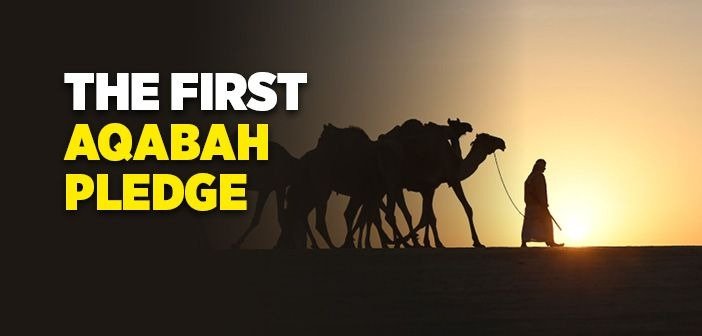
The Pledge of Aqaba
The Secret Pact That Changed History
The story of the Pledge of Aqaba is one of the most pivotal moments in the history of Islam. It was a secret pact that laid the foundation for the first Islamic state in Medina, transforming a persecuted community into a global force.
The First Allegiance
By the eleventh year of the Prophethood, the persecution and hostility from the Quraysh tribe in Mecca had reached its peak. The Prophet Muhammad (peace be upon him) realized that Mecca would not accept his message and began searching for a new land and a new people who would listen to the word of God.
During the Hajj season, a small delegation from Yathrib (later renamed Medina) arrived. The Prophet met with them secretly at a mountain pass near Aqaba in the darkness of the night. They were twelve men from the Khazraj tribe. They had heard the message of Islam, believed in it, and embraced the faith.
The Prophet called them to Islam, and they responded immediately. This meeting became known as the First Pledge of Aqaba. After the pledge, they returned to Yathrib and began inviting their people to Islam, sowing the seeds of faith that would soon blossom across the city.
The Second Allegiance: A Pact of Protection
The following year, in the twelfth year of the Prophethood, the delegation from Yathrib returned, now significantly larger: seventy-three men and two women, all united in their faith.
As night fell, they slipped away one by one to the same mountain pass at Aqaba, where the Prophet Muhammad (PBUH) awaited them. With him was his uncle, Al-Abbas ibn Abd al-Muttalib. Although Al-Abbas had not yet embraced Islam, he was there to witness the pact and ensure the safety of his nephew.
The Warning of Al-Abbas
Al-Abbas spoke first, addressing the people of Yathrib with a stern warning:
“O people of Khazraj, you know the position of Muhammad among us. We have protected him from our people who share our views about him. He is in honor and protection among his own people and in his own town. He has refused to stay with us and has chosen to join you. If you believe that you will be faithful to what you have invited him to, and that you will protect him from those who oppose him, then you are responsible for what you have undertaken. But if you think that you will surrender and betray him after he joins you, then leave him now, for he is in honor and protection among his people and in his town.”
The people of Yathrib replied with unwavering commitment:
“We have heard what you said. Now, O Messenger of God, speak and take for yourself and your Lord what you wish.”
The Terms of the Pact
The Prophet Muhammad (PBUH) then presented the terms of the allegiance:
“I take your pledge that you will protect me from whatever you protect your women and children from.”
The people affirmed their commitment immediately. Al-Bara’ ibn Ma’rur stepped forward, took the Prophet’s hand, and declared with pride:
“Yes, by the One who sent you with the truth, we will protect you from what we protect our own garments (or wives) from. So pledge your allegiance to us, O Messenger of God! We are, by God, the people of war and the people of the shield, inherited from generation to generation.”
The Critical Question
Before the pledge was sealed, Abu al-Haytham ibn al-Tayyihan raised a critical and deeply human question that revealed the gravity of the commitment:
“O Messenger of God, there are ties between us and other men (meaning the Jews), and we are about to sever them. If we do that, and then God grants you victory, will you return to your people and abandon us?”
The Prophet Muhammad (PBUH) smiled and gave a response that cemented his absolute loyalty to them—a response that would echo through Islamic history:
“No. Blood is blood, and destruction is destruction. I am from you, and you are from me. I will fight whom you fight, and I will make peace with whom you make peace.”
The Comprehensive Pledge
With this assurance, they extended their hands and gave a famous pledge known for its comprehensive and binding terms. They pledged allegiance to:
- Listen and obey in times of ease and hardship.
- Spend in times of difficulty and prosperity.
- Enjoin good and forbid evil in all circumstances.
- Speak the truth for the sake of God, fearing no blame from any critic.
- Support and protect him when he came to them, defending him as they would defend themselves, their wives, and their children.
The reward for this monumental commitment was Paradise. As’ad ibn Zurarah was the first to take the pledge, followed by the rest of the delegation.
The Aftermath and the First Ambassador
After the pledge was concluded, the people of Yathrib requested that the Prophet send someone with them to teach them the Qur’an and instruct them in the religion. The Prophet sent Mus’ab ibn Umayr (may God be pleased with him), who became the first ambassador of Islam.
The delegation returned to Yathrib, and the news of the secret allegiance spread. When the Quraysh learned of it, they were enraged and intensified their persecution of the Muslims they knew. However, the Pledge of Aqaba had already opened the door of hope.
It was the initial nucleus of the Islamic State that would soon be established in Medina after the Prophet’s migration (Hijra), paving the way for a new dawn for all humanity. The Pledge of Aqaba transformed a scattered, persecuted community into an organized, united force that would eventually establish a civilization based on justice, mercy, and the worship of the One God.










Be First to Comment