
Justice Without Exception
The Prophetic Stand Against Privilege and Inequality
العدل بلا استثناء
موقف النبي ﷺ ضد المحسوبية وعدم المساواة
It was narrated from ‘Aishah (may Allah be pleased with her) that the Quraysh were deeply concerned about the case of the Makhzumi woman who had committed theft. They said: “Who will speak to the Messenger of Allah concerning her?” They said: “Who would dare to do such a thing except Usamah bin Zaid, the beloved of the Messenger of Allah ﷺ?”
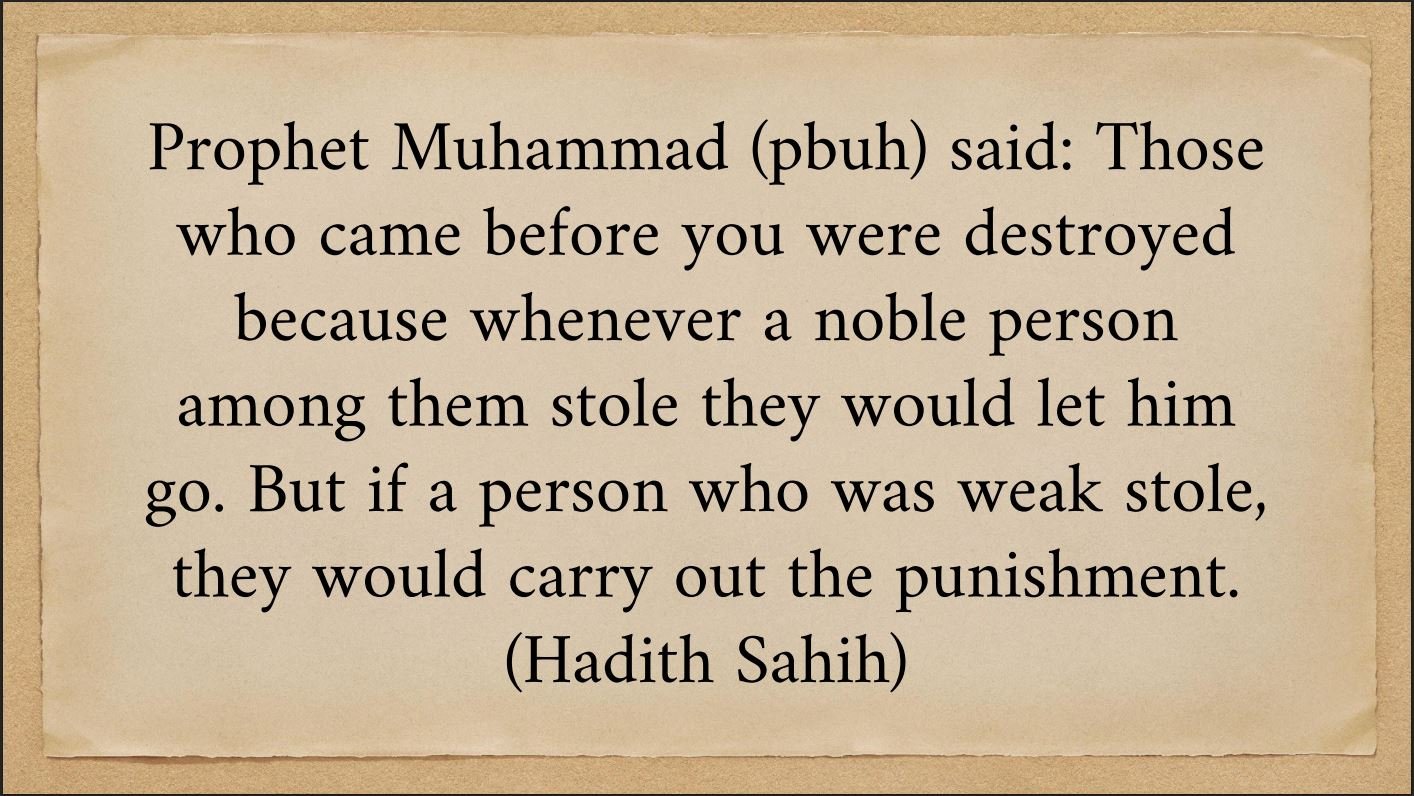
So Usamah spoke to him about it. The Messenger of Allah ﷺ said: “Those who came before you were destroyed because whenever a noble person among them stole, they would let him go. But if a person who was weak stole, they would carry out the prescribed punishment (Hadd). By Allah, if Fatimah, the daughter of Muhammad, were to steal, I would cut off her hand.”
Muhammad ibn Jabalah → Muhammad ibn Musa ibn A’yan → His father → Ishaq ibn Rashid → Al-Zuhri → ‘Urwah → ‘Aishah (may Allah be pleased with her)
The Historical Context
In Madinah, an incident occurred that shook the young Islamic society to its core. A woman from Banu Makhzum—one of the most noble and prestigious tribes of Quraysh—committed the crime of theft. Banu Makhzum was among the most distinguished Arab tribes, renowned for their lineage and social standing.
This was no ordinary case. The woman belonged to a family of influence and high social status, making the application of the prescribed punishment (Hadd) an extremely sensitive matter. The nobles of Quraysh found themselves in a dilemma: How could they protect a woman from their class without violating Allah’s law?
Quraysh had to choose between two paths: either implement Islam’s absolute justice that makes no distinction between noble and common, or preserve the old tribal customs that protected the elite from punishment. This moment was a true test of how committed the new Islamic society was to the principles of justice and equality.
The Intercession Attempt
In a desperate attempt to save the woman from punishment, the nobles of Quraysh consulted among themselves: Who would dare to speak to the Messenger of Allah ﷺ about this matter?
There was only one person who dared take on this difficult mission: Usamah bin Zaid (may Allah be pleased with him), the young man who was the beloved of the Messenger of Allah ﷺ and the son of his beloved Zayd bin Harithah. They knew that Usamah held a special place in the Prophet’s heart, and they thought his word might make a difference.
Usamah (may Allah be pleased with him) came forward with all respect and love, interceding for the Makhzumi woman. But what happened next became an unforgettable lesson in justice and equality.
The Decisive Prophetic Stand
The Messenger of Allah ﷺ became angry—not with personal anger, but with righteous indignation for the sake of Allah and the principles of justice. His noble face changed, and he stood to address the people, declaring an unwavering principle:
“Those who came before you were destroyed because whenever a noble person among them stole, they would let him go. But if a person who was weak stole, they would carry out the prescribed punishment.”
The Prophet ﷺ informed them that previous nations were destroyed not only because of disbelief, but because of injustice, nepotism, and applying two laws: one for the wealthy and noble, and another for the poor and weak. This is the corruption that demolishes civilizations and destroys societies.
“By Allah, if Fatimah, the daughter of Muhammad, were to steal, I would cut off her hand.”
Then the Prophet ﷺ declared the supreme principle: Even his beloved daughter Fatimah (may Allah be pleased with her)—the leader of the women of Paradise—if she were to steal, the punishment would be applied to her. There is no exception for anyone, not for kinship, not for lineage, not for social status.
Lessons Learned
Justice in Islam is not selective. There is no “protected class” above the law. The rich and poor, noble and common, strong and weak—all are equal before Allah’s law.
This principle is what protects societies from collapse. When the law becomes a tool in the hands of the powerful to oppress the weak, and a shield protecting the elite from punishment—civilizations begin to disintegrate and fall.
The Prophet ﷺ did not fear society, did not fear the anger of Quraysh, did not accommodate tribal sensitivities. Truth deserves to be followed, even if it’s difficult, even if it angers the powerful, even if it contradicts social norms.
This is true leadership: to stand with justice even if the whole world stands against you.
Islam establishes the rule of law, not the rule of whims and favoritism. Even the Messenger of Allah ﷺ—the greatest of humanity—clearly declared that he would not exempt his own daughter from the application of Shariah. This means that institutions are stronger than individuals, and principles are higher than relationships.
A Message to Our Era
This hadith is not just a historical story, but a mirror we must hold up to our societies today. How many times do we see the powerful escape punishment while the weak are punished for lesser offenses? How many times do we witness laws applied to the poor but ignored for the rich?
The Prophet ﷺ teaches us that justice is not a slogan we raise, but a practice we live. And that a society which protects its elite from punishment while being harsh on its weak—carries the seeds of its own destruction within itself.
This hadith establishes that equality before the law is not optional—it is the foundation of a just society. When we create exceptions for the powerful, we destroy the very fabric that holds civilizations together. The Prophet’s willingness to apply the law even to his own beloved daughter demonstrates that justice must be blind to status, wealth, and relationships. This is what distinguishes a society governed by divine principles from one governed by human prejudices and desires.
أَخْبَرَنَا مُحَمَّدُ بْنُ جَبَلَةَ، قَالَ حَدَّثَنَا مُحَمَّدُ بْنُ مُوسَى بْنِ أَعْيَنَ، قَالَ حَدَّثَنَا أَبِي، عَنْ إِسْحَاقَ بْنِ رَاشِدٍ، عَنِ الزُّهْرِيِّ، عَنْ عُرْوَةَ، عَنْ عَائِشَةَ، أَنَّ قُرَيْشًا، أَهَمَّهُمْ شَأْنُ الْمَخْزُومِيَّةِ الَّتِي سَرَقَتْ فَقَالُوا مَنْ يُكَلِّمُ فِيهَا قَالُوا مَنْ يَجْتَرِئُ عَلَيْهِ إِلاَّ أُسَامَةُ بْنُ زَيْدٍ حِبُّ رَسُولِ اللَّهِ صلى الله عليه وسلم.
فَكَلَّمَهُ أُسَامَةُ فَقَالَ رَسُولُ اللَّهِ صلى الله عليه وسلم: “إِنَّمَا هَلَكَ الَّذِينَ مِنْ قَبْلِكُمْ أَنَّهُمْ كَانُوا إِذَا سَرَقَ فِيهِمُ الشَّرِيفُ تَرَكُوهُ وَإِذَا سَرَقَ فِيهِمُ الضَّعِيفُ أَقَامُوا عَلَيْهِ الْحَدَّ وَايْمُ اللَّهِ لَوْ سَرَقَتْ فَاطِمَةُ بِنْتُ مُحَمَّدٍ لَقَطَعْتُ يَدَهَا”
محمد بن جبلة ← محمد بن موسى بن أعين ← أبيه ← إسحاق بن راشد ← الزهري ← عروة ← عائشة رضي الله عنها
It was narrated from ‘Aishah (may Allah be pleased with her) that the Quraysh were deeply concerned about the case of the Makhzumi woman who had committed theft. They said: “Who will speak to the Messenger of Allah concerning her?” They said: “Who would dare to do such a thing except Usamah bin Zaid, the beloved of the Messenger of Allah ﷺ?”
So Usamah spoke to him about it. The Messenger of Allah ﷺ said: “Those who came before you were destroyed because whenever a noble person among them stole, they would let him go. But if a person who was weak stole, they would carry out the prescribed punishment (Hadd). By Allah, if Fatimah, the daughter of Muhammad, were to steal, I would cut off her hand.”
Muhammad ibn Jabalah → Muhammad ibn Musa ibn A’yan → His father → Ishaq ibn Rashid → Al-Zuhri → ‘Urwah → ‘Aishah (may Allah be pleased with her)
السياق التاريخي
في المدينة المنورة، وقعت حادثة هزّت المجتمع الإسلامي الفتيّ. امرأة من بني مخزوم—وهي قبيلة عريقة من أشراف قريش—ارتكبت جريمة السرقة. وبني مخزوم من أنبل قبائل العرب وأعزها نسباً ومكانة.
القضية لم تكن عادية. كانت هذه المرأة من عائلة ذات نفوذ ومكانة اجتماعية عالية، مما جعل تطبيق الحد عليها أمراً حساساً للغاية. أشراف قريش وجدوا أنفسهم في مأزق: كيف يمكنهم حماية امرأة من طبقتهم دون أن يخالفوا شرع الله؟
كان على قريش أن تختار بين أمرين: إما تطبيق عدالة الإسلام المطلقة التي لا تفرق بين شريف ووضيع، أو الحفاظ على الأعراف القبلية القديمة التي كانت تحمي الأشراف من العقوبة. هذه اللحظة كانت اختباراً حقيقياً لمدى التزام المجتمع الإسلامي الجديد بمبادئ العدالة والمساواة.
محاولة التوسط
في محاولة يائسة لإنقاذ المرأة من العقوبة، تداول أشراف قريش فيما بينهم: من يجرؤ على أن يكلم رسول الله ﷺ في هذا الأمر؟
لم يكن هناك من يجرؤ على هذه المهمة الصعبة إلا أسامة بن زيد رضي الله عنه، الشاب الذي كان حبيب رسول الله ﷺ وابن حبه زيد بن حارثة. كانوا يعلمون أن لأسامة مكانة خاصة في قلب النبي ﷺ، وظنوا أن كلمته قد تؤثر.
تقدم أسامة رضي الله عنه بكل احترام ومحبة، يشفع للمرأة المخزومية. ولكن ما حدث بعد ذلك كان درساً لا يُنسى في العدالة والمساواة.
الموقف النبوي الحاسم
غضب رسول الله ﷺ—ليس غضباً شخصياً، بل غضباً لله ولمبادئ العدالة. تغير وجهه الشريف، وقام خطيباً في الناس ليعلن مبدأ لا يتزعزع:
“إِنَّمَا هَلَكَ الَّذِينَ مِنْ قَبْلِكُمْ أَنَّهُمْ كَانُوا إِذَا سَرَقَ فِيهِمُ الشَّرِيفُ تَرَكُوهُ وَإِذَا سَرَقَ فِيهِمُ الضَّعِيفُ أَقَامُوا عَلَيْهِ الْحَدَّ”
أخبرهم النبي ﷺ أن الأمم التي سبقتهم لم تهلك بسبب الكفر فقط، بل بسبب الظلم والمحسوبية وتطبيق قانونين: قانون للأغنياء والأشراف، وقانون آخر للفقراء والضعفاء. هذا هو الفساد الذي يهدم الحضارات ويدمر المجتمعات.
“وَايْمُ اللَّهِ لَوْ سَرَقَتْ فَاطِمَةُ بِنْتُ مُحَمَّدٍ لَقَطَعْتُ يَدَهَا”
ثم أعلن النبي ﷺ المبدأ الأعظم: حتى ابنته الحبيبة فاطمة رضي الله عنها—سيدة نساء أهل الجنة—لو سرقت، لطبق عليها الحد. ليس هناك استثناء لأحد، لا لقرابة، ولا لنسب، ولا لمكانة اجتماعية.
الدروس المستفادة
العدالة في الإسلام ليست انتقائية. لا توجد “طبقة محمية” فوق القانون. الغني والفقير، الشريف والوضيع، القوي والضعيف—كلهم سواء أمام شرع الله.
هذا المبدأ هو الذي يحمي المجتمعات من الانهيار. عندما يصبح القانون أداة في يد الأقوياء لقمع الضعفاء، ودرعاً يحمي الأشراف من العقاب—تبدأ الحضارات في التفكك والانهيار.
النبي ﷺ لم يخش المجتمع، ولم يخش غضب قريش، ولم يراعِ المشاعر القبلية. الحق أحق أن يُتبع، حتى لو كان صعباً، حتى لو أغضب الأقوياء، حتى لو تعارض مع الأعراف الاجتماعية.
هذه هي القيادة الحقيقية: أن تقف مع العدل حتى لو وقف العالم كله ضدك.
الإسلام يؤسس لحكم القانون، لا لحكم الأهواء والمحسوبية. حتى رسول الله ﷺ—أعظم البشر—أعلن بوضوح أنه لن يستثني ابنته من تطبيق الشريعة. هذا يعني أن المؤسسات أقوى من الأفراد، والمبادئ أعلى من العلاقات.
رسالة إلى عصرنا
هذا الحديث ليس مجرد قصة تاريخية، بل هو مرآة نضع أمامها مجتمعاتنا اليوم. كم من مرة نرى القوي يفلت من العقاب بينما يُعاقب الضعيف على ذنب أقل؟ كم من مرة نشهد قوانين تُطبق على الفقراء وتُتجاهل عند الأغنياء؟
النبي ﷺ يعلمنا أن العدالة ليست شعاراً نرفعه، بل ممارسة نعيشها. وأن المجتمع الذي يحمي أشرافه من العقاب ويقسو على ضعفائه—مجتمع يحمل بذور دماره في داخله.
The Historical Context
In Madinah, an incident occurred that shook the young Islamic society to its core. A woman from Banu Makhzum—one of the most noble and prestigious tribes of Quraysh—committed the crime of theft. Banu Makhzum was among the most distinguished Arab tribes, renowned for their lineage and social standing.
This was no ordinary case. The woman belonged to a family of influence and high social status, making the application of the prescribed punishment (Hadd) an extremely sensitive matter. The nobles of Quraysh found themselves in a dilemma: How could they protect a woman from their class without violating Allah’s law?
Quraysh had to choose between two paths: either implement Islam’s absolute justice that makes no distinction between noble and common, or preserve the old tribal customs that protected the elite from punishment. This moment was a true test of how committed the new Islamic society was to the principles of justice and equality.
The Intercession Attempt
In a desperate attempt to save the woman from punishment, the nobles of Quraysh consulted among themselves: Who would dare to speak to the Messenger of Allah ﷺ about this matter?
There was only one person who dared take on this difficult mission: Usamah bin Zaid (may Allah be pleased with him), the young man who was the beloved of the Messenger of Allah ﷺ and the son of his beloved Zayd bin Harithah. They knew that Usamah held a special place in the Prophet’s heart, and they thought his word might make a difference.
Usamah (may Allah be pleased with him) came forward with all respect and love, interceding for the Makhzumi woman. But what happened next became an unforgettable lesson in justice and equality.
The Decisive Prophetic Stand
The Messenger of Allah ﷺ became angry—not with personal anger, but with righteous indignation for the sake of Allah and the principles of justice. His noble face changed, and he stood to address the people, declaring an unwavering principle:
“Those who came before you were destroyed because whenever a noble person among them stole, they would let him go. But if a person who was weak stole, they would carry out the prescribed punishment.”
The Prophet ﷺ informed them that previous nations were destroyed not only because of disbelief, but because of injustice, nepotism, and applying two laws: one for the wealthy and noble, and another for the poor and weak. This is the corruption that demolishes civilizations and destroys societies.
“By Allah, if Fatimah, the daughter of Muhammad, were to steal, I would cut off her hand.”
Then the Prophet ﷺ declared the supreme principle: Even his beloved daughter Fatimah (may Allah be pleased with her)—the leader of the women of Paradise—if she were to steal, the punishment would be applied to her. There is no exception for anyone, not for kinship, not for lineage, not for social status.
Lessons Learned
Justice in Islam is not selective. There is no “protected class” above the law. The rich and poor, noble and common, strong and weak—all are equal before Allah’s law.
This principle is what protects societies from collapse. When the law becomes a tool in the hands of the powerful to oppress the weak, and a shield protecting the elite from punishment—civilizations begin to disintegrate and fall.
The Prophet ﷺ did not fear society, did not fear the anger of Quraysh, did not accommodate tribal sensitivities. Truth deserves to be followed, even if it’s difficult, even if it angers the powerful, even if it contradicts social norms.
This is true leadership: to stand with justice even if the whole world stands against you.
Islam establishes the rule of law, not the rule of whims and favoritism. Even the Messenger of Allah ﷺ—the greatest of humanity—clearly declared that he would not exempt his own daughter from the application of Shariah. This means that institutions are stronger than individuals, and principles are higher than relationships.
A Message to Our Era
This hadith is not just a historical story, but a mirror we must hold up to our societies today. How many times do we see the powerful escape punishment while the weak are punished for lesser offenses? How many times do we witness laws applied to the poor but ignored for the rich?
The Prophet ﷺ teaches us that justice is not a slogan we raise, but a practice we live. And that a society which protects its elite from punishment while being harsh on its weak—carries the seeds of its own destruction within itself.
This hadith establishes that equality before the law is not optional—it is the foundation of a just society. When we create exceptions for the powerful, we destroy the very fabric that holds civilizations together. The Prophet’s willingness to apply the law even to his own beloved daughter demonstrates that justice must be blind to status, wealth, and relationships. This is what distinguishes a society governed by divine principles from one governed by human prejudices and desires.
Published in All, Articles, Hadith, Islam and Islamic Center in Stillwater










Be First to Comment