
Great Character
The Hardest Thing a Human Being Can Ever Master
We tend to assume that the most difficult human achievements are the visible ones — brilliant discoveries, dazzling intellect, towering expertise. But a quiet, deeply reasoned insight reframes the question entirely: the hardest thing a person can ever become is not knowledgeable. It is good.
To hold good character, to restrain one’s own greed, to wage a constant inner struggle against the pull of the self — this, it turns out, is the real test. And nowhere is this made clearer than in how God chose to praise His own Messenger ﷺ.
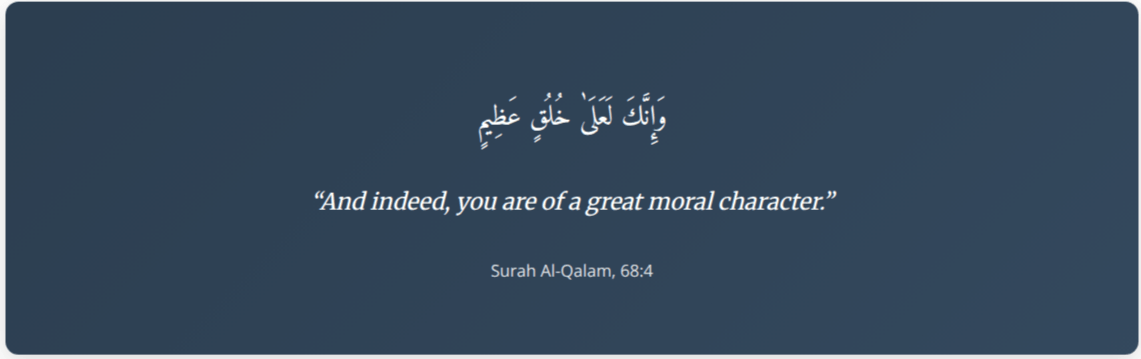
وَإِنَّكَ لَعَلَىٰ خُلُقٍ عَظِيمٍ
“And indeed, you are of a great moral character.”
Surah Al-Qalam, 68:4
Not “you are of great knowledge.” Not “you are of great intellect.” Great character. This single word choice carries an entire worldview about what is genuinely difficult — and genuinely dangerous — for a human being to hold.
Why Character Is Harder Than Knowledge
Knowledge, however impressive, can be transmitted: studied, memorized, tested, certified. A person can master medicine, law, or theology through disciplined study alone. Character offers no such shortcut. It cannot be downloaded or memorized — it must be lived, moment by moment, especially when no one is watching and nothing forces the choice.
This is the essence of mujahada — the inner struggle. To be good is to restrain one’s own greed, to hold the self accountable when a more convenient, more selfish path is available. It is a daily, unglamorous battle that produces no diploma and wins no headlines — yet it is precisely this struggle the Quran singles out as praiseworthy above all else.
Had the verse instead praised “great knowledge,” it would have carried a darker undertone — because knowledge, unlike character, can be turned against creation itself. The same expertise that cures disease can engineer a pandemic. The same science that generates power can end civilizations. Knowledge is morally neutral; it amplifies whatever character directs it.
A truly good person — someone of real khuluq — poses no danger in proportion to their goodness. The better they become, the safer those around them become. This asymmetry is exactly why character, not intellect, was chosen as the defining trait of the Quran’s greatest human exemplar.
At a Glance: Two Paths, Two Outcomes
The Quiet, Unrecorded Victories
This has a very practical implication for how we measure a life well lived. We tend to measure ourselves — and each other — by achievement: degrees earned, wealth accumulated, status attained. But this reframing shifts the real test elsewhere entirely: Did you restrain your greed when you had the chance to take more? Did you keep your composure when losing it would have felt justified? Did you treat someone fairly when unfairness would have benefited you?
None of the four struggles named here are dramatic. Greed, impatience, self-interest, and moral compromise are often treated as ordinary, even expected, parts of being human. We excuse them as “just being practical” or “looking out for myself.” Yet this is precisely why they are dangerous — not because they are rare failures, but because they are constant temptations, quietly available in nearly every decision we make.
Guarding the Harder Jewel
The practical lesson isn’t complicated, even if it isn’t easy: building knowledge means study. Building character means mujahada — a sustained, deliberate struggle against the self, fought in small moments rather than won once and for all. A temptation resisted, a greed restrained, a moment of self-interest set aside in favor of what is right — each one keeps the harder, rarer virtue intact for one more day.
In a world increasingly enamored with intelligence — artificial and otherwise — this ancient reframing feels newly urgent. Knowledge, unchecked by character, holds the power to end everything. Character, forged through daily struggle against one’s own greed and ego, is what makes a world worth saving possible at all.








Be First to Comment