
Guarding the Tongue
The Anatomy of a Believer’s Character
In the journey of faith, the internal state of a person is often mirrored by their external conduct, particularly their speech. Islam places immense emphasis on the refinement of character (Akhlaq), teaching that true belief is not merely a set of rituals but a transformative force that purifies one’s interaction with others.
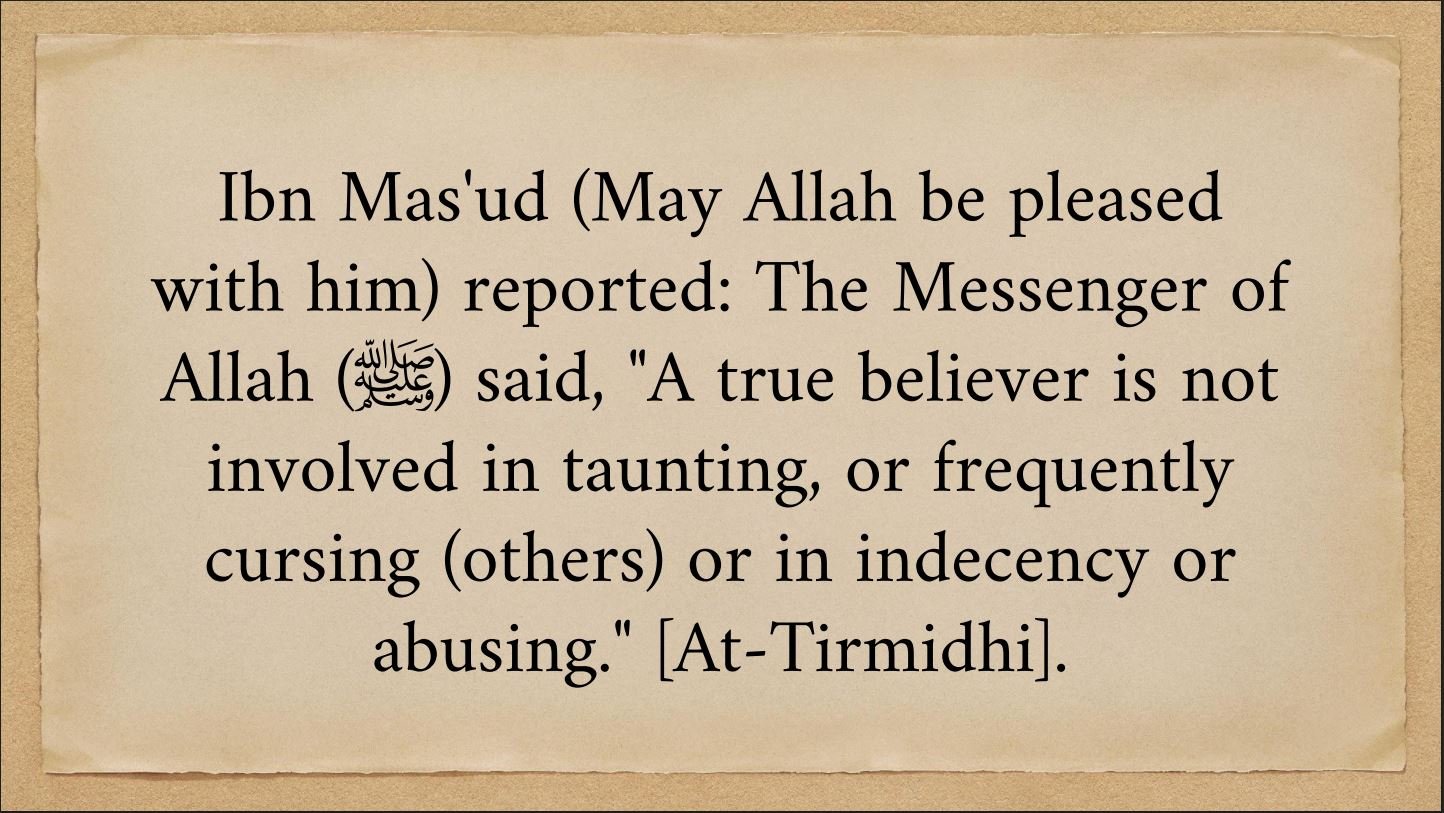
(Source: Sunan al-Tirmidhi)
Word-by-Word Explanation
To understand the depth of this teaching, we must examine the specific terms used by the Prophet ﷺ, each of which targets a different ailment of the tongue.
The word Ta’an comes from a root meaning “to pierce” or “to stab.” In the context of speech, it refers to someone who “stabs” the honor and reputation of others. This includes defamation, sarcasm, and constantly looking for flaws in people to expose them.
La’an refers to the act of invoking a curse—asking for someone to be removed from the Mercy of Allah. A believer is a source of mercy and well-wishing, not a source of condemnation. Frequent cursing indicates a heart lacking in compassion.
Fahish refers to anything that exceeds the bounds of decency. In speech, it refers to foul language, graphic or crude expressions, and acting without a sense of Haya (modesty/shame).
While similar to Fahish, Badhi specifically emphasizes the foulness of the mouth. It refers to someone who is “foul-mouthed” and uses abusive language as a default mode of communication. It is the opposite of gentleness and forbearance.
The Essence of Worship: Beyond Rituals
The refinement of speech is so critical that it determines the very validity and spirit of our worship. The Prophet ﷺ linked the physical act of fasting to the moral act of guarding the tongue:
(Source: Sahih al-Bukhari)
This teaching reveals that fasting is meant to be a shield not just from food, but from sins. There is no value in a “hungry body” if the “tongue is loose” with lies and vulgarity. The goal of all worship is Taqwa (God-consciousness), which is impossible to achieve while maintaining a foul character.
Conclusion: A Call to Excellence
For any reader, these teachings highlight that Islam is a religion of profound civility. It demands that its followers be the most refined in their speech and the most gentle in their conduct. A believer’s tongue should be a vessel for truth, kindness, and remembrance of God—never a weapon for destruction or a fountain of filth.
As we reflect on these Hadiths, let us remember the Quranic description of the Prophet ﷺ, which serves as the ultimate standard for us all:
By guarding our tongues, we protect our faith, our dignity, and the peace of the society around us.











Be First to Comment