

The Linguistic Fingerprint of Divine Revelation
How Stylometric Analysis Illuminates the Uniqueness of the Quran
“Say: If all mankind and the jinn gathered together to produce the like of this Quran, they could not produce its like, even if they were to help one another.”
— Surah Al-Isra (17:88)
For fourteen centuries, Muslims have held that the Quran possesses a unique literary quality that sets it apart from all human speech—a characteristic known as i’jaz al-Quran (the inimitability of the Quran). While this belief has traditionally been defended through theological and literary arguments, modern computational linguistics has opened a new frontier in examining this claim through rigorous statistical analysis.
Stylometry—the statistical analysis of linguistic style—offers a scientific approach to investigating questions of authorship, chronology, and textual coherence. By examining patterns in vocabulary, syntax, morphology, and other linguistic features, researchers can create unique “stylistic fingerprints” for texts and their authors. When applied to the Quran, these methods yield fascinating insights that both challenge and support traditional Islamic beliefs about the text’s origin and nature.
Distinguishing the Quran from the Hadith
One of the most compelling applications of stylometry to Islamic texts addresses a fundamental question: Can we statistically distinguish between the words attributed to Allah in the Quran and the words attributed to Prophet Muhammad ﷺ in the Hadith collections? If both originated from the same human author, we would expect to find significant stylistic overlap. However, if they truly represent different sources—one divine and one human—we would expect to find distinct linguistic signatures.
In a landmark 2012 study, Algerian researcher Halim Sayoud conducted sixteen independent computational experiments comparing the linguistic characteristics of the Quran with Sahih al-Bukhari, one of the most authoritative collections of Hadith. The research employed multiple statistical classifiers and analyzed various linguistic features to determine whether the two texts could have originated from the same author.
The results were striking and statistically significant. Sayoud’s analysis revealed profound differences in the linguistic profiles of the two texts:
The term “statistically irreconcilable” in Sayoud’s study is significant. It means that the differences between the two texts are not random variations but represent fundamental distinctions in linguistic style. The study employed sophisticated classifiers including Canberra distance metrics and Naïve Bayes algorithms, both of which consistently identified the texts as products of different authors with high confidence levels.
Beyond mere vocabulary differences, Sayoud’s analysis examined word length frequency distributions, grammatical patterns, and syntactic structures. Each of these features independently pointed to the same conclusion: the Quran and Hadith exhibit distinct stylistic signatures that strongly suggest different authorship. For Muslims, this finding provides empirical support for the traditional belief that the Quran represents divine speech, while the Hadith represents the Prophet’s own words—two fundamentally different sources of communication.
Internal Chronology and Stylistic Evolution
While distinguishing the Quran from the Hadith addresses questions of external authorship, another important line of research examines the internal chronology of the Quran itself. Islamic tradition divides the Quranic revelation into two major periods: the Meccan period (610-622 CE) and the Medinan period (622-632 CE). Can stylometric analysis detect and confirm this chronological development?
Nicolai Sinai, a leading scholar of Quranic studies at the University of Oxford, has conducted extensive research into the chronological development of Quranic style. His work has identified clear developmental trajectories in the text, particularly regarding verse length and structural complexity.
One of Sinai’s key findings concerns the progressive increase in average verse length throughout the Meccan period. Early Meccan surahs are characterized by short, rhythmic verses with powerful imagery and repetitive structures. As the revelation progressed, verses gradually became longer and more complex, incorporating detailed narratives and legal prescriptions. This stylistic evolution is not random but follows a smooth, predictable pattern that suggests organic development by a single author over time.
Behnam Sadeghi, a professor of Islamic history at Stanford University, took the analysis even deeper by examining morpheme frequencies—the smallest meaningful units in a language. His comprehensive study analyzed 28 of the most common morphemes, 114 other common morphemes, and 3,693 relatively uncommon morphemes across the entire Quranic corpus.
Sadeghi’s morpheme analysis revealed smooth stylistic transitions across seven proposed chronological phases of Quranic revelation. The changes were gradual and consistent, showing no abrupt shifts or inconsistencies that would suggest multiple authors or later editorial interventions. This finding is particularly significant because morpheme frequency is typically an unconscious aspect of language use—authors don’t deliberately control the frequency of grammatical particles or prefixes. The fact that these frequencies change smoothly and consistently over time provides strong evidence for unified authorship.
If the Quran had been compiled from multiple sources or significantly edited by later redactors, we would expect to find discontinuities in stylistic markers—sudden jumps or inconsistencies in morpheme frequencies, vocabulary usage, or syntactic patterns. The absence of such discontinuities, and instead the presence of smooth, gradual evolution, strongly supports the traditional Islamic narrative of a single source of revelation received consistently over 23 years.
Oral Composition and Formulaic Density
Another fascinating dimension of Quranic stylometry involves the analysis of formulaic patterns—recurring phrases and structures that characterize orally composed texts. This line of research connects the Quran to the broader context of ancient Arabic oral literature.
Computerized analysis has revealed that the Quran exhibits a formulaic density ranging from 23% to 53%, depending on the surah and the definition of “formula” employed. This means that between one-quarter and one-half of the Quranic text consists of recurring phrases, parallel structures, and formulaic expressions.
These formulaic systems are characteristic of oral composition techniques similar to those found in pre-Islamic Arabic poetry and other oral traditions worldwide. The presence of such formulaic density supports the Islamic historical narrative that the Quran was revealed orally, memorized by the Prophet ﷺ and his Companions, and transmitted through recitation before being written down.
However, the Quran’s use of formulaic structures differs from pre-Islamic poetry in important ways. While pre-Islamic poems relied heavily on standard phrases and metrical patterns, the Quran employs formulas more flexibly and creatively, often breaking or modifying traditional patterns to create new meanings. This distinctive use of oral-formulaic techniques adds another layer to the text’s uniqueness.
The identification of oral composition techniques in the Quran aligns with the Islamic tradition that the Prophet Muhammad ﷺ was unlettered (ummi) and received the revelation through direct divine communication rather than through writing. The stylistic markers of oral composition—including formulaic density, rhythmic patterns, and mnemonic structures—all support the traditional account of how the Quran was produced and transmitted.
Methodological Considerations and Limitations
While stylometric studies of the Quran yield compelling results, researchers in this field are careful to acknowledge important methodological limitations. These considerations are essential for properly understanding and contextualizing the findings.
The Quran, while substantial, is relatively brief compared to corpora typically used in authorship attribution studies. With approximately 77,000 words, it represents a smaller dataset than researchers would ideally prefer for absolute statistical certainty. Some scholars, such as Justin Parrott in his critical analysis of stylometric approaches, caution that the brevity of the Quranic corpus limits the confidence with which we can draw definitive conclusions about authorship based solely on statistical methods.
Additionally, researchers emphasize that computational methods must be balanced with traditional philological intuition and historical-critical analysis. Stylometry is a powerful tool, but it cannot answer all questions about a text’s origin, meaning, or significance. The numbers must be interpreted within their proper linguistic, historical, and cultural contexts.
There are also ongoing debates about which statistical measures are most appropriate for analyzing classical Arabic texts. Different classifiers and distance metrics sometimes yield slightly different results, and researchers must carefully justify their methodological choices. The field continues to evolve as new computational techniques become available and as our understanding of classical Arabic linguistics deepens.
Theological Implications and Interpretations
The findings of stylometric research on the Quran carry significant implications for discussions about the text’s origin and nature. For many Muslim scholars and believers, these studies provide empirical support for traditional Islamic beliefs about the Quran’s divine authorship.
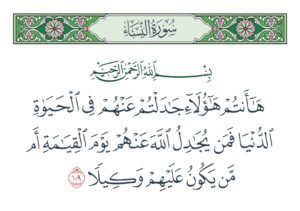
“Do they not then reflect on the Quran? Had it been from anyone other than Allah, they would have certainly found in it many inconsistencies.”
— Surah An-Nisa (4:82)
The statistical evidence for unified authorship, smooth stylistic evolution, and clear distinction from the Prophet’s own speech in the Hadith all align with the Islamic understanding that the Quran represents kalam Allah (the Speech of Allah) rather than human composition. The text’s internal coherence across 23 years of revelation, despite varying circumstances and addressees, becomes even more remarkable when examined through the lens of computational linguistics.
Furthermore, the linguistic uniqueness demonstrated by these studies resonates with the Quranic challenge of i’jaz—the assertion that humans cannot produce anything like the Quran. While stylometry cannot prove divine authorship in an absolute sense, it can demonstrate that the Quran possesses distinctive linguistic characteristics that set it apart from other texts of its time and place, including the authenticated statements of the Prophet Muhammad ﷺ himself.
Some scholars argue that these findings make purely naturalistic explanations of Quranic authorship more difficult to sustain. If the Quran were simply the product of Muhammad’s own compositional efforts, we would expect to find greater stylistic overlap with his recorded statements in the Hadith. If it were the product of multiple authors or later editorial compilation, we would expect to find discontinuities and inconsistencies in morpheme frequencies and other unconscious linguistic markers. The absence of these expected features, coupled with the text’s distinctive linguistic profile, suggests that traditional explanations deserving serious consideration.
Academic Reception and Ongoing Research
The application of stylometry to the Quran remains a relatively young field, with active debates continuing among scholars. While the findings discussed above have been published in peer-reviewed academic journals and have gained recognition in the field of computational linguistics, they have also faced scrutiny and criticism from various quarters.
Some scholars working from secular or critical perspectives maintain that stylometric findings must be interpreted within naturalistic frameworks and that appeals to divine authorship lie outside the scope of historical-critical inquiry. Others argue that the statistical differences between the Quran and Hadith could potentially be explained by genre differences, contextual factors, or unconscious stylistic choices rather than necessarily indicating different ultimate sources.
However, what remains uncontested across different scholarly perspectives is that the Quran possesses distinctive linguistic characteristics that merit serious scholarly attention. Whether one interprets these characteristics as evidence of divine origin or as remarkable features of a unique ancient text, the stylometric data itself provides objective measurements of the text’s linguistic properties.
The field continues to evolve with the application of increasingly sophisticated computational methods. Machine learning algorithms, neural networks, and advanced natural language processing techniques are being applied to classical Arabic texts with promising results. Future research may provide even more detailed understanding of the Quran’s linguistic structure and its relationship to other Arabic texts of the 7th century. Additionally, comparative studies examining the Quran alongside other ancient religious texts using similar methodologies could provide valuable context for understanding its unique characteristics.
Conclusion: Science and Faith in Dialogue
The application of stylometric analysis to the Quran represents a fascinating intersection of modern computational science and ancient religious texts. While no scientific method can definitively prove or disprove claims about divine revelation, stylometry provides objective data about the text’s linguistic characteristics that must be accounted for in any comprehensive theory of Quranic origins.
For Muslim believers, these findings offer empirical support for traditional beliefs about the Quran’s divine authorship and the Prophet Muhammad’s role as a messenger rather than the text’s human author. The statistical distinctiveness of the Quranic style from the Prophet’s own speech, the internal coherence across decades of revelation, and the text’s unique linguistic fingerprint all align with Islamic theological claims.
For scholars and researchers regardless of religious perspective, these studies demonstrate that the Quran merits continued investigation using the most sophisticated analytical tools available. The text possesses distinctive and measurable linguistic properties that distinguish it within the corpus of classical Arabic literature.
As computational linguistics continues to advance, we can expect even more detailed and nuanced analyses of the Quran’s linguistic structure. These future studies will undoubtedly deepen our understanding of this remarkable text, whether one approaches it as a believer in its divine origin or as a scholar interested in its historical and literary significance.
“We will show them Our signs in the horizons and within themselves until it becomes clear to them that it is the truth.”
— Surah Fussilat (41:53)
Academic References and Further Reading
May Allah guide us to understanding and appreciating the wisdom contained in His final revelation to humanity.








Be First to Comment