
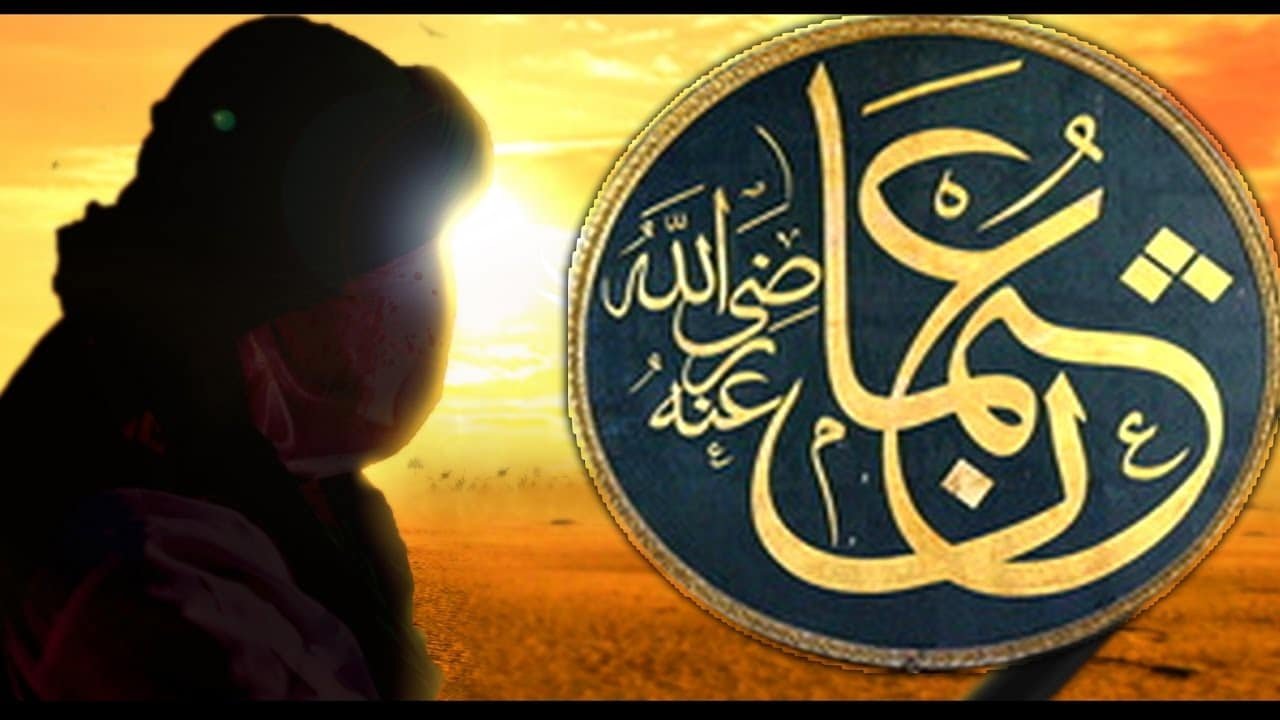
Uthman ibn Affan (radi Allahu anhu)
The Third Rightly Guided Caliph: A Life of Modesty, Generosity, and Faith
In the days of Mecca before the Prophetic mission, a child was born in one of the noblest and wealthiest houses of the Quraysh, from the Banu Umayyah clan. He was Uthman ibn Affan (radi Allahu anhu). His father, Affan, was a wealthy merchant, and his mother, Arwa bint Kurayz, was a descendant of the house of Abdul Muttalib. Uthman grew up in comfort and luxury, but he stood out among his peers for his extreme modesty, chastity, and gentle speech. He never touched alcohol, nor did he worship idols, and he was beloved and respected by his people.
Once, he returned from a trade journey to Sham (Syria) and had a strange dream: a voice called out, “Hurry, for Ahmad has emerged in Mecca.” He did not understand its meaning at the time, but it settled in his heart. Then he met Abu Bakr al-Siddiq (radi Allahu anhu), who invited him to meet Muhammad ibn Abdullah (ﷺ). Uthman sat before the Prophet (ﷺ), heard the pure words of Tawhid (monotheism), and saw in his face the truthfulness and trustworthiness for which he was already known. Without hesitation, he declared his Islam, saying, “I bear witness that there is no god but Allah and that Muhammad is the Messenger of Allah.” He was the fourth man to embrace Islam, among the earliest of the early believers.
Soon after, he faced persecution from his uncle, who tortured him for his faith, but he endured with patience and steadfastness. He then migrated with his wife, Ruqayyah bint Rasulullah (ﷺ), to Abyssinia in the first migration. He was the first to migrate with his family after the Prophet Lut (AS), and later returned to Mecca. Afterward, he migrated again with the Prophet (ﷺ) to Medina.
In Medina, the Prophet (ﷺ) loved him dearly and said about him: “Should I not be shy of a man whom the angels are shy of?” On another occasion, Uthman entered while the Prophet (ﷺ) was reclining. The Prophet (ﷺ) sat up out of respect for him and adjusted his seating. The Prophet (ﷺ) also married his daughter Ruqayyah to Uthman, and after her passing, he married him to another of his daughters, Umm Kulthum. Thus, Uthman was given the title “Dhu al-Nurayn” (Possessor of the Two Lights), for he was married to two daughters of the Messenger of Allah (ﷺ).
Uthman (radi Allahu anhu) was unmatched in generosity. He purchased the well of Rumah from a Jewish man and made it a waqf (endowment) for the Muslims when they suffered from thirst in Medina. During the Expedition of Tabuk (the Army of Hardship), he equipped a third of the army at his own expense: a thousand camels, hundreds of horses, and a thousand dinars, which he poured into the lap of the Prophet (ﷺ). The Prophet (ﷺ) gave him the glad tidings, saying: “Nothing will harm Uthman after what he has done today.” At the Battle of Badr, the Prophet (ﷺ) kept him behind to care for his sick wife, Ruqayyah, but he was still rewarded as if he had participated in the battle.
After the passing of the Prophet (ﷺ), then Abu Bakr, and then Umar (radi Allahu anhum), Umar, before his death, instructed that the next Caliph be chosen from six men: Ali, Uthman, Abd al-Rahman ibn Awf, Sa’d ibn Abi Waqqas, Al-Zubayr, and Talhah. They consulted among themselves, and Abd al-Rahman ibn Awf sought the people’s opinion. After extensive consultation, Uthman was chosen. The Muslims pledged allegiance to him in the Prophet’s Mosque, and he became the third of the Rightly Guided Caliphs.
During his caliphate, Islamic conquests expanded greatly: North Africa, Armenia, Khorasan, Kirman, Sistan, and Cyprus were conquered, and the first Islamic naval fleet was built. He expanded the Prophet’s Mosque and the Sacred Mosque in Mecca. But his greatest achievement was the compilation of the Quran into a single, unified mushaf (copy). Fearing differences in recitation as Islam spread to distant lands, he had it written in the dialect of the Quraysh and sent copies to the Islamic cities, thus preserving Allah’s Book from distortion.
Uthman (radi Allahu anhu) was a man of night prayers, fasting during the day, and weeping at graves until his beard was wet. He narrated hadiths from the Prophet (ﷺ) and taught people how to perform wudu (ablution) practically, saying: “Whoever performs wudu like mine…”
In the later years of his caliphate, a fitnah (trial) was stirred by some parties in Egypt, Kufa, and Basra. They were deceived by rumors and forged letters. They came to Medina demanding changes. They besieged him in his house for weeks, preventing him from accessing water and from going out to pray in the mosque. He offered them dialogue and justice, but they stormed his house. While he was reciting the Quran, they entered and struck him. His wife, Nailah, tried to defend him, and her fingers were cut off. His blood spilled on the Quran, and he was martyred on Friday, the 18th of Dhu al-Hijjah, 35 AH, at the age of about 82.
He was buried in Al-Baqi’. His last words were a plea to not shed the blood of any Muslim on his account. The Prophet (ﷺ) had said about him: “Uthman is among the people of Paradise,” and gave him the glad tidings of martyrdom.
May Allah have mercy on Dhu al-Nurayn and reward him with the best reward for the Ummah. He was an example of modesty, generosity, knowledge, action, patience, and benevolence—a model to be followed in every era.
Key Themes
This article highlights the life, achievements, and legacy of Uthman ibn Affan (radi Allahu anhu).





Be First to Comment